

Getting your pet’s vaccinations right from the start sets them up for a healthy life. A proper pet vaccination schedule protects against serious diseases and builds immunity at the right moments.
Here at LifeEventGuide, we know that new pet owners often feel uncertain about when and what to vaccinate. This guide walks you through each stage, from your puppy or kitten’s first shots to adult boosters, so you can make informed decisions with your veterinarian.
How Vaccinations Build Your Pet’s Immunity
Training Your Pet’s Immune System
Vaccinations train your pet’s immune system to recognize and fight specific diseases before exposure occurs. When your veterinarian administers a vaccine, it introduces a weakened or inactive version of a disease, triggering your pet’s body to produce antibodies as a defense mechanism. This preparation matters because the diseases vaccines prevent-like canine parvovirus, feline panleukopenia, and rabies-pose serious threats that can cause gastrointestinal disease, organ failure, or death. Rabies stands out as particularly critical since it has no cure and can transmit to humans, making vaccination a public health requirement in most areas.
Core Vaccines: Protection for All Pets
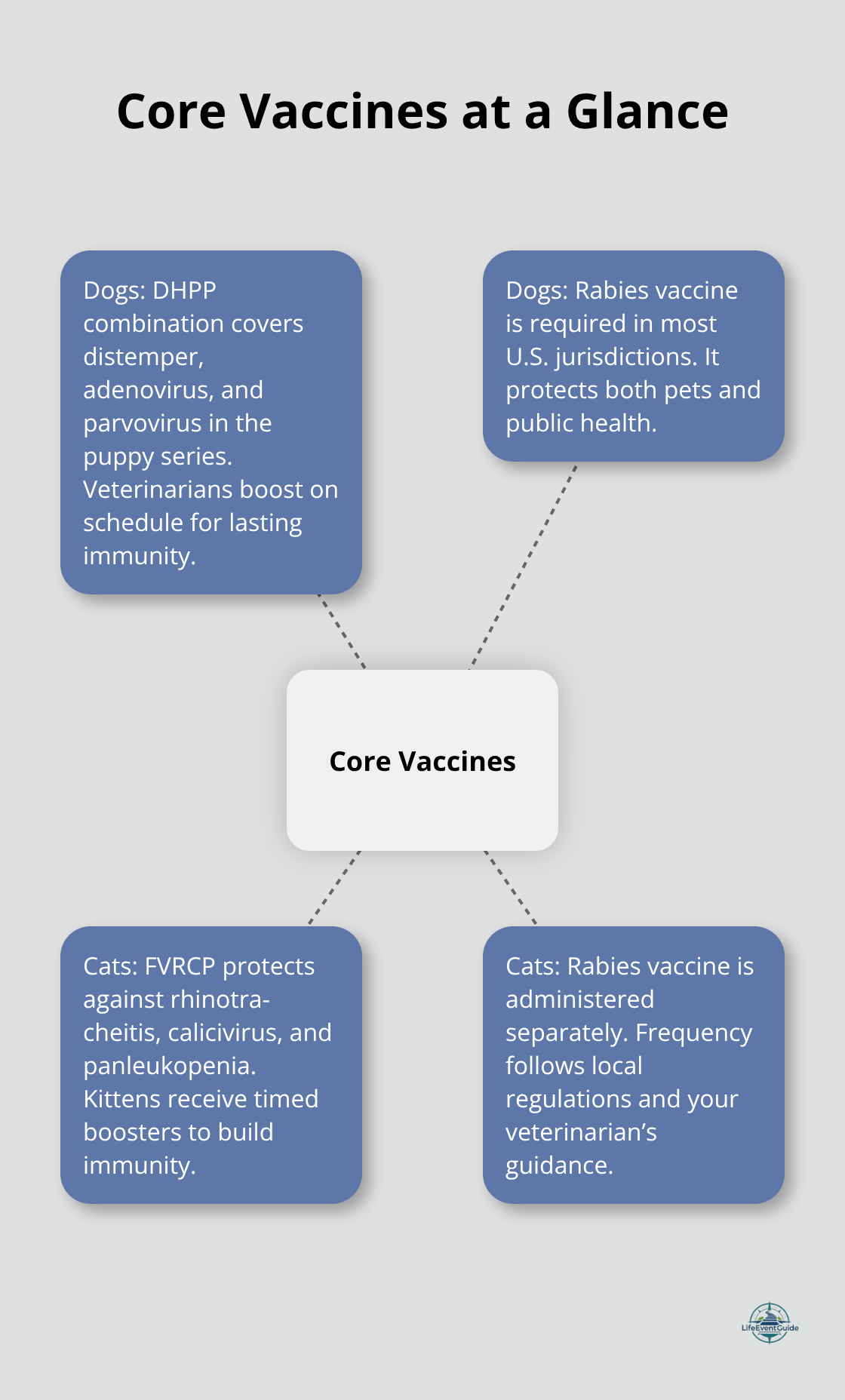
Core vaccines protect against the most dangerous diseases and apply to all pets. For dogs, core vaccines include rabies, distemper, adenovirus, and parvovirus, typically given as a combination shot called DHPP. For cats, the core vaccine is FVRCP, which covers feline viral rhinotracheitis, calicivirus, and panleukopenia, plus a separate rabies vaccine. These vaccines form the foundation of your pet’s protection against diseases that spread widely and cause severe illness.
Non-Core Vaccines: Tailored to Your Pet’s Life
Non-core vaccines target diseases based on your pet’s lifestyle and geographic risk. A dog that spends time in boarding facilities or dog parks benefits from Bordetella and canine influenza vaccines. A dog that hikes or swims in areas where wildlife urine contaminates water should receive leptospirosis protection, as this bacterial infection can cause liver and kidney failure. Cats with outdoor access face feline leukemia virus exposure, which causes immune suppression and cancer, making FeLV vaccination worth discussing with your veterinarian.
The Critical Window: Maternal Antibodies and Timing
Maternal antibodies fade around 6 to 8 weeks of age. This window creates a vulnerability period where your puppy or kitten needs vaccinations to build their own immunity. According to WSAVA 2024 vaccination guidelines, puppies should start core vaccines at 6 to 8 weeks and receive boosters every 3 to 4 weeks until 16 weeks of age. Kittens follow a similar timeline, typically starting at 9 weeks. This series approach works because maternal antibodies can interfere with vaccine effectiveness, so multiple doses given weeks apart ensure your pet develops lasting protection as those maternal antibodies decline. Skipping doses or waiting too long between shots creates gaps where your pet remains vulnerable to serious illness.
From Puppies to Adults: Adjusting Your Vaccination Plan
After the initial puppy or kitten series, your pet transitions to an adult vaccination schedule that typically involves boosters every 1 to 3 years, depending on the vaccine type and your veterinarian’s assessment of disease risk in your area. Your veterinarian will tailor the schedule based on your pet’s age, health status, lifestyle, and local disease prevalence (which is why a one-size-fits-all approach fails to serve most pets well). Vaccine costs vary by geography and provider, with core vaccines ranging from $27 to $96 per shot nationally, so discussing the full vaccination plan upfront helps you budget appropriately. Understanding these variables prepares you to work with your veterinarian on a schedule that fits your pet’s specific needs and your family’s circumstances.
Starting Your Puppy or Kitten’s Vaccination Series
Your puppy or kitten’s first vaccines arrive at 6 to 8 weeks of age, when maternal antibodies fade enough for their immune system to respond effectively to vaccination. At this stage, puppies receive the DHPP vaccine covering distemper, adenovirus, parainfluenza, and parvovirus in a single injection. Kittens receive the FVRCP vaccine protecting against feline viral rhinotracheitis, calicivirus, and panleukopenia. Both species also start parasite prevention at 8 weeks with products targeting fleas, ticks, and heartworms, since these parasites pose immediate threats to young pets. Your veterinarian will also recommend deworming and fecal testing at this first visit to screen for intestinal parasites that commonly affect young animals.
Why the Initial Appointment Sets the Foundation
This first appointment establishes your pet’s protection baseline, but it marks only the start of the vaccination series. Many new pet owners mistakenly believe one vaccine provides full protection, which leaves their pet vulnerable during the critical weeks ahead. Your veterinarian will explain what each vaccine covers and answer questions about your pet’s specific risk factors based on your location and lifestyle.
The Booster Schedule That Builds Lasting Immunity
Boosters every 3 to 4 weeks until 16 weeks of age create the immunity your pet needs for long-term protection. At 12 weeks, puppies receive a DHPP booster and kittens receive an FVRCP booster. At 16 weeks, both species receive their final core vaccine boosters; puppies also get their first rabies vaccine while kittens receive rabies and may receive feline leukemia vaccination depending on outdoor exposure risk.
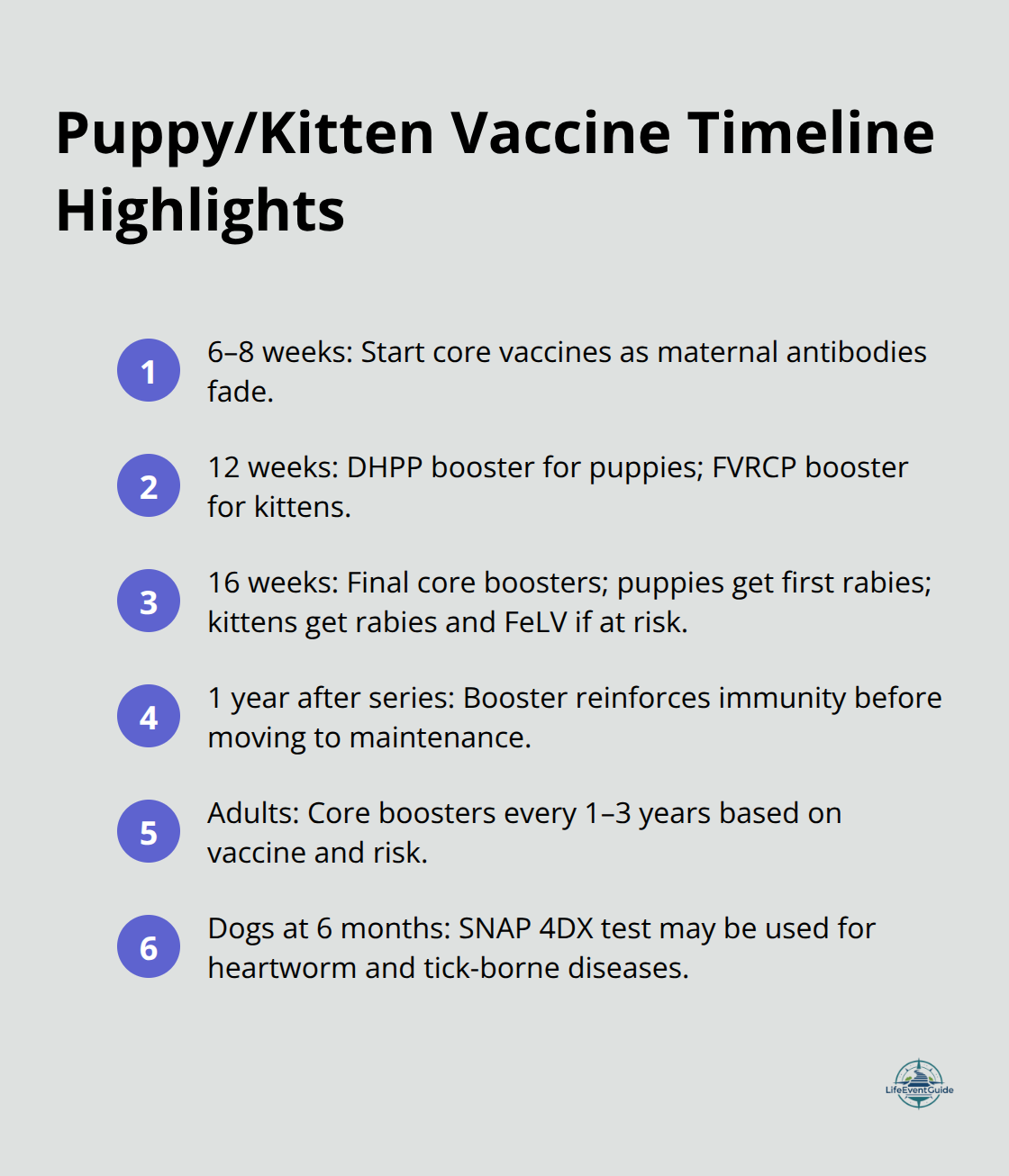
Each booster increases antibody levels as maternal antibodies continue declining, ensuring your pet develops robust protection. Non-core vaccines for dogs, such as leptospirosis, Bordetella, or Lyme disease, typically start at 12 weeks if your veterinarian recommends them based on your region and lifestyle. Spacing matters more than most owners realize; compressed schedules or missed appointments create gaps where your young pet remains susceptible to serious illness. At 6 months of age, dogs may undergo a SNAP 4DX test to screen for heartworm, Lyme disease, ehrlichiosis, and anaplasmosis, providing early detection of tick-borne diseases.
Transitioning to Adult Maintenance
Once your pet reaches 4 months of age and completes the initial vaccination series, they transition to an adult maintenance schedule. One year after the final booster in the puppy or kitten series, your pet needs a booster to reinforce immunity as they move out of the vulnerable young stage. After this one-year booster, many core vaccines can be given every 1 to 3 years depending on the specific vaccine formulation and your veterinarian’s risk assessment for your geographic area. Rabies vaccination frequency depends on local regulations and whether you choose a 1-year or 3-year formulation, so confirm requirements with your veterinarian.
Keeping Records and Staying on Track
This transition period shifts your thinking from vaccination as a series to vaccination as ongoing maintenance. Accurate records matter significantly at this stage; your veterinarian needs to know exactly when each vaccine was administered to calculate booster timing correctly. Avoid gaps of more than one year for core vaccines, as this resets your pet’s protection timeline and may require restarting the series. Your veterinarian will send reminders based on your pet’s individual schedule, but staying proactive ensures your pet never misses a booster window. As your pet moves into adulthood, lifestyle factors and regional disease prevalence will shape which additional vaccines make sense for your specific situation.
How Often Your Adult Pet Needs Boosters
Once your pet enters adulthood, vaccination shifts from a series to a maintenance schedule, but the frequency depends entirely on which vaccines your veterinarian recommends and your pet’s individual risk profile. Many core vaccines can be administered every three years after the one-year booster following the puppy or kitten series, though some veterinarians may recommend annual boosters based on local disease prevalence or your pet’s health status. Rabies vaccination follows local regulations, which vary significantly by state and county-some areas require annual rabies boosters while others accept three-year formulations, so confirm your local requirements with your veterinarian rather than assuming a standard timeline applies.
Budgeting for Annual Versus Three-Year Protocols
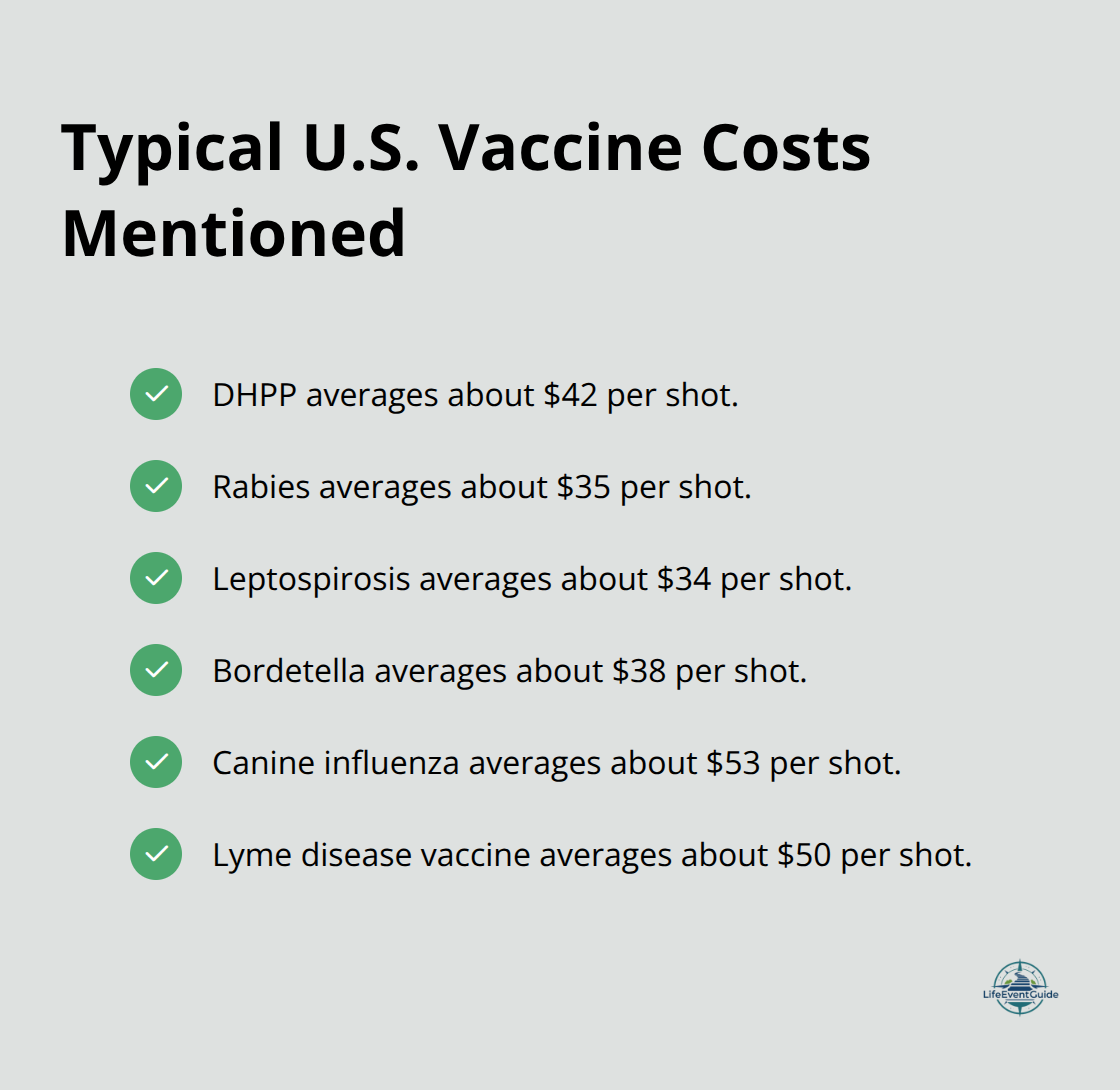
The cost difference between annual and tri-annual protocols matters for your budget: if your core vaccines cost around $42 for DHPP, $35 for rabies, and $34 for leptospirosis, spacing boosters to every three years instead of annually cuts your annual vaccination expense substantially. However, non-core vaccines typically require annual or more frequent boosters to maintain protection, so a dog receiving Bordetella ($38 average), canine influenza ($53 average), or Lyme disease vaccines ($50 average) will have higher ongoing costs regardless of core vaccine frequency. Your veterinarian should tailor the booster schedule based on whether your dog frequents boarding facilities, dog parks, or hiking trails where exposure risk justifies annual non-core boosters, or whether your indoor cat with no outdoor access needs fewer vaccines than an outdoor cat facing feline leukemia exposure.
Tracking Records and Preventing Protection Gaps
Your vaccination records become your most important tracking tool once your pet reaches adulthood, since missing a booster window can require restarting the entire vaccination series. Request written records from your veterinarian at every appointment and store them digitally as backup, because boarding facilities, training classes, and veterinary specialists will ask for proof of current vaccination before accepting your pet. Set phone reminders based on your pet’s booster due dates rather than relying on veterinary clinic reminders alone, since scheduling delays happen frequently and your pet’s protection gap widens the longer you wait after the due date.
Using Veterinary Tools to Stay Current
Some veterinarians use online portals or text reminders to notify you before boosters are due, which helps prevent gaps-ask your clinic whether they offer this service at your next appointment. If you travel with your pet or plan to board them, check vaccination requirements well in advance, since some facilities require boosters within specific timeframes and you cannot compress booster schedules without losing effectiveness. Your veterinarian’s assessment of local disease prevalence should drive your final booster decisions; if your area has documented Lyme disease cases in dogs, skipping the Lyme booster puts your pet at genuine risk, whereas a region with no Lyme presence makes that vaccine optional.
Aligning Wellness Exams with Booster Schedules
Schedule your annual wellness exam to coincide with booster due dates, allowing your veterinarian to assess your pet’s overall health and adjust the vaccination plan if your lifestyle or local disease threats change. This approach consolidates your pet’s care into one visit and ensures your veterinarian reviews your pet’s complete health picture before administering vaccines. Your veterinarian will ask about any changes in your pet’s environment, travel plans, or social activities that might affect which vaccines your pet needs that year.
Final Thoughts
Your pet’s vaccination schedule spans their entire life, starting with those critical first shots at 6 to 8 weeks and continuing through annual or tri-annual boosters in adulthood. Each milestone you hit-completing the initial series by 16 weeks, receiving the one-year booster, and settling into a maintenance schedule-serves a specific purpose in building and maintaining immunity against serious diseases. These dates reflect how your pet’s immune system develops and how long vaccine protection lasts, not arbitrary timing.
Your veterinarian creates a custom pet vaccination schedule by considering your pet’s age, health status, lifestyle, and the diseases present in your geographic area. A dog that spends weekends at dog parks needs different protection than one that stays home, and a cat with outdoor access faces different risks than an indoor cat. Your vet asks the right questions to identify which core and non-core vaccines actually protect your pet from real threats rather than unnecessary ones.
Maintaining long-term health means treating vaccination as an ongoing responsibility, not a one-time event. Accurate records, reminders for booster due dates, and wellness exams around vaccination appointments keep your pet protected without gaps. At LifeEventGuide, we help families navigate major life transitions with clear frameworks and practical guidance-visit our publisher recommendations to explore resources that support you through bringing a pet into your family.
Publisher’s Note: LifeEventGuide is an independent educational publisher. Some articles reference tools or services we recommend to help readers explore options related to major life transitions. Learn more about how we make recommendations here.