

Bringing a new pet home is exciting, but it also means preparing your space with the right supplies. We at LifeEventGuide know that first-time pet owners often feel overwhelmed by how much gear they actually need.
This pet supplies checklist breaks down exactly what matters, from food bowls to toys, so you can focus on settling in with your new companion instead of second-guessing your purchases.
What Your New Pet Actually Needs to Eat and Where to Sleep
Choose the Right Food and Water Bowls
The feeding setup you establish from day one prevents digestive upset and sets your pet on a stable routine. Stainless steel or ceramic bowls outperform plastic because they resist bacteria growth and last longer, making them easier to sanitize between meals. Plastic bowls harbor odors and bacteria even after washing, which matters more than most people realize. Separate your pet’s food and water bowls to prevent contamination, and if you have a larger dog, elevated feeders reduce strain on their neck and joints during meals.
Select Age-Appropriate Food
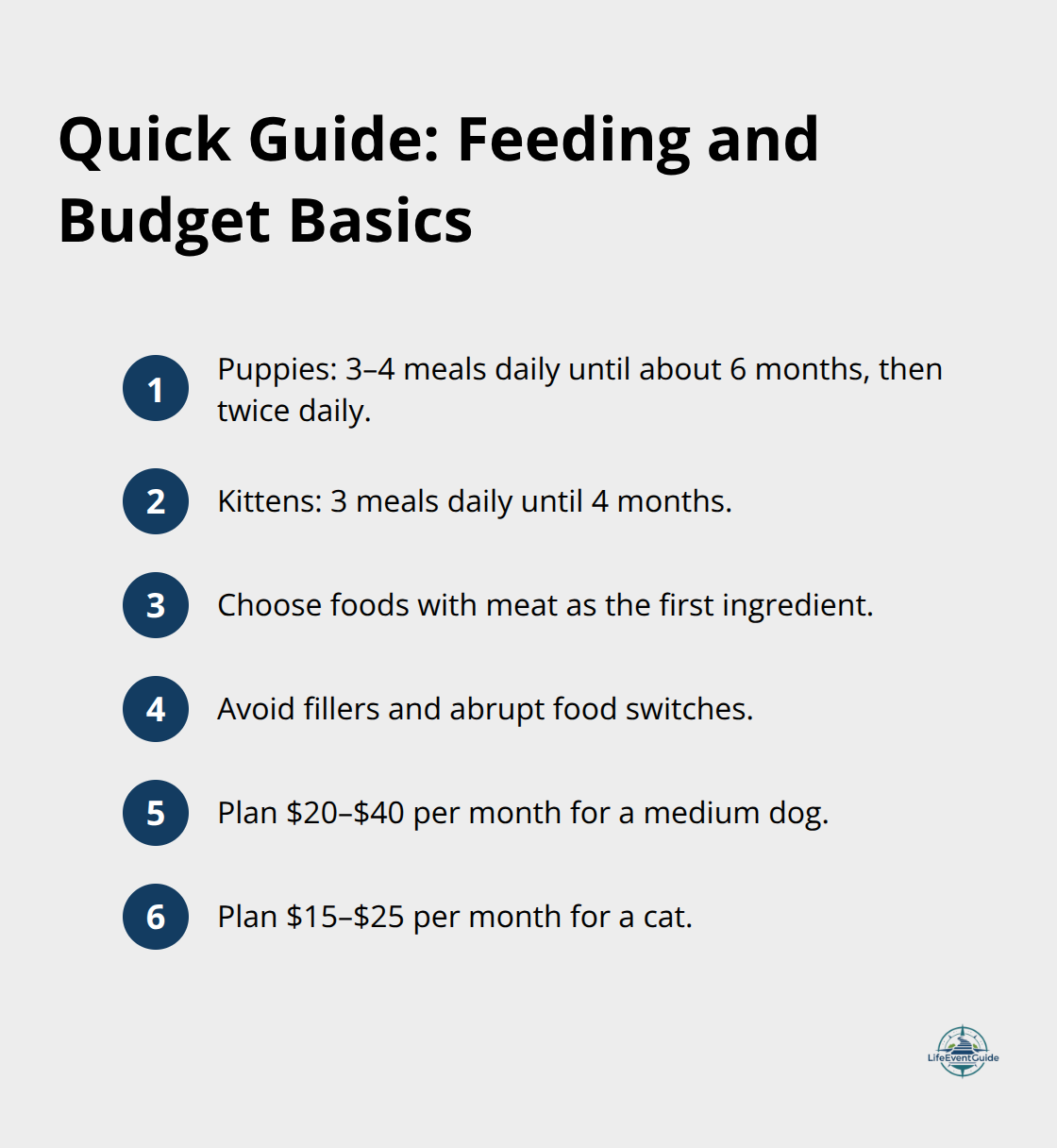
Ask your veterinarian or the pet’s previous caregiver about the specific food type and feeding frequency, since switching foods too quickly causes digestive issues that lead to expensive vet visits. Most puppies need three to four meals daily until around six months old, then transition to twice daily feeding, while kittens typically need three meals a day until four months. Age-appropriate food matters more than brand loyalty-look for foods that list meat as the first ingredient and avoid fillers. Budget roughly 20 to 40 dollars monthly for a medium-sized dog and 15 to 25 dollars for a cat, though premium or specialized diets can cost significantly more.
Create a Safe Sleeping Space
Your new pet needs a dedicated sleeping space that feels safe and separate from activity areas. Choose a comfortable, washable bed placed in a quiet corner away from household traffic, which helps your pet feel secure during adjustment. Many owners buy two identical beds to rotate between washing and drying, keeping one available at all times. Puppies especially benefit from crates lined with blankets, since they naturally seek enclosed spaces and crates aid house-training by creating a designated resting area.
Size Your Crate Correctly
Make sure the crate is large enough for your pet to stand and stretch fully but not so spacious that they can eliminate in one corner and sleep in another. For cats, a quiet bedroom corner or a low-traffic area works well, and some cats prefer elevated beds or perches where they can observe their surroundings. Place bedding away from direct sunlight and heating vents to keep the temperature moderate. Add a blanket or towel that carries your scent to comfort your pet during the first weeks, signaling that this space is part of their new family.
Invest in Proper Setup
The investment in proper bedding and feeding stations, while modest upfront, prevents behavioral problems and health issues that would cost far more to address later. With your pet’s basic nutrition and rest needs covered, you can now focus on the health and safety measures that protect them from injury and illness.
Keeping Your Pet Safe and Healthy
Establish Proper Identification
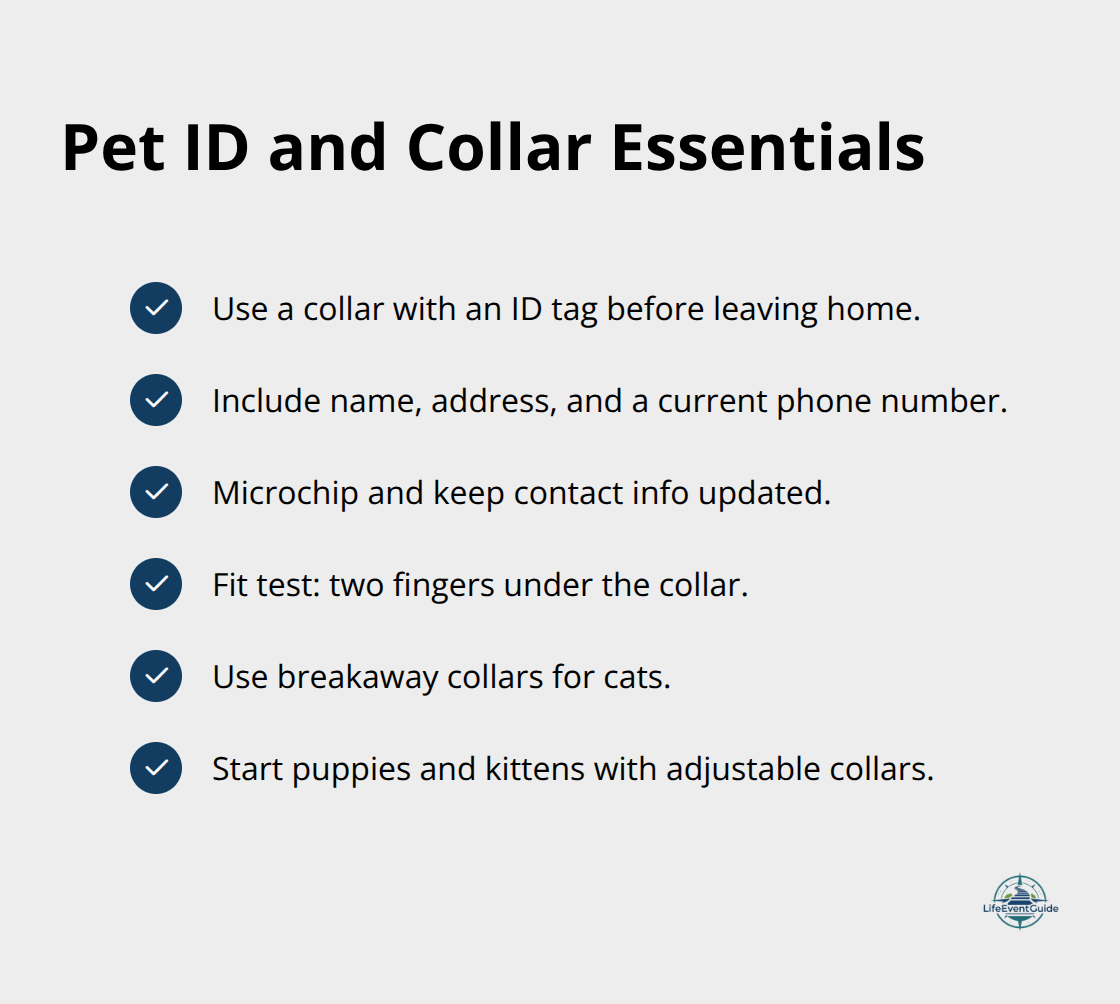
Your pet’s safety starts with identification before they leave home. A collar with an ID tag is non-negotiable, not optional. Under The Control of Dogs Order 1992, you must display your name and address on your dog’s collar tag, and adding a phone number makes reuniting with a lost pet far more likely. Proper identification for lost pets includes both a microchip and a collar name tag with all your dog’s information. Choose a collar that fits snugly enough that you can fit two fingers between it and your pet’s neck-too loose and they slip free, too tight and it restricts breathing.
For puppies and kittens, start with adjustable collars from brands like Li’l Pals that grow with them, then upgrade to a properly fitted collar as they mature. Cats need breakaway collars that release under pressure to prevent strangulation if they catch on something. The ID tag itself should display your current phone number and address in clear, readable text. Replace the tag if your contact information changes, since an outdated number defeats the entire purpose.
Choose the Right Leash and Harness
Pair the collar with a leash suited to your pet’s size and strength-a small cat harness differs completely from a large dog leash. Introduce puppies to harnesses early so they accept them without resistance. For dogs, attach the leash to a secure D-ring on the collar, never to a weak attachment point that could fail during a walk.
Build a First Aid Kit
A pet first aid kit prevents minor injuries from becoming emergencies that require costly vet visits. Stock it with bandages, antiseptic spray, tweezers for splinter removal, and any medications your veterinarian prescribes. Keep enzyme cleaner on hand for accidents, since regular cleaners don’t eliminate odors that encourage repeat incidents in the same spot.
Maintain Regular Grooming
Grooming prevents health problems before they start. Brush your pet regularly based on coat type-daily for long-haired pets, weekly for short-haired ones-and focus on areas behind ears, between toes, and around eyes where mats and tangles hide. Trim nails every three to four weeks, or more often if they click on floors, since overgrown nails cause pain and joint problems.
Light-coated dogs need high-factor sun cream on exposed areas like ears during sunny days. Bathe your pet only when truly dirty, not weekly, using pet-specific shampoo on a non-slip bath mat. Teeth care matters too-use canine toothpaste and a dog-safe toothbrush to brush regularly and prevent gum disease that leads to tooth loss. Safari offers professional-grade grooming tools for at-home use, while Li’l Pals provides puppy and kitten grooming kits sized appropriately for young pets.
Schedule Your First Veterinary Visit
Schedule your first veterinary visit within the first week of bringing your pet home to establish a baseline health record, discuss vaccination schedules, plan for flea and tick prevention, and arrange microchipping with current contact information. With your pet’s health and safety measures in place, you can now focus on the items that keep them mentally stimulated and emotionally comfortable in their new home.
Toys, Scratching Posts, and Why Your Pet’s Mental Health Matters
Provide the Right Toys for Mental Stimulation
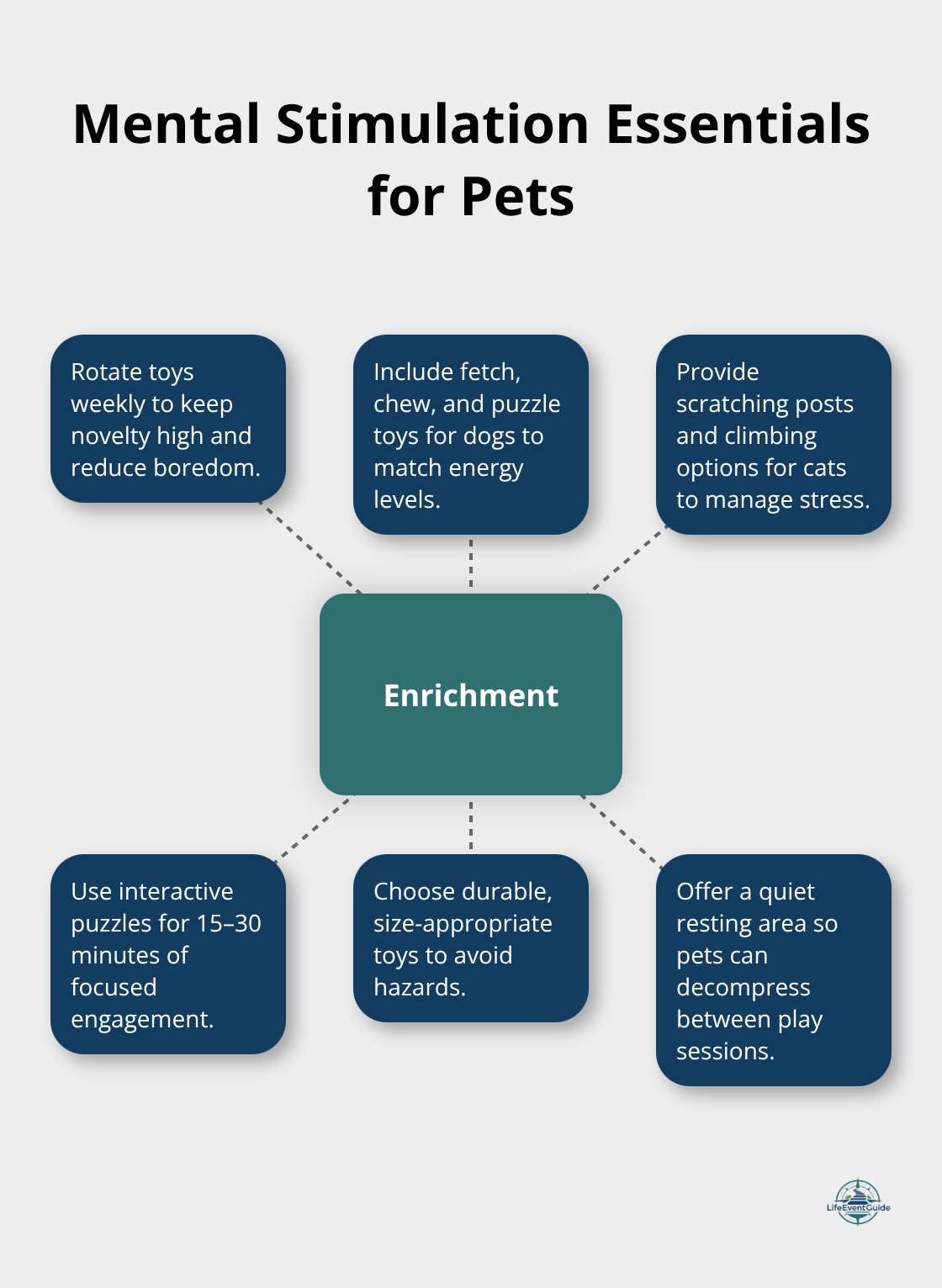
Mental stimulation prevents destructive behavior far more effectively than punishment ever will. A bored pet chews furniture, scratches walls, or knocks things off tables out of pure frustration. Coastal Turbo, Li’l Pals, and Rascals toy collections offer options matched to your pet’s energy level and size, so a low-energy senior cat needs something completely different from a high-drive puppy. Rotate toys weekly to maintain novelty without spending constantly-your pet’s brain responds to variety, not quantity.
For dogs, include fetch toys, chew toys, and interactive puzzle toys that dispense treats when manipulated correctly. Kittens and cats need climbing structures and scratching posts because scratching controls their stress levels and keeps their claws sharp and healthy. If you skip scratching posts, your furniture becomes the target.
Choose Safe Toys and Avoid Hazards
Select toys without small parts that could become choking hazards and avoid sticks or golf balls for dogs, since these cause serious internal injuries when swallowed. For puppies specifically, teething toys ease the discomfort of erupting teeth and redirect the urge to chew away from your belongings. Puppies will chew through soft rubber toys, so supervise plush toys closely and remove them if they start tearing. Hard rubber toys and nylon chews last longer and withstand aggressive chewing.
Use Interactive Toys for Problem-Solving
Interactive puzzle toys keep your pet’s mind engaged for 15 to 30 minutes at a time, which is far more valuable than passive toys they ignore. Some puzzle toys hide treats inside compartments that your pet must figure out how to open, creating problem-solving challenges that mimic natural foraging behavior. This type of engagement satisfies your pet’s instincts while preventing boredom-related destruction.
Position Scratching Posts Strategically
Place scratching posts in high-traffic areas where your cat naturally spends time, not hidden in a corner they never visit. Vertical space matters enormously for cats-a cat tree or wall-mounted shelves let them observe their territory from above, which reduces anxiety significantly. Cats feel safer when they can survey their environment from elevated positions.
Create a Dedicated Resting Space
A comfortable resting area separate from playtime space gives your pet a retreat when they feel overwhelmed or tired. This doesn’t need to be expensive-a quiet corner with a washable bed works perfectly. Many pets feel safest in their crate with the door open, since it becomes their den rather than a punishment space. Provide access to this resting area during the day, not just at night, since rest is essential for growth and emotional regulation.
Final Thoughts
You don’t need to spend a fortune to get pet ownership right, and the essentials form the foundation of responsible care. Proper food and water bowls, age-appropriate nutrition, a safe sleeping space, identification, basic grooming supplies, and toys for mental stimulation prevent behavioral problems, health issues, and the stress that comes from feeling unprepared. Monthly food costs typically range from 15 to 40 dollars depending on your pet, and initial setup costs for bedding, bowls, and basic supplies usually fall between 150 and 300 dollars.
Before your new pet arrives, walk through your home and complete your pet supplies checklist to ensure you have everything in place. Stock food and water bowls, prepare bedding, set up a crate or safe space, gather toys, assemble your first aid kit, locate a veterinarian, and schedule that first appointment within the first week. Remove hazards like toxic plants, secure loose wires, and block access to unsafe areas with baby gates so your pet stays protected from day one.
Getting a pet is a major life transition that benefits from the same thoughtful planning you’d apply to moving or buying a home. We at LifeEventGuide help people navigate significant life changes by breaking them into manageable steps with clear timelines and checklists, and our structured planning framework guides you through defining goals, protecting yourself from common mistakes, and executing your plan calmly. Your new pet is counting on you to create a safe, comfortable home, and with these supplies in place, you’re ready to welcome them with confidence.
Publisher’s Note: LifeEventGuide is an independent educational publisher. Some articles reference tools or services we recommend to help readers explore options related to major life transitions. Learn more about how we make recommendations here.