

Receiving an offer is exciting, but it’s also the moment when clarity matters most. You need to know exactly what you’re agreeing to and whether it truly fits your situation.
We at LifeEventGuide created this offer decision checklist to help you move through this choice with confidence. Whether you’re evaluating a job offer, a purchase agreement, or any major commitment, this guide walks you through the key questions that separate good decisions from ones you’ll regret.
Understanding Your Offer and Terms
Read Every Word of Your Offer Document
Start by reading every word of your offer document, not just the headline numbers. Most people focus on salary or purchase price and miss critical details buried in the fine print. If you’re evaluating a job offer, check whether the salary figure is base pay only or if it includes bonuses, stock awards, or commission structures. Write down each component separately so you can see what you’re actually receiving.
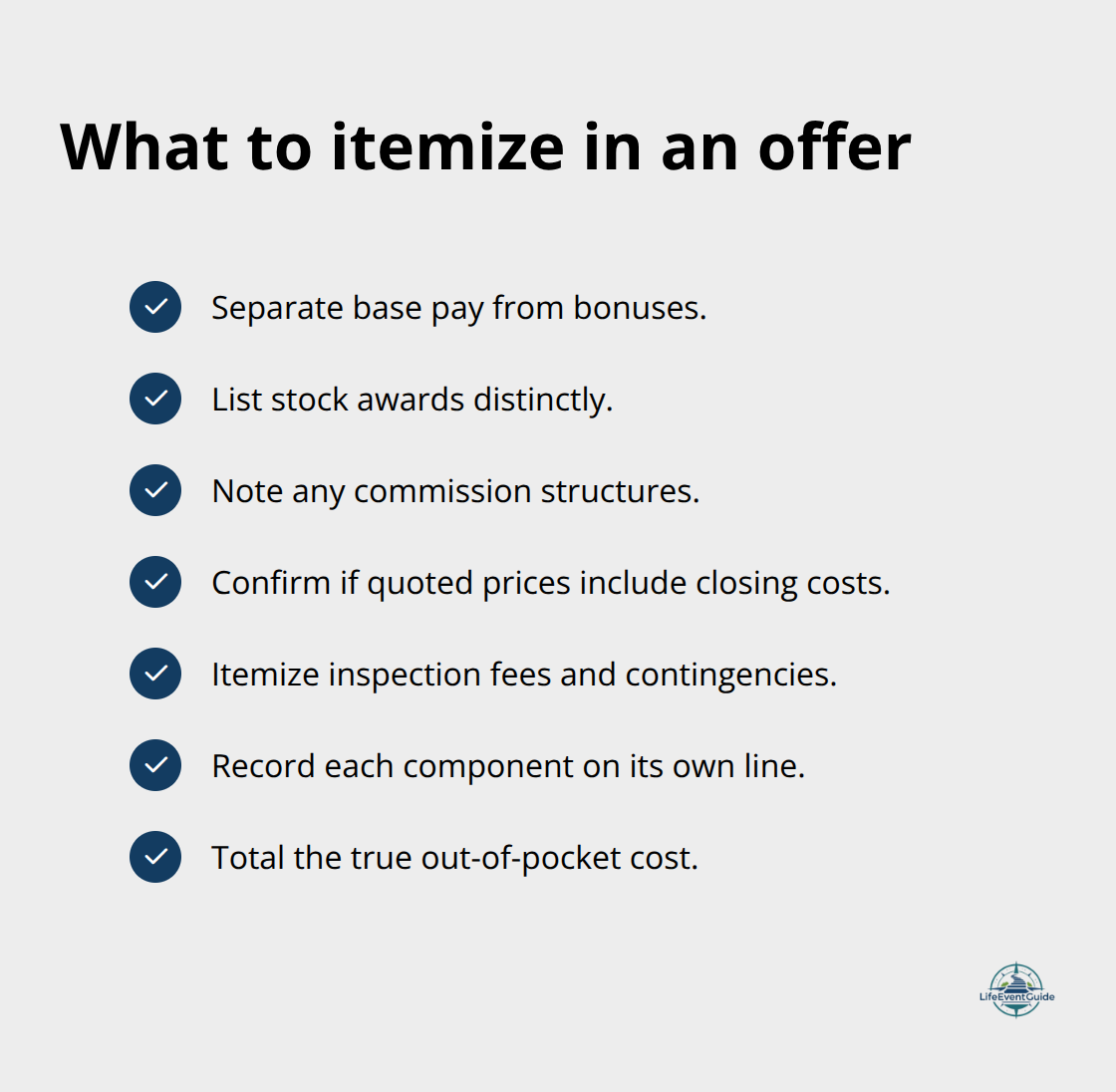
For purchase agreements, verify whether the quoted price includes closing costs, inspection fees, or contingencies. This separation reveals the true financial commitment you face. Small details-like whether the seller covers certain inspections or whether you absorb all closing costs-shift your actual out-of-pocket expense significantly.
Identify What Matters Most to You
Not every offer component has equal weight in your life. If you have young children, flexible work arrangements might matter more than a 5 percent salary bump. If you’re buying a home, property tax rates and insurance costs in your specific area matter far more than national averages.
Factors contributing to job satisfaction include working conditions, compensation, and opportunities for advancement, so if your offer includes manager information, assess that relationship carefully. For salary negotiations, Salary.com and Glassdoor let you benchmark your offer against market rates for your specific role, location, and experience level. If your offer falls below market range, that’s actionable data for negotiation. If it exceeds market range but includes unusual restrictions (like non-compete clauses or travel requirements), weigh whether those trade-offs justify the higher pay.
Calculate the Real Financial Impact
Your financial picture deserves honest analysis before you commit. Calculate the real cost or benefit of the offer against your current situation and your budget. If you’re changing jobs, factor in any gap in income, health insurance costs during transitions, and whether retirement contributions reset.
If you’re making a major purchase, stress-test your budget by setting aside a small amount each month for regular maintenance and unexpected repairs. Consult Salary.com to understand whether benefits like health insurance, retirement matching, and paid time off are competitive for your industry and location. If the offer requires you to relocate, calculate commuting costs, housing costs in the new area, and whether your salary increase actually improves your financial position after those expenses.
Red flags include vague compensation structures where you can’t calculate what you’ll actually earn, or offers that require you to cover costs upfront with promises of reimbursement later. Those situations create financial risk you may not absorb easily. Once you understand what you’re actually receiving and what it costs, you need to measure this offer against the goals and timeline you set before the opportunity arrived.
Evaluating Fit Against Your Goals and Timeline
Compare Your Offer to Your Original Objectives
You set goals before this opportunity arrived. You defined what success looks like, what timeline works for your life, and what trade-offs you will accept. Now you need to measure this specific offer against those original criteria, not against some imaginary perfect scenario. This step separates offers that genuinely improve your situation from ones that just feel new or exciting.
Pull out your original objectives. If you were job hunting, you likely identified must-haves like salary range, location flexibility, or specific skill development. If you were shopping for a home or car, you set parameters around budget, features, and timing.
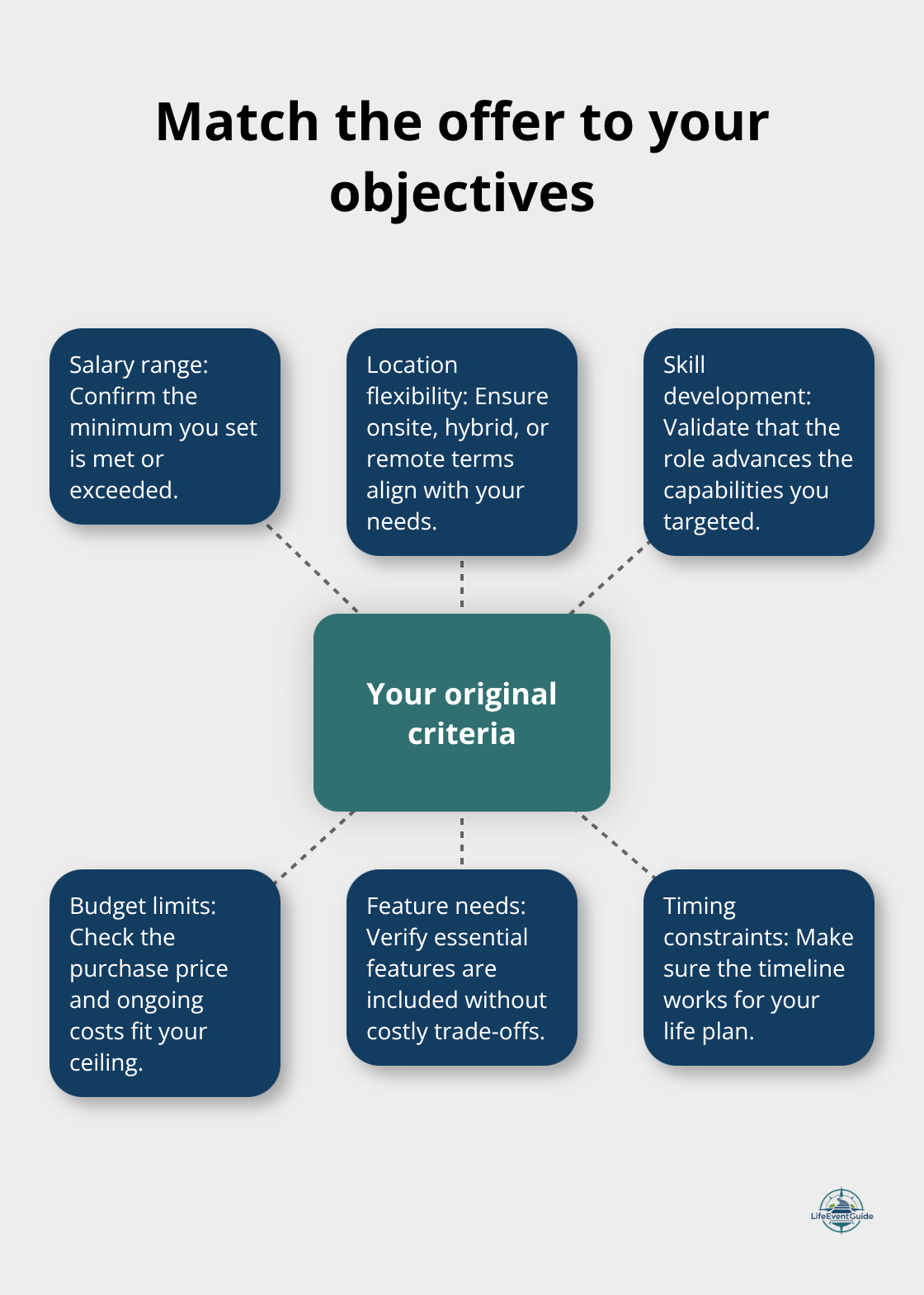
Compare your offer directly to those original criteria. Does it meet your minimum salary threshold, or does it fall short? Does the timeline match your needs, or does it force you to rush? Does it require you to relocate when you specifically wanted to stay put?
Assess Manager Quality and Leadership Fit
Gallup research shows that the person you report to strongly influences job satisfaction. If you set a goal around working with strong leadership and your offer includes manager details, verify that fit carefully. If your offer fails to meet even one of your original non-negotiable criteria, that signals a genuine warning, not something you can rationalize away later.
Calculate Your Actual Monthly Impact
Overlay your budget and schedule reality onto the offer. A higher salary means nothing if it requires a 90-minute commute that costs you $400 monthly in gas and vehicle wear, or if it demands 60-hour work weeks when you committed to protecting family time. Calculate the actual impact on your monthly cash flow and daily schedule.
If you buy property, factor property taxes for your specific location and homeowners insurance costs-these vary dramatically by region and shift your true monthly cost by hundreds of dollars. If you change jobs, account for any income gap during transition, whether your health insurance coverage starts immediately or after a waiting period, and whether you lose or gain retirement matching contributions.
Document Real Numbers on Paper
Write down these real numbers so you see the actual financial and time impact, not the headline offer amount. This prevents the common mistake of accepting something that sounds good in theory but creates genuine strain in practice. Once you understand what the offer truly costs you in time and money, you need to examine whether hidden problems lurk beneath the surface.
Red Flags and Warning Signs
Vague Language Hides Real Problems
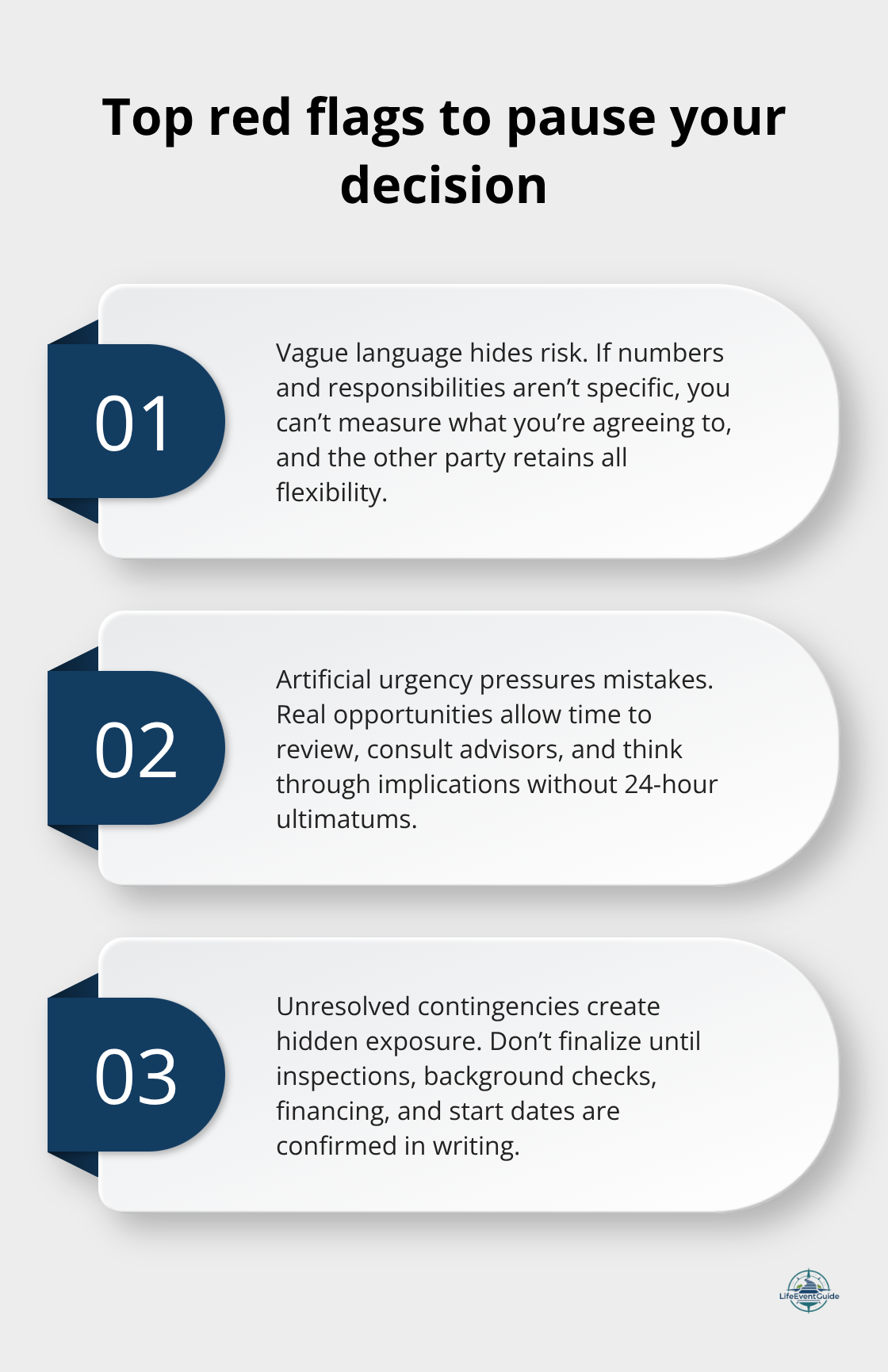
Vague language in your offer document signals trouble ahead. If the compensation structure uses phrases like “competitive salary,” “market rate,” or “based on experience” without stating an actual number, walk away from the negotiation table. You cannot manage what you cannot measure. The same applies to benefits descriptions that promise flexibility without defining what flexibility means, or roles that describe responsibilities as “other duties as assigned.” These phrases create legal cover for the employer or seller while leaving you with no clarity about what you’re actually committing to.
Demand specificity: exact salary figures, defined benefits, explicit job responsibilities, and clear timelines. If someone resists providing these details, that resistance itself tells you whether to proceed. Vague offers protect the other party, not you.
Artificial Urgency Pressures Bad Decisions
Pressure to decide quickly deserves your skepticism. A legitimate offer gives you reasonable time to review terms, consult advisors, and think through implications. If a hiring manager says you must decide within 24 hours, or a real estate agent claims three other buyers are waiting, question the urgency. Real opportunities rarely evaporate overnight, and anyone pushing artificial deadlines prioritizes their timeline over your careful judgment.
You have the right to take several days, consult a lawyer or financial advisor about terms, and discuss the decision with people who know your situation. If the offer withdraws because you asked for reasonable time, you avoided a relationship that would have pressured you constantly.
Unresolved Contingencies Create Hidden Risk
Unresolved contingencies represent a serious category of problems. If you are buying property, never finalize your decision before the inspection happens and you review results. If you are taking a job, do not commit until background checks clear and you confirm start dates, benefits enrollment procedures, and any conditions that could change your actual start.
If your offer depends on contingencies like the seller’s approval, financing approval, or reference checks, those contingencies must resolve before you fully commit. Document in writing what happens if contingencies fail: Does the offer remain valid? Can you back out without penalty? What timeline applies? Offers that leave these questions unanswered create situations where you discover problems too late to protect yourself.
Final Thoughts
You’ve reviewed the terms, measured the offer against your goals, and identified any red flags. Now you make the actual decision-the moment where many people hesitate because they want certainty that doesn’t exist. No offer is perfect, and every choice involves trade-offs. Compare what this offer actually gives you against what you’re giving up, then make a deliberate choice rather than drifting into acceptance by default. Write down the genuine pros and cons of accepting this offer based on real details you’ve gathered, then write down what happens if you decline. Comparing the actual outcomes of yes versus no clarifies which choice genuinely serves your situation better.
Talk through your decision with people who know your life and your priorities (a trusted friend, family member, or advisor can spot blind spots you might miss when emotionally invested in the outcome). They help you reality-test whether you’re rationalizing away legitimate concerns or overthinking a solid opportunity. Their perspective matters because they’re not caught in the emotional pull of the offer itself. Once you decide, document it by writing down what you’re accepting, what conditions matter to you, and what happens next.
We at LifeEventGuide built our offer decision checklist around this exact process to help you move through major decisions with clear structure. Your decision matters because it shapes what comes next.
Publisher’s Note: LifeEventGuide is an independent educational publisher. Some articles reference tools or services we recommend to help readers explore options related to major life transitions. Learn more about how we make recommendations here.