

Choosing where to live shapes your daily life in ways that go far beyond the house itself. The neighborhood you select affects your commute, your safety, your finances, and your family’s opportunities.
We at LifeEventGuide know that picking the right community requires more than a quick drive-by. This neighborhood research checklist walks you through the specific factors that matter most, the tools that make research easier, and the mistakes that catch most people off guard.
What Matters Most When Researching a Neighborhood
The four factors that shape your daily life in a neighborhood are school quality, safety, commute time, and housing costs. These aren’t equally important to everyone, but they determine whether you’ll feel at home or regret your move within six months.
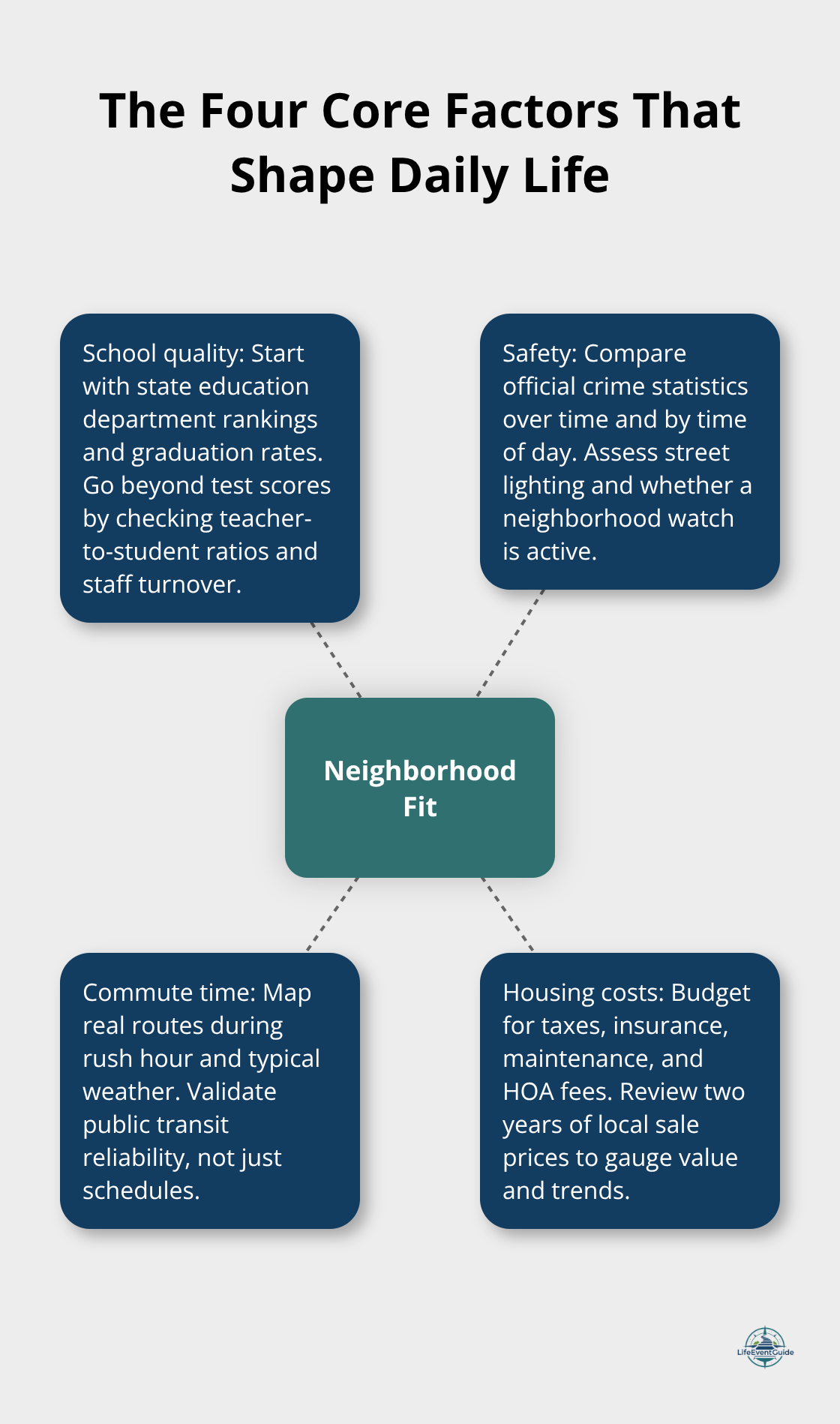
School quality and property values influence your family’s future, so start by checking your state’s education department for official district rankings and graduation rates. Minnesota publishes detailed data through the Minnesota Report Card, which includes graduation rates, test scores, and special education resources. Beyond test scores, look at teacher-to-student ratios and staff turnover rates, which reveal whether a school is stable and well-resourced. Contact the school directly or reach out to the PTA president for unfiltered insights about school culture and parent involvement.
Safety Data Tells the Real Story
Safety data comes from safety data from official crime statistics and local law enforcement reports, not from neighborhood rumors or real estate agent reassurances. Compare crime rates across neighborhoods you’re considering, and recognize that crime patterns shift by season and time of day. Walk the neighborhood at different hours-morning, afternoon, and evening-to see how safe streets actually feel when you’re there. Check for street lighting quality and whether an active neighborhood watch exists, both of which meaningfully reduce crime and improve perceived safety.
Commute Time Affects Your Weekly Hours
Commute time matters more than most people admit because it eats hours from your week and affects family stress levels. Map your actual routes from home to work, school, and other places you visit regularly, accounting for rush-hour delays and weather. If you rely on public transit, research actual reliability data rather than just published schedules; transit delays are common and can derail your entire day.
Housing Costs Go Beyond the Mortgage
Housing costs include the mortgage or rent, property taxes, insurance, maintenance, and HOA fees if applicable. Many people overlook HOA fees, which can add hundreds to your monthly payment and restrict how you use your property. Pull public property records to see actual sales prices in the neighborhood over the past two years, which reveals real market value and appreciation trends. Cost of living extends beyond housing to groceries, utilities, and childcare; neighborhoods with lower home prices sometimes have higher costs for everyday services.
Use Data to Narrow Your Choices
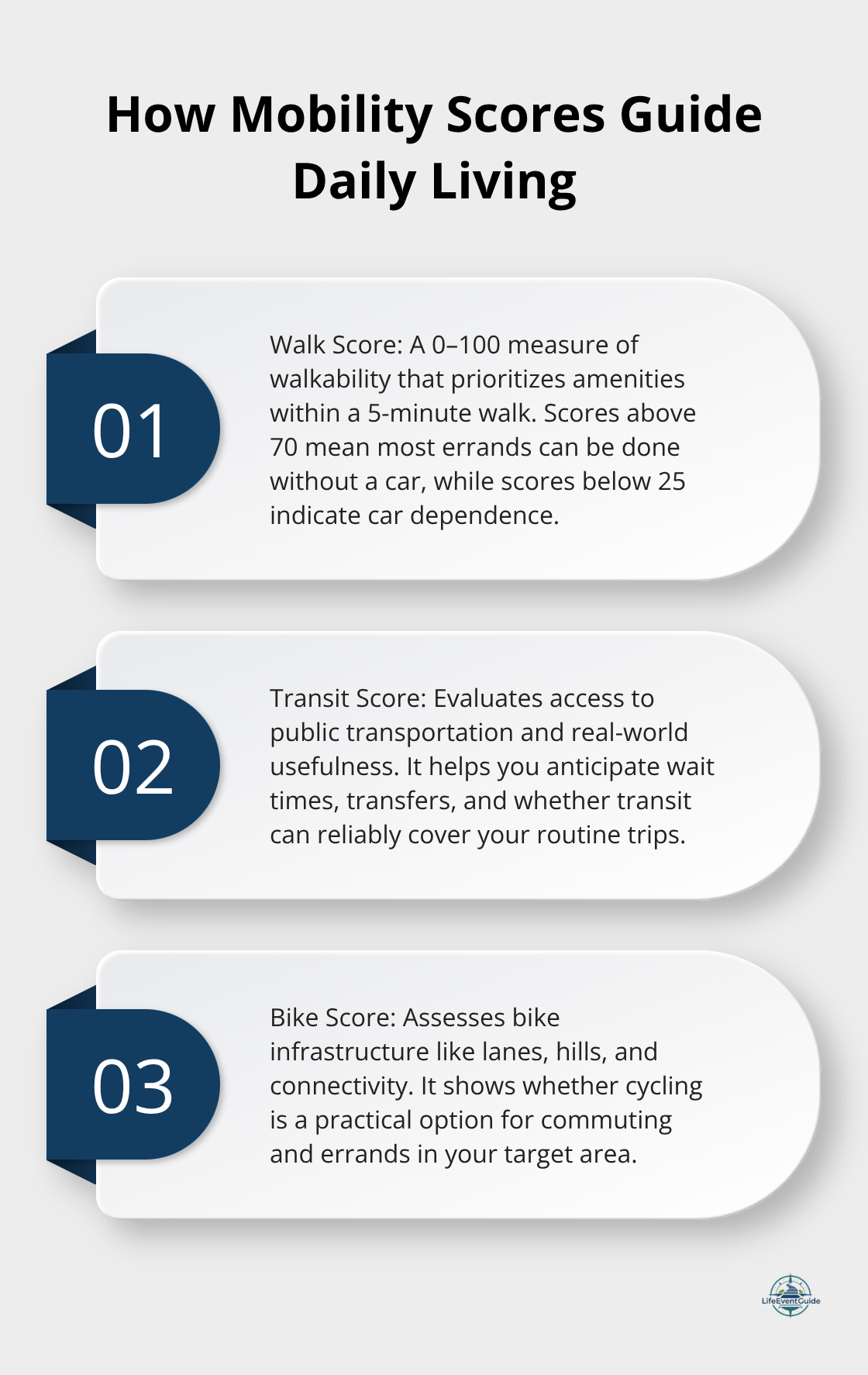
NeighborhoodScout analyzes over 200 neighborhood characteristics across six categories and more than 600 data elements, offering address-level insights that help you avoid stereotypes and hearsay. The platform provides crime ratings, school performance scores, and price forecasts specific to each address, which is far more useful than general neighborhood impressions. Walk Score measures walkability on a scale of 0 to 100, with maximum points awarded for amenities within a 5-minute walk of your home. A Walk Score above 70 means you can accomplish most errands without a car, while a score below 25 means you’ll need a vehicle for nearly everything. Transit Score and Bike Score work similarly, measuring public transportation access and biking infrastructure so you understand your actual mobility options. Combine these three scores to get a clear picture of how you’ll move around the neighborhood daily.
Verify Information in Person
Online research gets you 70 percent of the way there, but neighborhoods feel different when you’re actually standing on the street. Visit at least twice-once during the week and once on a weekend-and spend time in areas where you’ll actually spend time, like near schools, grocery stores, or your workplace. Talk to residents about their experience, ask about neighborhood changes they’ve seen, and notice whether people seem engaged with their community or isolated.
Pay attention to sidewalk conditions, whether storefronts are occupied or vacant, and whether parks look maintained. These observations tell you whether the neighborhood is stable and well-cared-for or showing signs of decline. Once you’ve gathered this data and walked the streets yourself, you’re ready to identify the specific mistakes that catch most people off guard-and how to avoid them.
Where to Find Reliable Neighborhood Data
NeighborhoodScout Provides Address-Level Insights
NeighborhoodScout delivers address-level analytics rather than broad neighborhood generalizations. The platform analyzes over 200 characteristics across crime, demographics, housing, school performance, and real estate forecasts, giving you specific data for the exact address you’re considering instead of vague impressions. You pay $30 per report or subscribe for ongoing access at roughly $112.50 per month. This investment pays for itself when you avoid buying in a neighborhood with hidden crime spikes or declining property values.
Walk Score, Transit Score, and Bike Score Show Your Mobility
Walk Score measures walkability on a 0–100 scale with maximum points for amenities within a 5-minute walk, meaning a score above 70 lets you handle most errands without a car while anything below 25 locks you into car dependency. Transit Score and Bike Score work the same way for public transportation and cycling infrastructure. These three scores together tell you whether you can realistically walk to the grocery store, bike to work, or reach transit within reasonable distance.
Public Records Reveal Real Market Trends
Local real estate databases and public property records show actual sales prices from the past two years, revealing genuine market trends instead of asking prices that sellers hope to receive. Most counties maintain free online property records where you can pull sale prices, property taxes, and HOA fees for specific addresses. This data exposes whether a neighborhood is appreciating steadily or stalling, which matters enormously for your financial future. Local community websites, neighborhood Facebook groups, and Nextdoor accounts give you unfiltered resident perspectives that online databases cannot provide. People on these platforms complain freely about noise, problematic landlords, flooding issues, and neighborhood changes, which means you learn about real problems before you commit. However, treat these sources as conversation starters rather than definitive truth because one vocal resident’s experience may not reflect the broader neighborhood.
In-Person Visits Confirm What Data Cannot Show
Visit the neighborhood at different times-morning during school drop-off, midday on a weekday, and evening on a weekend-because the same street feels completely different depending on when you’re there. Morning visits show you traffic congestion and school activity. Midday visits reveal whether the neighborhood feels active or abandoned. Evening visits expose whether streets are well-lit and whether people are outside or locked inside their homes. Talk directly to residents you encounter and ask what they wish they’d known before moving there. Notice whether they seem satisfied or counting down to their next move. These in-person visits confirm whether the data you found online actually matches reality on the ground, and they prepare you to spot the specific mistakes that most people make when they rush through neighborhood selection.
What Actually Changes a Neighborhood During Your Research Timeline
Most people spend three to six weeks researching neighborhoods before making an offer, but neighborhoods shift constantly in ways that data from last month won’t capture. The mistake isn’t gathering information-it’s treating that information as static. A neighborhood that looked stable in online records might have just announced a major development project, or a thriving commercial corridor might lose tenants month by month. Walk the neighborhood at morning rush hour to see real congestion levels rather than relying on traffic maps that show averages. Morning visits also reveal whether school drop-off chaos affects residential streets or whether traffic flows smoothly, which determines your actual daily experience.
Visit at Different Times to See Real Conditions
Visit again on a Saturday afternoon when families are outside, then return on a weeknight around 7 PM to see how the same streets feel after dark. This matters enormously because a neighborhood can feel active and safe at 2 PM but isolating and poorly lit by 9 PM. Talk to residents during each visit and ask specifically what surprised them after moving in-not whether they like it generally, but what caught them off guard. You’ll hear about seasonal flooding that isn’t visible in dry months, noise from nearby bars that only starts on weekends, or parking problems that emerge only during winter. These details won’t appear in crime statistics or Walk Score calculations.
Hidden Costs Destroy Neighborhood Satisfaction
Hidden costs destroy neighborhood satisfaction far more often than crime rates or school rankings. Hidden costs in HOA fees typically run $200 to $300 monthly for single-family homes and often increase annually, which means a fee today becomes significantly higher in five years-money that never showed up in your initial mortgage calculation. Pull the HOA rules and reserve studies from public records, which reveal whether the association is properly funded or headed toward special assessments that hit owners with substantial bills. Property taxes vary dramatically within the same city depending on local school funding formulas and municipal services, so two homes with identical prices can have annual tax bills differing by $2,000 or more. Check your county assessor’s website for actual tax rates on specific properties you’re considering, not just state averages.
Long-Term Development Plans Reshape Neighborhoods
Long-term development plans reshape neighborhoods completely-a vacant lot near your potential home might become a shopping center, a highway expansion, or affordable housing that brings dramatic changes to traffic and character. Contact your city planning department and ask about zoning changes, approved developments, and infrastructure projects planned for the next five to ten years. These conversations take thirty minutes but prevent the shock of discovering a major development announced after you’ve already committed.
Declining Retail Signals Neighborhood Trouble
Neighborhoods with declining retail also signal trouble because empty storefronts mean fewer services, reduced foot traffic, and lower property values. Drive the main commercial streets in your target neighborhood and count vacant spaces, then check back three months later. If vacancies are growing, that neighborhood is losing economic vitality and residents are likely moving out, which affects property appreciation and community stability.
Final Thoughts
You’ve now gathered crime data, walked the streets at different times, checked school ratings, and verified commute times. You’ve pulled property records, reviewed HOA fees, and talked to residents about what surprised them after moving. This neighborhood research checklist gives you the foundation to make a decision that actually fits your life, not just a house that looks good in photos.
The final step is confirming that your top choice aligns with how you actually want to live. A neighborhood with excellent schools means nothing if you spend three hours daily commuting, and a walkable area with great restaurants doesn’t matter if the schools are struggling and your family’s education is your priority. Return to the factors that matter most to you personally, then measure your top candidates against those specific priorities-you’ll likely find that one neighborhood consistently ranks highest across your must-haves.
Visit your top choice one more time at a time of day when you’ll actually be there most often, and trust the work you’ve invested in this neighborhood research checklist. We at LifeEventGuide understand that decisions this significant deserve a structured approach, which is why our Decide-Protect-Execute-Review framework walks you through major life changes with clear checklists and timelines so you avoid common mistakes and move forward with confidence.
Publisher’s Note: LifeEventGuide is an independent educational publisher. Some articles reference tools or services we recommend to help readers explore options related to major life transitions. Learn more about how we make recommendations here.