

Moving day can feel overwhelming when you’re juggling dozens of tasks at once. A solid moving day checklist keeps you organized and prevents the last-minute scramble that catches most people off guard.
Here at LifeEventGuide, we’ve seen how a structured approach transforms a stressful move into a manageable process. This guide walks you through every phase, from weeks before you pack your first box to settling into your new place.
Getting Started: The First Weeks Matter Most
Build Your Timeline and Budget
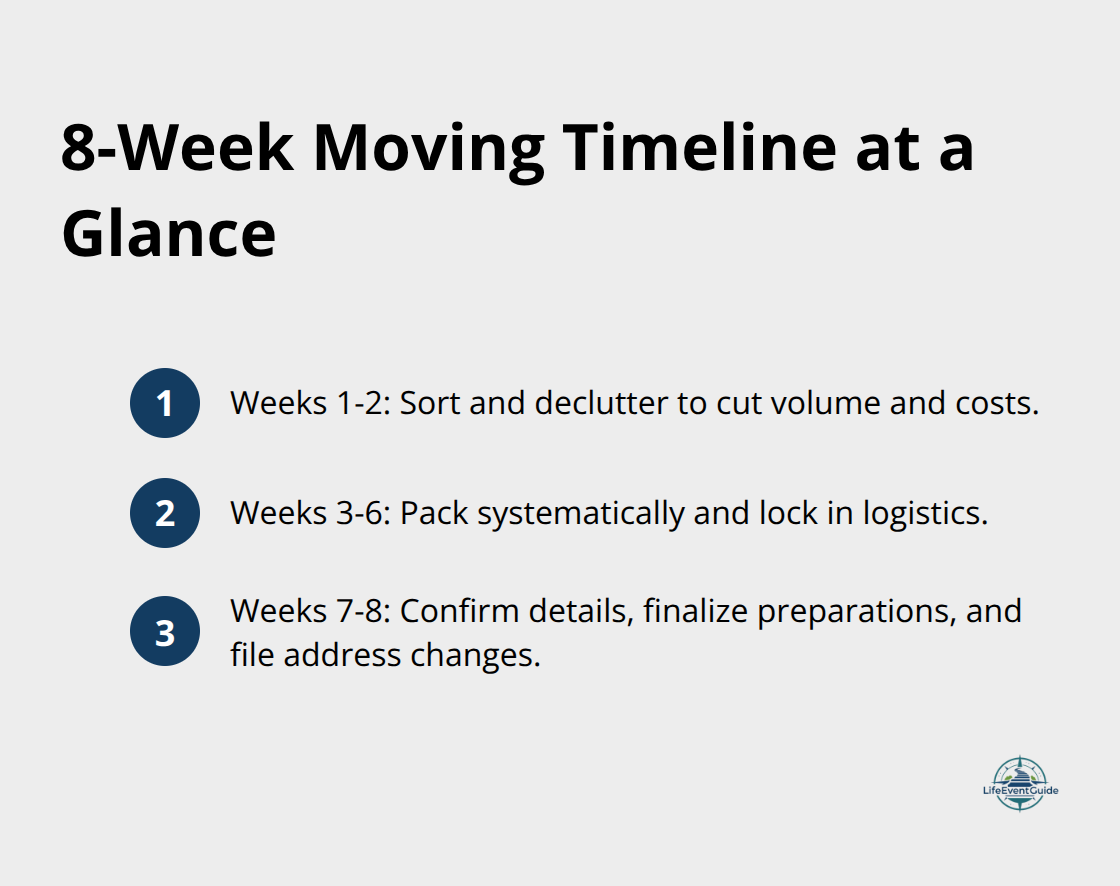
Starting your move weeks in advance separates organized transitions from chaotic ones. Work backward from your move date to create a realistic timeline. If you’re moving in eight weeks, allocate the first two weeks to sorting and decluttering, the next four to packing and logistics, and the final two to final preparations and address changes. This pacing prevents the cramped feeling of last-minute decisions.
Your timeline must include specific dates for contacting moving companies, changing your address with the USPS, and notifying utilities. Many people underestimate how long these administrative tasks take-transferring medical records, coordinating with your old and new utility providers, and updating your address across banks, insurance companies, and subscription services typically requires two to four weeks of scattered effort.
Build your budget around three main categories: moving services, supplies, and setup costs at your new home. Request on-site estimates from at least three moving companies and verify each company’s USDOT number with the U.S. Department of Transportation to confirm registration and safety standards. Professional movers typically cost between $1,400 and $9,700 for a full-service move, though prices vary based on distance and volume. If you’re renting a truck instead, factor in fuel, insurance, and equipment rental fees. Add 15 to 20 percent to your initial estimate as a buffer for unexpected costs.
Sort Your Belongings and Measure Your New Space
Decluttering before packing reduces moving expenses because costs increase with volume. Sort your belongings into three categories: keep, donate, and discard. Items you haven’t used in two years rarely deserve space in your new home.
Measure doorways and rooms in your new place to verify that large furniture will actually fit. This prevents the frustration of discovering a couch won’t navigate through a hallway or a bed won’t fit through a bedroom door. Once you’ve decided what travels with you, finalize your moving company choice and get written confirmation of the date, costs, and specific services included. The written estimate protects both you and the mover by establishing clear expectations.
Secure Your Moving Company and Declare Valuables
If you have items worth over $100 per pound, declare them to your mover and consider additional insurance coverage, as standard policies have per-item limits. Confirm all arrangements two weeks before moving day and provide your mover with complete old and new addresses plus multiple contact numbers. This level of detail prevents day-of confusion and missed appointments. With your timeline locked in and your mover confirmed, you can now focus on the physical work of preparing your home and items for transport.
Packing and Logistics: Getting the Details Right
Pack Room by Room with a Consistent System
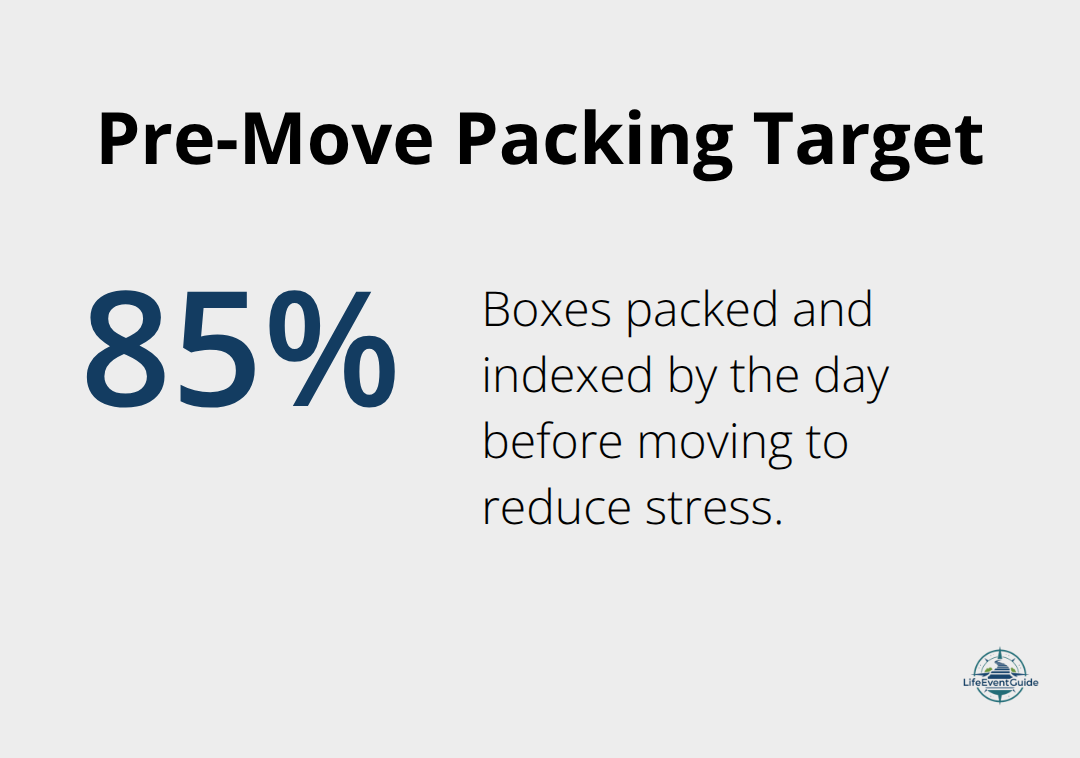
Packing room by room with a consistent system prevents items from scattering across boxes without clear destinations. Start with spaces you use least frequently-guest bedrooms, storage closets, seasonal decorations-so daily disruptions stay minimal. Try to have roughly 85 percent of your boxes packed and indexed by the day before moving rather than chasing perfection in those final chaotic hours. Create a single numbering system across all rooms and maintain one master box index that logs contents and destinations. This approach takes discipline but saves hours on moving day when locating a specific item could otherwise mean unpacking dozens of boxes.
Number each box with a permanent marker on both the top and side so contents remain visible regardless of stacking position. When packing room by room with a consistent system, place heavier boxes at the bottom to stabilize the load and avoid crushing lighter items, with lighter, more delicate items on top. Dish barrels and wardrobe boxes, which you can order when requesting moving company estimates six weeks before your move, protect fragile kitchen items and hanging clothes far better than improvised solutions.
Label Boxes and Create a Color-Coded System
Labeling extends beyond writing contents on boxes. Create a color-coded system using brightly colored labels or markers to assign each room a specific color, then apply that color to every box destined for that space. Movers move faster and more accurately when they can spot a red label means master bedroom without reading individual labels. This visual system reduces confusion and accelerates the unloading process significantly.
Update Utilities and Address Information
Update utilities and address changes during weeks three through six of your timeline to avoid service gaps. Contact your electricity, gas, water, phone, and internet providers simultaneously rather than staggering calls, since coordination schedules installation around your moving date. Set up new accounts before canceling old ones to prevent lapses, especially for internet service.
The USPS Change of Address form processes within three to five business days, so submit it four weeks before moving. Simultaneously notify banks, credit card companies, insurance providers, subscription services, and the IRS using a simple spreadsheet tracking which entities you’ve contacted and when. Medical records transfers typically require written release forms and take two to four weeks, so initiate these requests at the six-week mark. Forward mail from your old address to your new one for at least six months to catch payments and notices that arrive late.
With your boxes labeled, your utilities coordinated, and your address changes submitted, you’ve completed the groundwork that prevents moving day surprises. The final preparation phase focuses on the items and documents that require special handling during the actual move.
What to Protect on Moving Day
Secure Your Most Valuable Possessions
The 24 hours surrounding your move require a different mindset than the weeks of preparation that came before. While movers handle the bulk of your possessions, certain items demand your personal attention and control. Keep all important documents, valuables, and irreplaceable items with you rather than on the moving truck. This means your jewelry, passports, birth certificates, insurance policies, medical records, and any items worth more than $100 per pound travel in your vehicle or stay in your direct possession.
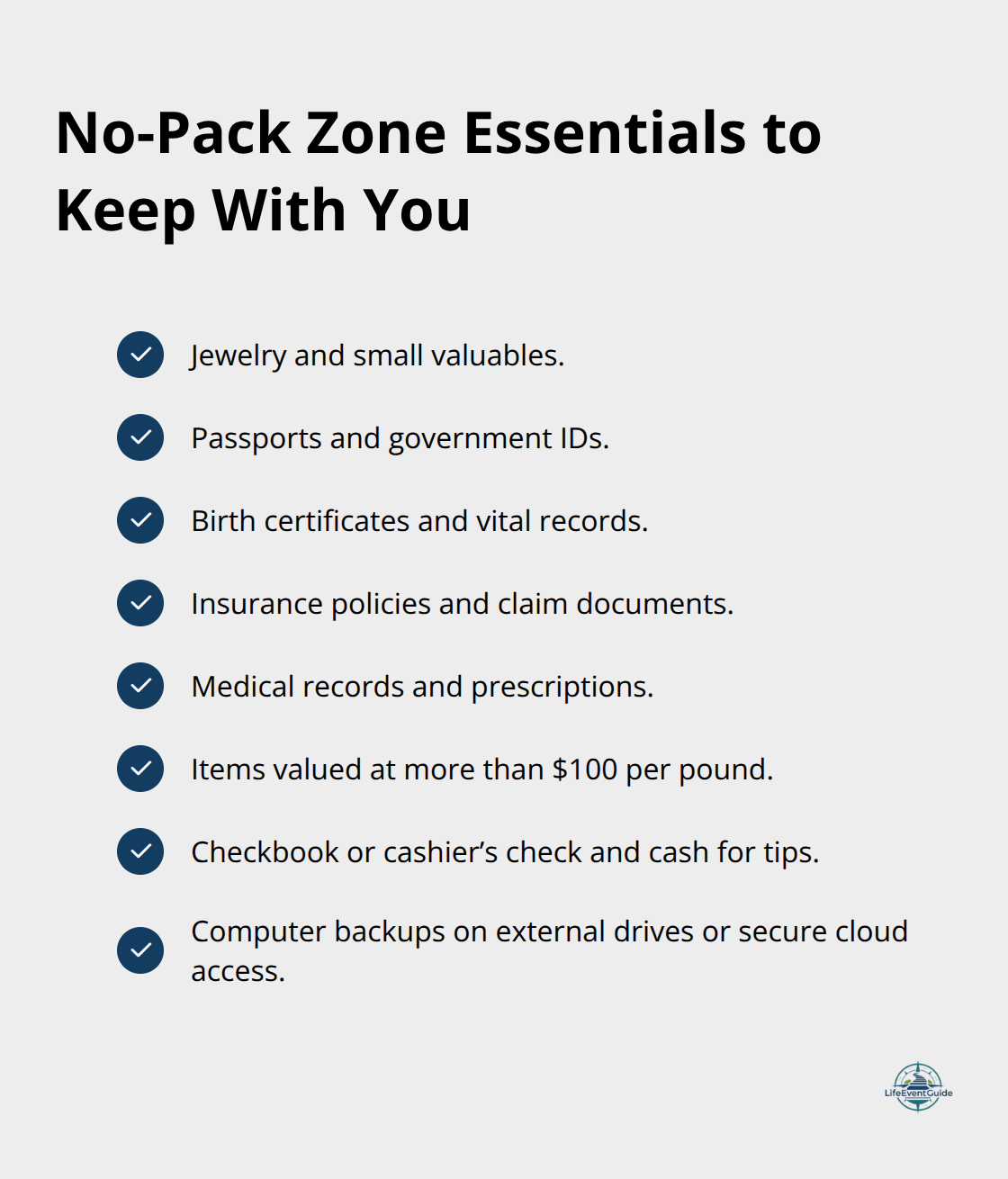
Create a secure case or lockbox for jewelry and store computer backups on external drives or cloud storage that you transport yourself. Your checkbook must remain accessible and unpacked-you’ll need it to pay the movers with a cashier’s check or money order on arrival, plus cash for tips ranging from 10% to 20%, up to $100 per mover.
Establish a No-Pack Zone
Place your documents and valuables in a designated No-Pack Zone, clearly labeled so movers understand they should skip this area entirely. Position your No-Pack Zone in an out-of-the-way spot like a closet or your vehicle to prevent accidental packing. This physical boundary protects irreplaceable items from ending up on the truck and gives you peace of mind during the controlled chaos of moving day.
Complete Your Final Walkthrough
Before the moving truck arrives, conduct a final walkthrough of your old home with a checklist focused on overlooked spaces. Check inside kitchen cabinets, bathroom drawers, closets, and storage areas where items hide during regular packing. Verify that garage shelves, attic spaces, and basement corners are empty. Take photos or video of empty rooms and closets to document the condition of your old home for your security deposit or sale records.
Verify Your Mover’s Credentials and Confirm Logistics
Confirm your moving company’s arrival time the day before by calling with your complete contact number and verifying the USDOT number on their truck matches the number on your written estimate-this simple verification prevents unlicensed operators from entering your home. Have your moving company’s contact information and your new address readily available on moving day so you can provide clear directions and confirm estimated arrival times. Arrange your payment method in advance and keep cash accessible rather than scrambling to find an ATM when the truck arrives.
Final Thoughts
Your moving day checklist extends beyond the truck’s departure from your old home. Set up your bedroom first so you have a comfortable place to sleep, then tackle bathrooms and the kitchen to restore basic comfort faster than unpacking every box in sequence. Resist the urge to organize everything perfectly during the first 48 hours-focus instead on making your space livable, and you can arrange decorative items and fine-tune storage later when you’re not exhausted.
Inspect items for damage as boxes come off the truck and document any issues immediately with photos of broken items or dents on furniture before the movers leave. File a damage claim with your moving company within the timeframe specified in your contract (typically 30 days), as this documentation protects your claim and creates a clear record of what happened during transport. Address changes with financial institutions and subscriptions require attention within the first two weeks of moving to prevent billing problems and missed notifications.
We at LifeEventGuide recognize that moving involves dozens of interconnected tasks across weeks and months. Our moving day checklist and event-specific resources help you navigate major life transitions with clarity and confidence, reducing the risk of overlooked details and unnecessary stress.
Publisher’s Note: LifeEventGuide is an independent educational publisher. Some articles reference tools or services we recommend to help readers explore options related to major life transitions. Learn more about how we make recommendations here.