

Moving is one of life’s biggest expenses, and most people underestimate the true cost. Hidden fees, seasonal pricing, and unexpected charges can quickly drain your budget if you’re not prepared.
We at LifeEventGuide created this moving budget checklist to help you identify every cost upfront and plan accordingly. With the right strategy, you can move confidently without financial surprises.
Hidden Moving Costs You Need to Know About
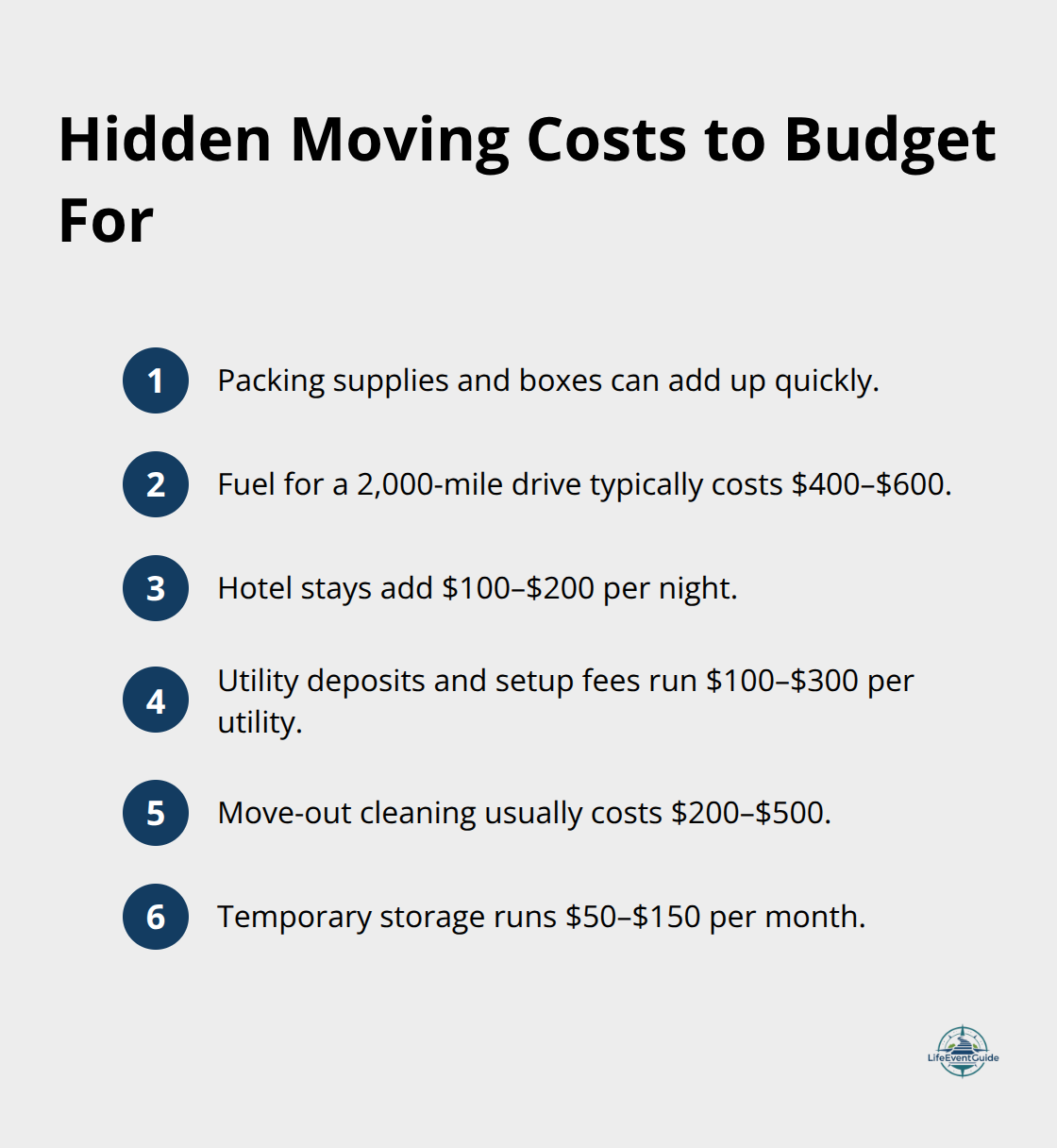
Most people focus on mover fees and truck rentals, then get blindsided by everything else. Packing supplies alone can cost $300 to $500 for a typical household, and that’s before you add boxes, tape, bubble wrap, and protective materials.
Packing Supplies and Materials
Standard boxes typically cost $3 to $7 each, wardrobe boxes run $10 to $15, and dish packs cost $5 to $10. A two-bedroom home needs 40 to 50 boxes minimum. The smarter approach is to source free or cheap boxes from local classifieds, grocery stores, or retailers before you spend a dime. Reusing household items like towels, linens, and newspapers as packing material cuts costs significantly.
Travel and Accommodation Expenses
Travel and accommodation expenses often shock people who move long-distance. If you drive cross-country, fuel costs add up fast-a 2,000-mile move in a standard vehicle costs $400 to $600 in gas alone. Add hotel stays along the way, and you’ll pay another $100 to $200 per night. If you fly to your new location, factor in airfare, baggage fees, airport transportation, and meals during the transition. Many people forget to budget for meals during moving day and the unpacking phase when your kitchen sits packed away.
Utility Setup Fees and Deposits
Utility setup fees and deposits hit different depending on where you move. Water, electricity, gas, and internet all require deposits and reconnection fees that typically range from $100 to $300 per utility. Some states require deposits upfront; others charge reconnection fees. Internet installation costs $50 to $150, and cable setup adds another $50 to $100. Call your new utility providers at least two weeks before moving day to understand their fee structure and deposit requirements. Disconnection fees at your old address also apply-expect $50 to $150 total across all utilities.
Professional house cleaning is another hidden cost people skip until they realize their landlord or the home inspection requires it. Cleaning services for move-out typically cost $200 to $500 depending on home size and condition. If you’re buying a home, factor in closing costs and inspections. If you’re renting, protect your security deposit by budgeting for professional cleaning rather than risking deductions. Vehicle registration and license updates in your new state vary wildly-check your new state’s DMV website immediately after moving to understand timelines and fees. One final hidden cost: temporary storage if your move doesn’t align perfectly with your lease dates. Month-to-month storage units cost $50 to $150 monthly, and you might need one for just a few weeks during transition.
These hidden costs add hundreds or even thousands to your total moving expense. Once you identify them, you can build a realistic budget that accounts for every category and prevents financial surprises on moving day.
Build Your Moving Budget With Real Numbers
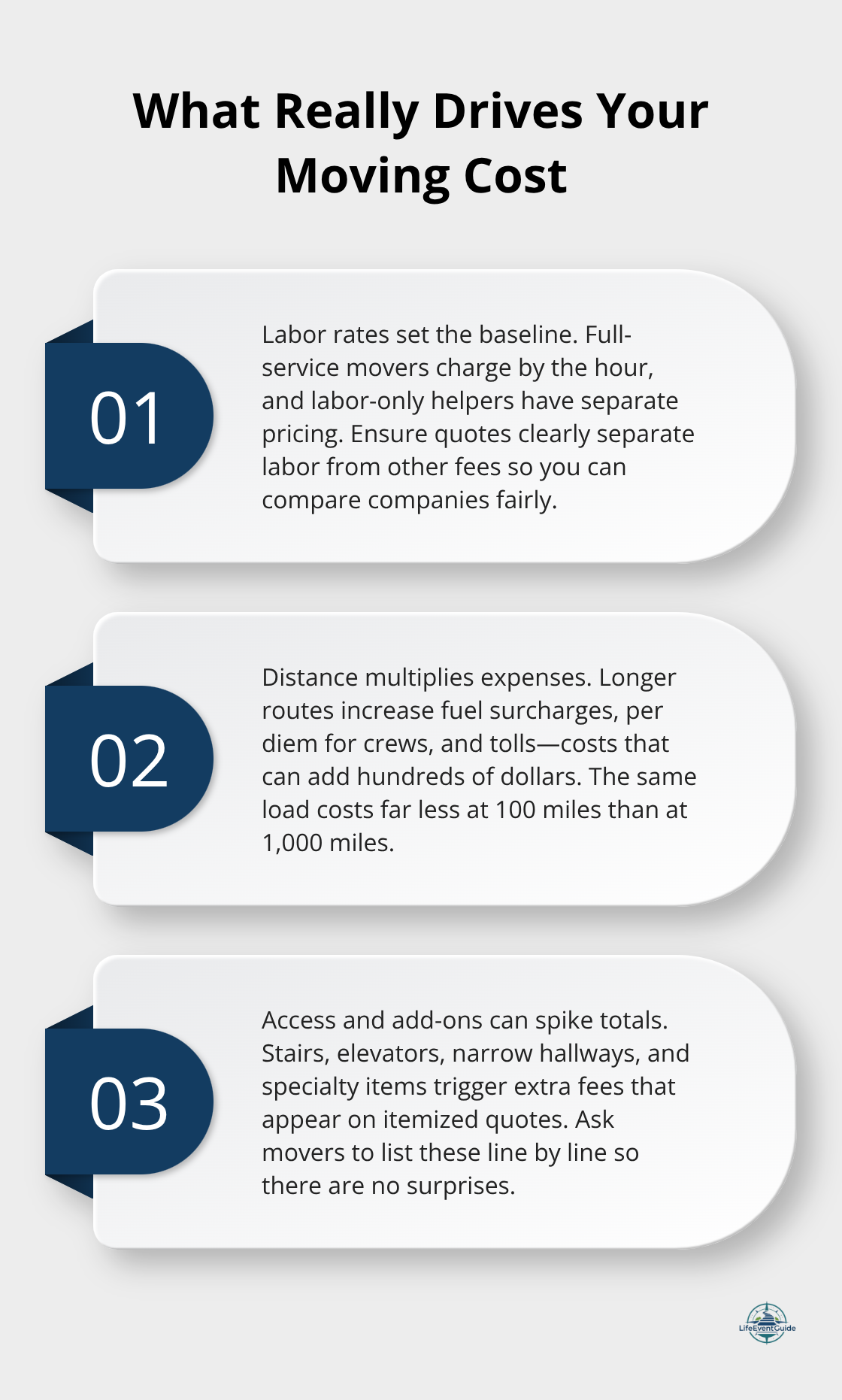
The gap between what people think their move costs and what it actually costs often reaches thousands of dollars. Start by obtaining concrete quotes from moving companies-not estimates, but actual written quotes after an in-person inspection. According to HomeAdvisor, the national average cost to hire local movers sits around $1,705, with local moves ranging from $880 to $2,561. Long-distance moves average around $4,582 nationally, with typical ranges between $2,417 and $6,863. These numbers matter because they form your baseline. Obtain at least three separate quotes from different moving companies before making any decision. Each quote should itemize labor costs, truck fees, packing services, and any add-on charges like stairs, elevators, or specialty item handling.
Understanding Labor and Distance Costs
Full-service movers charge $108–$125 per hour for local moves, while labor-only helpers cost around $135 for two people. Distance multiplies this cost significantly-longer moves incur higher fuel surcharges, per diem costs for crews, and tolls that add hundreds to your total. A 100-mile move costs far less than a 1,000-mile move, even with the same volume of belongings. Your written quotes should break down these components separately so you understand exactly where your money goes.
When to Move Matters More Than You Think
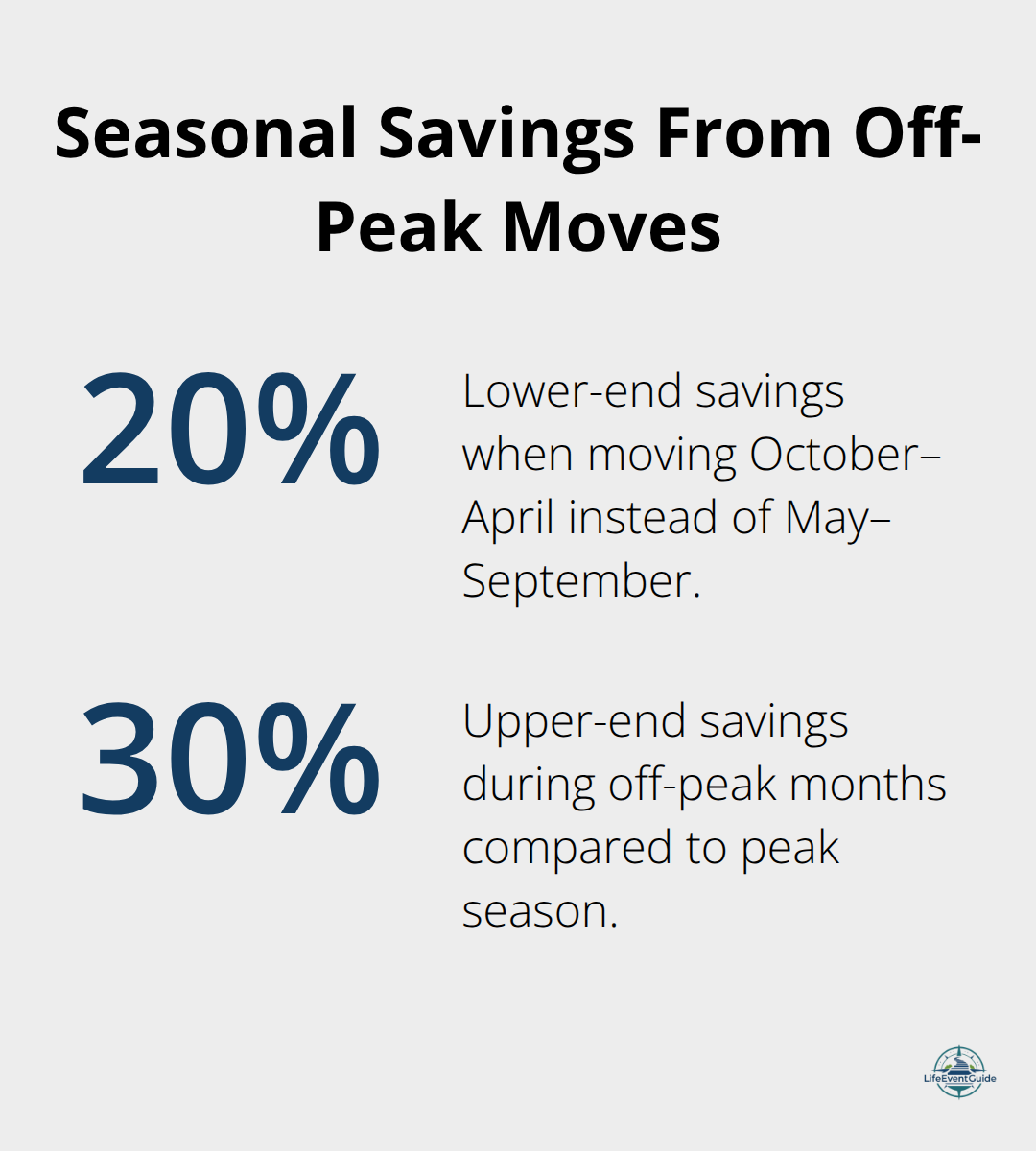
Seasonal pricing creates wild cost swings that most people ignore. Moving during peak season (May through September) costs substantially more than moving during off-peak months (October through April). Spring and summer demand drives prices up because families prefer moving when children are out of school and weather cooperates. If you move mid-week or mid-month instead of weekends or month-end, you’ll access significantly lower rates and better availability. Scheduling your move on a Tuesday or Wednesday in November costs less than a Saturday in June for the identical distance and home size. This timing strategy alone can save you 20 to 30 percent on moving company fees.
Planning for the Unexpected
Build a financial cushion of at least 10 to 15 percent above your estimated moving costs to cover unexpected charges that surface during the move itself. Heavy furniture requiring extra labor, multiple flights of stairs, narrow hallways that need furniture disassembly, or restricted building access can trigger additional fees ranging from $100 to $500. Long-distance moves often require overnight hotel stays for crews, which the moving company may pass along to you. Storage needs that extend beyond your original timeline add $50 to $150 monthly per unit. The contingency fund protects you from financial stress when reality diverges from your initial estimate-and it almost always does.
With your baseline costs identified and your contingency fund in place, you’re ready to explore the specific strategies that reduce your total moving expense without sacrificing quality or safety.
How to Cut Moving Costs Without Sacrificing Quality
Get Written Quotes From Multiple Movers
Obtain written quotes from at least three different moving companies after an in-person inspection of your home. This step matters because phone estimates often miss critical details-stairs, narrow hallways, elevator access restrictions, or specialty items like pianos that trigger additional fees. Local moves range from $880 to $2,560, but your actual cost depends entirely on what movers discover during their inspection. Request that each quote itemize labor, truck fees, packing services, and any add-on charges separately so you can compare apples to apples. Many moving companies inflate quotes knowing customers will negotiate, so obtaining multiple quotes gives you leverage to request discounts or ask competitors to match lower bids.
Reduce Volume Through Strategic Decluttering
Decluttering before you pack directly reduces the volume movers must transport, which lowers labor hours and truck size requirements. A household that ships 40 boxes costs significantly less than one shipping 60 boxes, even with identical distance. Sort through belongings room by room and sell items on Facebook Marketplace, Craigslist, or Goodwill-this strategy recovers cash while reducing moving volume simultaneously. The financial math is straightforward: every box you eliminate saves approximately $10 to $20 in moving costs, plus you avoid paying to unpack and store items you don’t need in your new home.
Schedule Your Move During Off-Peak Seasons
Seasonal timing amplifies savings far beyond what most people expect. Moving during off-peak months from October through April costs 20 to 30 percent less than peak season moves from May through September, according to industry data. A move scheduled for a Tuesday in November might cost $1,200, while the identical move on a Saturday in June costs $1,600 or more. Mid-month moves also access lower rates than month-end moves when everyone relocates simultaneously.
Try scheduling your move on a weekday in winter-this represents the single most effective cost reduction strategy available to you.
Final Thoughts
Your moving budget checklist now covers every major expense category, from packing supplies and utility deposits to seasonal pricing and contingency funds. The difference between a move that drains your finances and one that stays on track comes down to preparation and execution. Scheduling your move during off-peak seasons saves 20 to 30 percent compared to peak summer months, while decluttering reduces labor costs by approximately $10 to $20 per box eliminated.
Start by contacting utility providers at least two weeks before moving day to understand deposits and reconnection fees. Request in-person inspections from moving companies and collect written quotes that itemize every charge separately. Build a contingency fund of 10 to 15 percent above your estimated costs to cover unexpected fees that surface during the move itself.
Track every expense as it occurs so you understand where your money actually goes and can identify savings opportunities for future moves. We at LifeEventGuide help you navigate major life transitions like moving through event-specific checklists and planning frameworks that define goals, timelines, budgets, and key decisions upfront. With your moving budget checklist complete and your strategy in place, you’re ready to execute your move with confidence and financial control.
Publisher’s Note: LifeEventGuide is an independent educational publisher. Some articles reference tools or services we recommend to help readers explore options related to major life transitions. Learn more about how we make recommendations here.