

Bringing a new pet into your home is exciting, but it also requires thoughtful preparation. The first few days matter most-how you handle them shapes your pet’s confidence and comfort for months to come.
At LifeEventGuide, we’ve created this guide to walk you through introducing your pet to home step by step. You’ll learn how to prepare your space, manage those critical first days, and build a strong bond with your new companion.
Preparing Your Home Before Your Pet Arrives
Identify and Remove Hazards
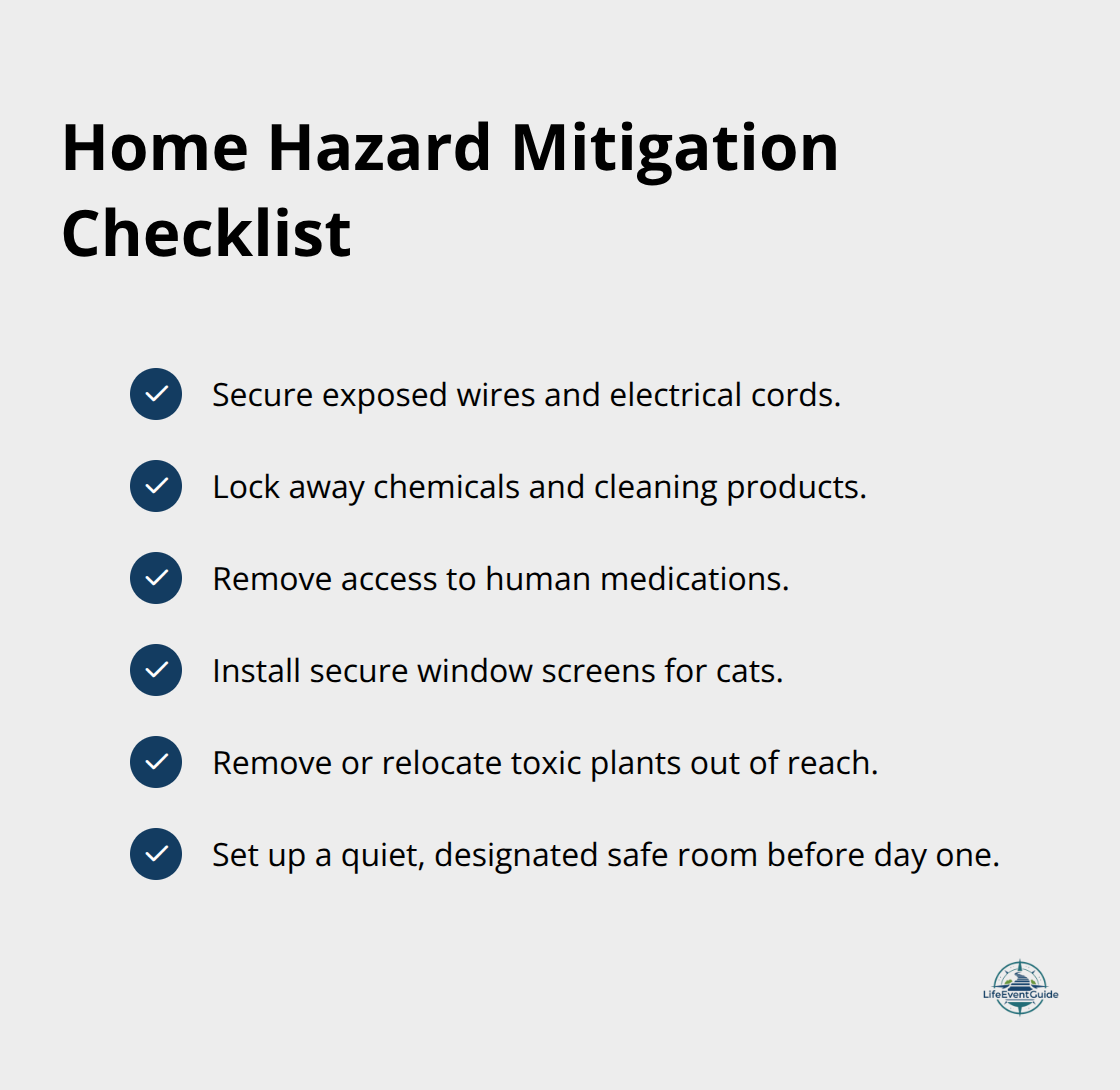
Your home needs to be ready before your pet walks through the door. Start by walking through each room and identify hazards your pet could encounter. Electrical cords, toxic plants like lilies and sago palms, cleaning products stored under sinks, and small objects that could be swallowed all pose real risks. If you have a puppy, assume it will chew anything within reach-secure wires, remove access to medications, and store chemicals in locked cabinets. For cats, ensure windows have secure screens and that no toxic plants sit on accessible shelves.
Research from the MDPI Animals journal shows that many adopted dogs arrive with incomplete behavioral histories, so you won’t know every trigger or sensitivity your pet might have. This means your home setup must account for unknowns.
Create a Safe Initial Space
Designate one small, quiet room as your pet’s initial space-a bedroom, bathroom, or laundry room works well. This room becomes their safe zone during the transition and prevents overwhelm from having the entire house available at once. Set up stainless steel bowls in this space for food and water; these materials reduce bacteria buildup compared to plastic. Place a comfortable, washable bed in a corner where your pet can retreat. A crate or carrier serves double duty as both a safe retreat and a training tool. Stock this room with toys appropriate to your pet’s age, but avoid anything with small parts that could be choking hazards. Keep grooming essentials nearby-a brush suited to your pet’s coat, nail clippers, and pet-safe shampoo.
For cats specifically, set up a litter box with scoopable litter in a low-sided design that allows easy access, positioned away from their food and water bowls. Install a scratching post in this initial space to redirect natural scratching instincts before furniture gets damaged.
Set Boundaries Throughout Your Home
For the rest of your home, create clear boundaries. Use baby gates to block off rooms you’re not ready to open yet, and apply double-sided tape to furniture or surfaces you want to protect. This isn’t temporary-adopters frequently implement safety boundaries long-term, according to MDPI Animals research, especially in the first three to six months when trust is still developing.
Gather Supplies and Plan for Family Interactions
Gather supplies before day one arrives: a collar with an ID tag for dogs, a leash for walks, age-appropriate food (consult your veterinarian about the best diet for your specific pet), and pet-friendly cleaning products for accidents. If you have children, set up a plan for supervising interactions from day one. Teach children to approach slowly, avoid direct eye contact, and never disturb your pet while eating or sleeping. Schedule a free initial physical exam with a veterinarian soon after arrival to catch any health issues early and establish baseline care.
With your home prepared and supplies in place, you’re ready to welcome your new companion. The first days at home will test your preparation, but they’ll also reveal how your pet responds to their new environment-information that shapes everything you do next.
The First Days: Creating Calm and Routine
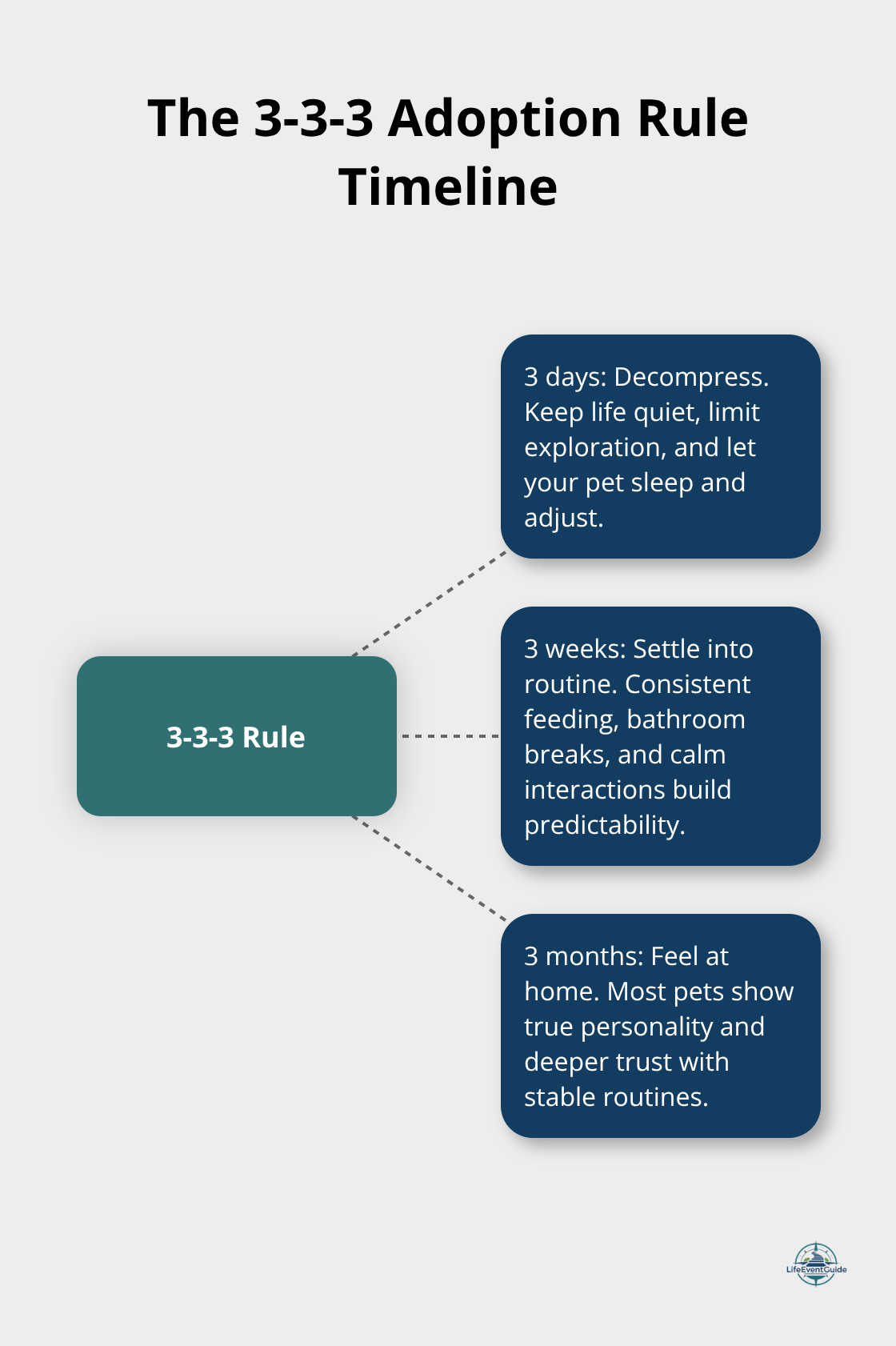
Your pet’s first week at home determines whether they feel safe or anxious during the months ahead. Research shows most pets take time to trust their new owners, but that trust begins in those initial days when your pet learns whether this new home is predictable and secure. The 3-3-3 rule, widely used by shelters and adoption organizations, breaks this timeline into phases: three days to decompress, three weeks to settle into routine, and three months to feel truly at home. This means your job in week one is not to socialize your pet or teach commands-it’s to create an environment so calm and predictable that your pet’s nervous system can begin to relax.
Keep Your Pet in Their Safe Room
Keep your new companion in that initial safe room you prepared, even if they seem ready to explore. Resist the urge to show them around the house or invite friends over to meet them. Your pet is already processing enormous change: new smells, new people, new sounds, new territory. Add structure by feeding at the same time each day, taking dogs outside on a consistent schedule for bathroom breaks, and maintaining quiet during evening hours.
If you have a dog, take them out first thing in the morning, after meals, before bedtime, and every two to three hours in between-accidents are normal and expected during this transition. Use the same door each time and the same outdoor spot when possible; this repetition helps your pet understand the routine and builds confidence.
Let Your Pet Set the Pace for Interaction
Keep interactions low-pressure during these first days. Let your pet approach you rather than pursuing them for cuddles or play. Some pets hide for several days, and that’s healthy-they regulate their stress response through withdrawal. Avoid forcing interaction or picking up your pet unless necessary. Reward calm behavior with treats and gentle praise, but don’t overwhelm them with enthusiasm. If you have children, supervise every interaction and keep sessions brief.
Anticipate Behavioral Changes
Expect behavioral surprises during this phase. According to research from Powell et al. published in Scientific Reports, seven to twenty percent of adopted shelter dogs are returned after adoption, with a large share returning in the first month, often because adopters didn’t anticipate how their pet would actually behave in a home setting. Your dog might be fearful, destructive, or surprisingly different from their shelter personality. This is normal. Shelter environments mask true behavior, so your pet’s actual temperament emerges once they feel safe enough to show it.
Begin Gradual Exploration
After three to five days, when your pet seems calmer and eats regularly, start short, leashed room tours of your home, always returning to the safe room afterward. This gradual exposure prevents overwhelm while satisfying curiosity. Watch your pet’s body language closely-a tucked tail, flattened ears, or reluctance to move forward means slow down. Your patience now prevents months of anxiety later. As your pet grows more comfortable with their immediate surroundings, the next phase of bonding can truly begin, shifting from survival mode to connection.
Building Trust Through Consistency and Patience
Trust forms through repetition, predictability, and your pet learning that you do what you say you’ll do. McGreevy’s 2009 research on human-dog bonds identifies consistency as the cement holding relationships together. This means feeding at exactly the same time each morning, walking the same route, using the same commands, and responding to your pet’s signals the same way every time. Your pet’s brain maps patterns right now. When you feed at 7 a.m. every day, your pet’s body prepares for food at 6:55 a.m. When you always use the back door for bathroom breaks, your pet stops checking the front door. When you stay calm during accidents or mistakes, your pet learns failure isn’t catastrophic.
Establish Three Core Daily Routines
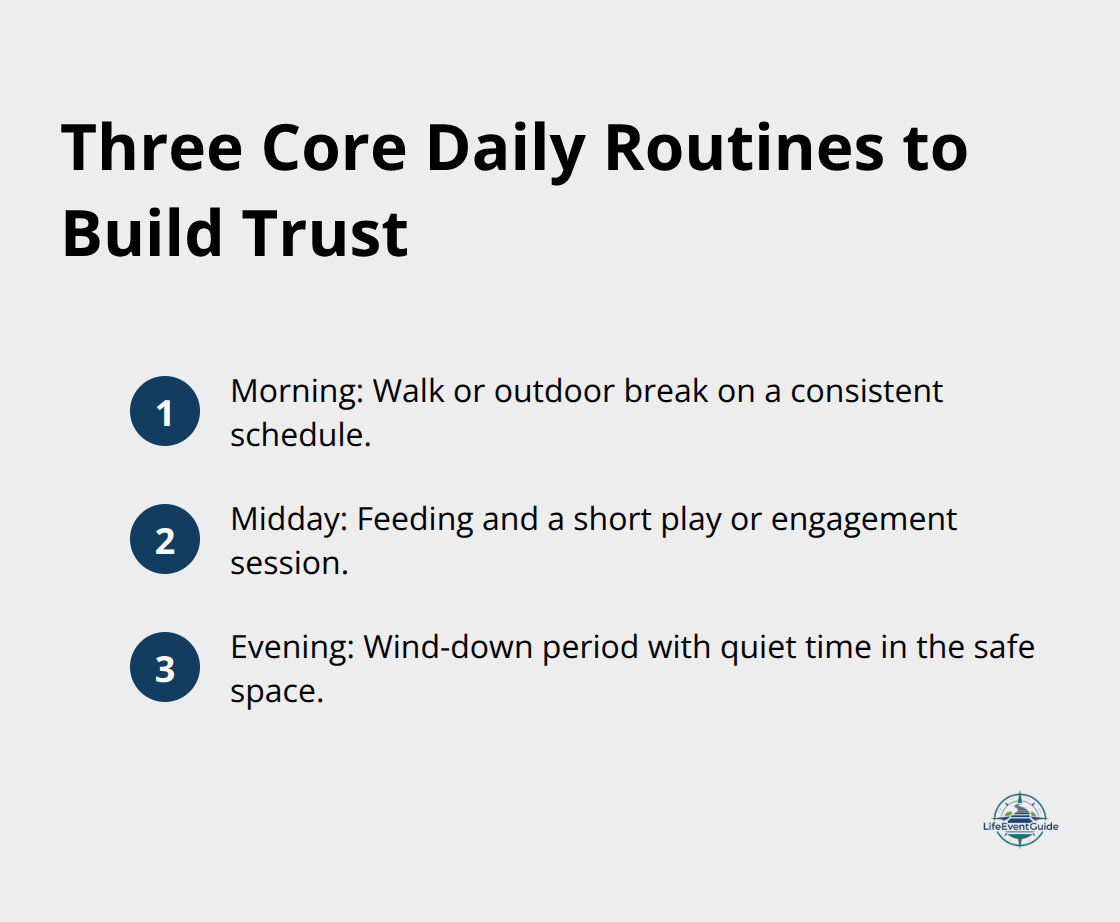
Start with three non-negotiable daily routines: a morning walk or outdoor break, a midday feeding and play session, and an evening wind-down period with quiet time in their safe space. Keep these times within thirty minutes of each other every single day for at least the first three months.
Your pet’s nervous system calibrates to this rhythm, and stress naturally decreases as their body learns what comes next. This consistency matters more than any treat or toy.
Use Specific, Timely Rewards
Positive reinforcement works, but timing and specificity matter more than frequency. When your dog sits calmly instead of jumping, reward that exact moment with a treat or praise within two seconds. When your cat uses the litter box instead of the carpet, mark that success immediately. Generic praise like “good dog” teaches nothing; specific feedback like “yes, gentle” when your pet touches your hand softly teaches them exactly which behavior you want repeated. MDPI Animals research shows many adopters train dogs themselves using shelter guidance rather than hiring professionals, which works fine when you focus on marking the exact behavior you want.
Avoid rewarding fearful behavior with excessive comfort-this can actually reinforce anxiety. If your dog trembles during thunderstorms and you rush over with treats and coddling, you’ve taught them that trembling produces rewards. Instead, act normally, offer a treat only if they approach you, and reward calm behavior when it appears.
Manage Multi-Pet Introductions Carefully
For multi-pet homes, feed animals separately in different rooms for at least the first month. This removes competition stress and lets each pet feel secure during meals. Introduce your new pet to resident pets only when your new arrival shows calm, relaxed body language around the closed door where the other pet lives. Start with scent swapping-exchange bedding between pets-before any face-to-face meeting.
When introductions happen, keep them short, supervised, and in neutral territory like a hallway rather than in one pet’s established space. Watch for stiff postures, raised hackles, or intense staring, and separate immediately if tension rises. Multiple short, successful meetings build positive associations far better than one long, stressful encounter.
Set Clear Boundaries and Enforce Them Consistently
Research from MDPI Animals shows adopters frequently implement long-term safety boundaries, especially around feeding areas and sleeping spaces. Set these boundaries now and maintain them consistently. If your dog sleeps on the bed, that’s fine, but decide this now and stick with it-don’t allow it sometimes and forbid it other times. If cats aren’t allowed on kitchen counters, use deterrents consistently every single day.
Children should follow identical rules with your pet as you do. If one family member allows jumping on the couch and another doesn’t, your pet becomes confused and trust deteriorates. Have a family meeting before your pet arrives and establish three house rules everyone follows without exception. This clarity prevents conflict and helps your pet feel genuinely safe, which is the actual foundation of bonding.
Final Thoughts
The first three months of introducing a pet to home matter far more than most people realize. Within the first week, your pet should eat regularly and show calm behavior in their safe room-this signals their nervous system is settling. Within three weeks, they’ll likely follow basic routines without anxiety and may start approaching you for interaction. Within three months, most pets feel genuinely at home and trust their new owners enough to show their true personality.
Watch for warning signs that professional help is needed. If your pet shows severe anxiety, aggression toward family members, or destructive behavior that doesn’t improve after two months of consistent routine, contact a veterinarian or certified trainer. Behavioral problems are common relinquishment drivers, according to MDPI Animals research, but they’re also manageable with proper support. Many adopters successfully train dogs themselves using shelter guidance, though some situations require one-on-one professional training.
Schedule that initial veterinary exam within the first week and keep all follow-up appointments. Your vet catches health issues early and provides baseline care that prevents problems later. The patience you show during these first weeks compounds into a bond that weathers every challenge ahead, and that foundation is solid.
Publisher’s Note: LifeEventGuide is an independent educational publisher. Some articles reference tools or services we recommend to help readers explore options related to major life transitions. Learn more about how we make recommendations here.