

Bringing a pet into your home is exciting, but it requires real preparation. Home readiness for a pet means more than just buying a food bowl-it’s about creating a safe, comfortable space where your new family member can thrive.
At LifeEventGuide, we know that thoughtful planning before your pet arrives makes the transition smoother for everyone. This guide walks you through assessing your readiness, preparing your space, and building the support system you’ll need.
Is Your Home and Life Ready for a Pet?
Assess Your Living Space and Pet Type Match
Honest self-assessment comes before anything else. Your living situation, daily schedule, and finances directly determine whether pet ownership works for you and which type of pet fits your life. An apartment with limited space suits a cat better than a high-energy dog that needs hours of daily exercise. A studio apartment can work for a small dog or cat, but a large breed requires significantly more room to move comfortably.
Consider whether your home layout actually supports the pet you want. Renters need to verify lease terms allow pets and understand any breed or size restrictions, which often exclude dogs over 25 pounds. Some landlords charge pet deposits of $200 to $500 or monthly pet rent of $25 to $75. If you rent, contact your landlord before committing to a pet.
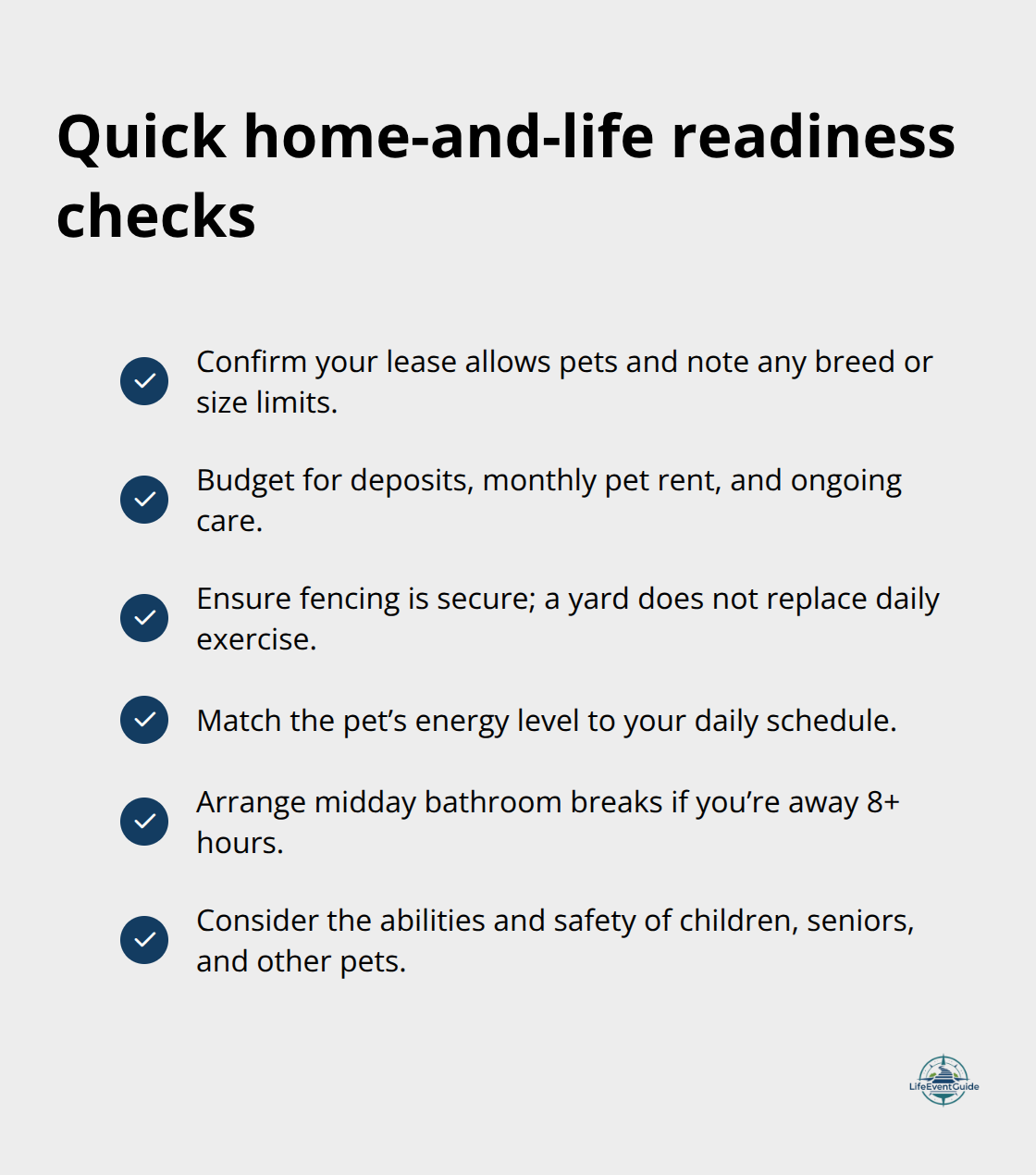
Homeowners with yards should inspect fencing for gaps or weak spots where dogs escape, and recognize that a yard alone doesn’t replace daily engagement-outdoor space helps but doesn’t eliminate exercise needs.
Evaluate Your Daily Schedule and Time Commitment
Your daily schedule determines what pet type works. Dogs need bathroom breaks at least every six to eight hours, though active dogs or those with smaller bladders may need more frequent breaks. If you work eight hours daily without midday pet care arranged, a puppy becomes impractical. Cats offer more flexibility since they use litter boxes indoors and tolerate alone time better, though they still need daily interaction and enrichment.
Your lifestyle also affects pet choice. Active people who enjoy outdoor activities might thrive with a hiking or running companion, but that same dog would suffer with a sedentary owner. Conversely, someone with limited mobility might struggle with a dog requiring multiple walks daily but manage perfectly with a cat. If you travel frequently for work, a pet that needs constant companionship creates stress for both you and the animal.
Plan Your Budget for Pet Care Costs
Financial readiness matters more than enthusiasm alone. Pet owners spend an average of $1,948 annually on dogs, though this varies widely based on health issues, food quality, and services like grooming or training. A single unexpected veterinary emergency can cost $1,000 to $5,000.
Financial capacity extends beyond basic food and supplies. Budget for annual veterinary care including vaccinations and preventive treatments, which costs $300 to $1,000 yearly per pet depending on age and health status. Pet insurance costs an average of $56.30 per month for dogs but can reduce catastrophic expense impact. Emergency veterinary clinics charge premium rates, often double standard clinic prices. If unexpected costs would strain your budget, reconsider timing or pet type.
Consider Your Household Composition
Your household composition matters significantly. Families with young children under five need pets with stable temperaments since toddlers can accidentally hurt animals, and pets might react defensively. Elderly household members might struggle with large dogs that pull on leashes or jump on furniture. If you have other pets, introduce a new one with planning and compatibility assessment. Cats and dogs can coexist peacefully, but some dogs have high prey drives that make small pets unsafe.
Be realistic about your motivation too. If you want a pet primarily for companionship during stressful periods, that’s valid, but understand that training and care demands add stress initially rather than relieving it. The adjustment period typically lasts weeks to months, and behavior problems often emerge during this time. Honest answers to these questions prevent the common outcome where pets are surrendered after months because the reality didn’t match expectations.
With your home and lifestyle honestly assessed, the next step involves preparing your physical space to welcome your new pet safely and comfortably.
Preparing Your Home for a New Pet
Creating a truly pet-ready home requires specific action, not just good intentions. Start with hazard removal because pets explore with their mouths and paws, and common household items pose real dangers. Secure electrical cords with cord protectors or place furniture in front of outlets, since chewing through live wires causes electrocution. Store cleaning products, paints, pesticides, and solvents on high shelves or in locked cabinets where pets cannot access them. Keep human foods that are toxic to pets-chocolate, grapes, onions, garlic, and xylitol-containing products-completely out of reach. Close trash can lids and toilet seat lids because pets rummage through garbage and drink toilet water, both of which create serious health risks. Remove or relocate any houseplants on the ASPCA Toxic and Non-toxic Plants List before your pet arrives, since many common houseplants cause poisoning. Anchor large furniture like TVs, bookcases, and floor lamps to walls to prevent tipping, which injures or kills pets. Secure small items such as coins, jewelry, rubber bands, and small tools in inaccessible drawers since they present choking hazards. For cats, install window perches and create multiple hiding spots because vertical space and escape routes reduce stress. For dogs, use baby gates or barriers to block stairs, balconies, and porches where injuries occur. Check your yard fencing thoroughly for gaps, weak spots, or areas where dogs can dig underneath and escape.
Create Designated Zones for Feeding, Sleeping, and Bathroom Needs
Designate specific areas for each function rather than allowing pets to roam freely for weeks. Place food and water bowls in a quiet, easily accessible location away from the main living area-this reduces stress during meals and keeps water spills contained. Use stainless steel or ceramic bowls instead of plastic, which harbor bacteria and can develop cracks where harmful microbes hide. Set up a litter box or potty training pad in a convenient location far from the feeding area, since cats and dogs instinctively avoid eliminating near where they eat. For cats, place the litter box in a low-traffic area where they feel safe, and use an uncovered box to minimize odors; scoop daily and wash the box with mild soap every two weeks. For dogs, designate a potty area outside and establish a consistent schedule-most dogs need bathroom breaks within 30 minutes of eating and after play or sleep. Create a dedicated sleeping area with a comfortable bed or crate that provides security and a sense of ownership. A crate becomes invaluable for house training puppies and helps anxious dogs feel safe during loud events or unfamiliar situations. Start acclimating your pet to their crate before arrival by leaving the carrier in areas they’ll frequent, feeding treats near the carrier, and adding a familiar blanket inside.
Gather Essential Supplies Before Arrival
Purchase supplies before your pet arrives so the first days feel organized rather than chaotic. For dogs, buy puppy or adult food appropriate to age and size, a collar with ID tag, a sturdy leash and harness, food and water bowls, a crate or carrier, age-appropriate toys including chewy toys for teething, a comfortable bed with washable covers, a brush suited to coat type, and training pads for house training. For cats, gather food and water bowls, the cat’s current food from the shelter or previous owner, treats, a collar with ID, a comfortable bed, toys especially wand toys for interactive play, a brush, a litter box with clumping litter, and a tall scratching post. Include grooming items like pet-safe shampoo and wipes. Have a first aid kit ready with gauze, antiseptic, tweezers, and items your veterinarian recommends.
Establish Predictable Daily Routines
Consistency reduces stress and accelerates adjustment, so establish a predictable daily routine before your pet arrives. Set regular times for meals, bathroom breaks, enrichment activities, and exercise. Feed dogs at the same times daily-twice daily is typical for most dogs-and note that free feeding often leads to overweight pets. For cats, follow a 7-day dietary transition when introducing new food: days 1–2 mix 25 percent new food with 75 percent shelter food, days 3–4 use 50/50, days 5–6 do 75 percent new and 25 percent shelter, and day 7 transition to 100 percent new food.
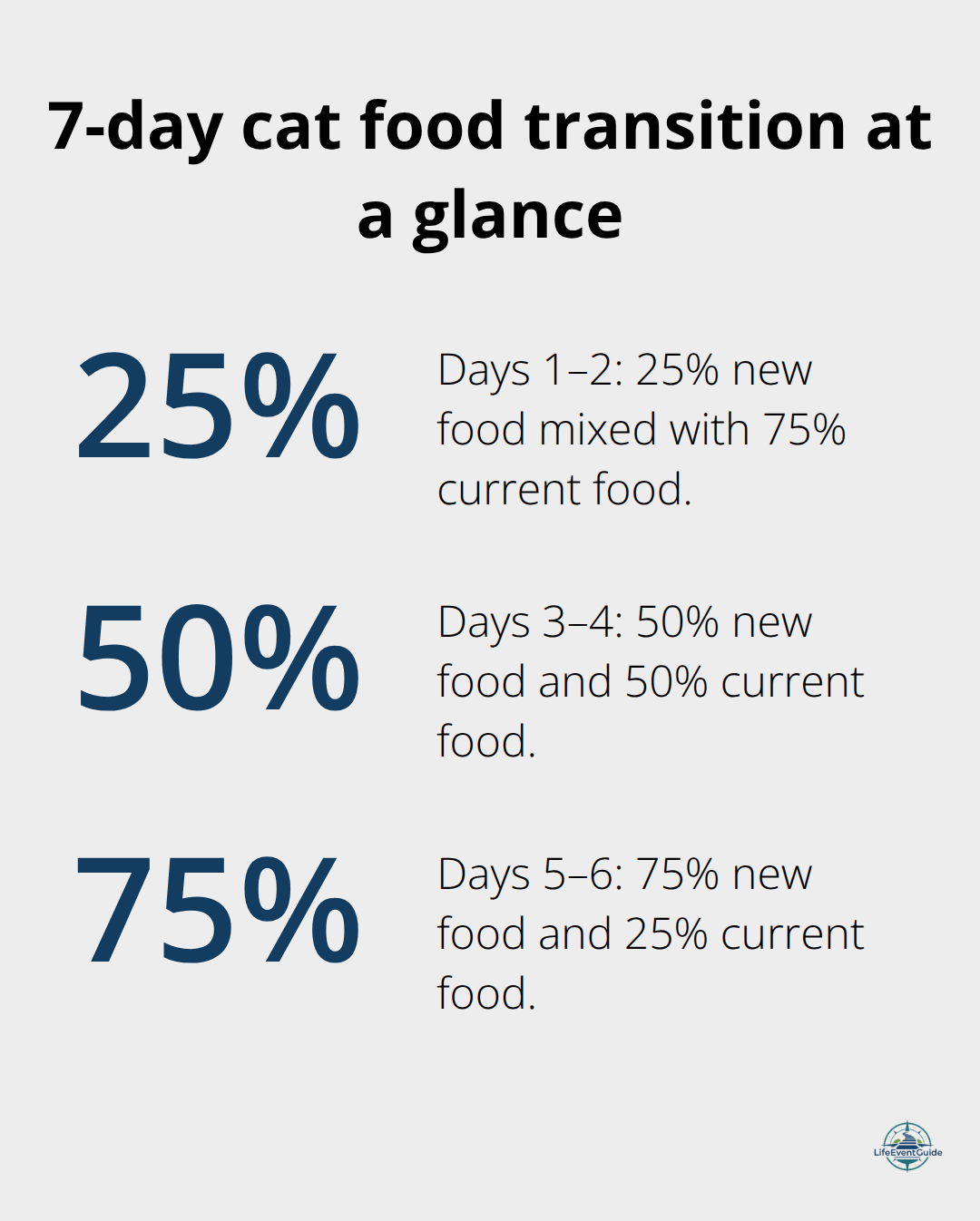
This gradual approach prevents digestive upset. Plan enrichment activities daily such as walks, play sessions, and puzzle toys because bored pets develop behavioral problems and destructive habits. With your space hazard-free, zones established, and supplies stocked, you’re ready to build the professional support system that keeps your pet healthy and safe throughout their life with you.
Building Your Pet’s Safety Net
Find a Veterinarian Before Your Pet Arrives
A veterinarian becomes your most important partner in pet ownership, yet many new pet owners delay finding one until an emergency occurs. Schedule your first appointment before or within the first week of bringing your pet home, not after problems develop. During this visit, your veterinarian establishes a baseline for future comparisons, discusses vaccination schedules, and reviews preventive care including parasite control and dental health. Bring any medical records from shelters or previous owners so your veterinarian understands your pet’s history.
Ask about spaying or neutering timelines, as these procedures prevent unwanted litters and offer significant long-term health benefits. Your veterinarian can also recommend appropriate food for your pet’s age and any health conditions, suggest specific enrichment toys, and address behavioral concerns before they become serious problems. This foundational relationship prevents costly mistakes later and gives you a trusted professional to contact when questions arise during the adjustment period.
Arrange Backup Care and Pet Sitters
Research pet sitters and boarding facilities in your area at least two weeks before any planned absence, since quality options fill up quickly. Visit facilities in person rather than choosing based on websites alone, and observe cleanliness, staff interaction with animals, and safety protocols. Ask about their experience with your pet type, how they handle medical needs or behavioral issues, and what happens if your pet becomes sick or injured during care.
Boarding facilities typically cost $30 to $60 daily for dogs and $15 to $30 for cats, while pet sitters charge $15 to $30 per visit depending on location and services. Prepare an emergency contact sheet for your backup caregiver that lists your veterinarian’s phone number, your contact information, your pet’s dietary needs, medication schedules, and behavioral quirks.
Prepare a Pet Emergency Kit
Create a pet emergency kit separate from your household emergency supplies, containing several days of food in waterproof containers, a multiple-day water supply, and extra medication if your pet takes any. Include vaccination records in a waterproof folder, a recent photo of you with your pet for identification purposes, a collar with current ID tags, a leash or harness, and comfort items like toys or bedding.
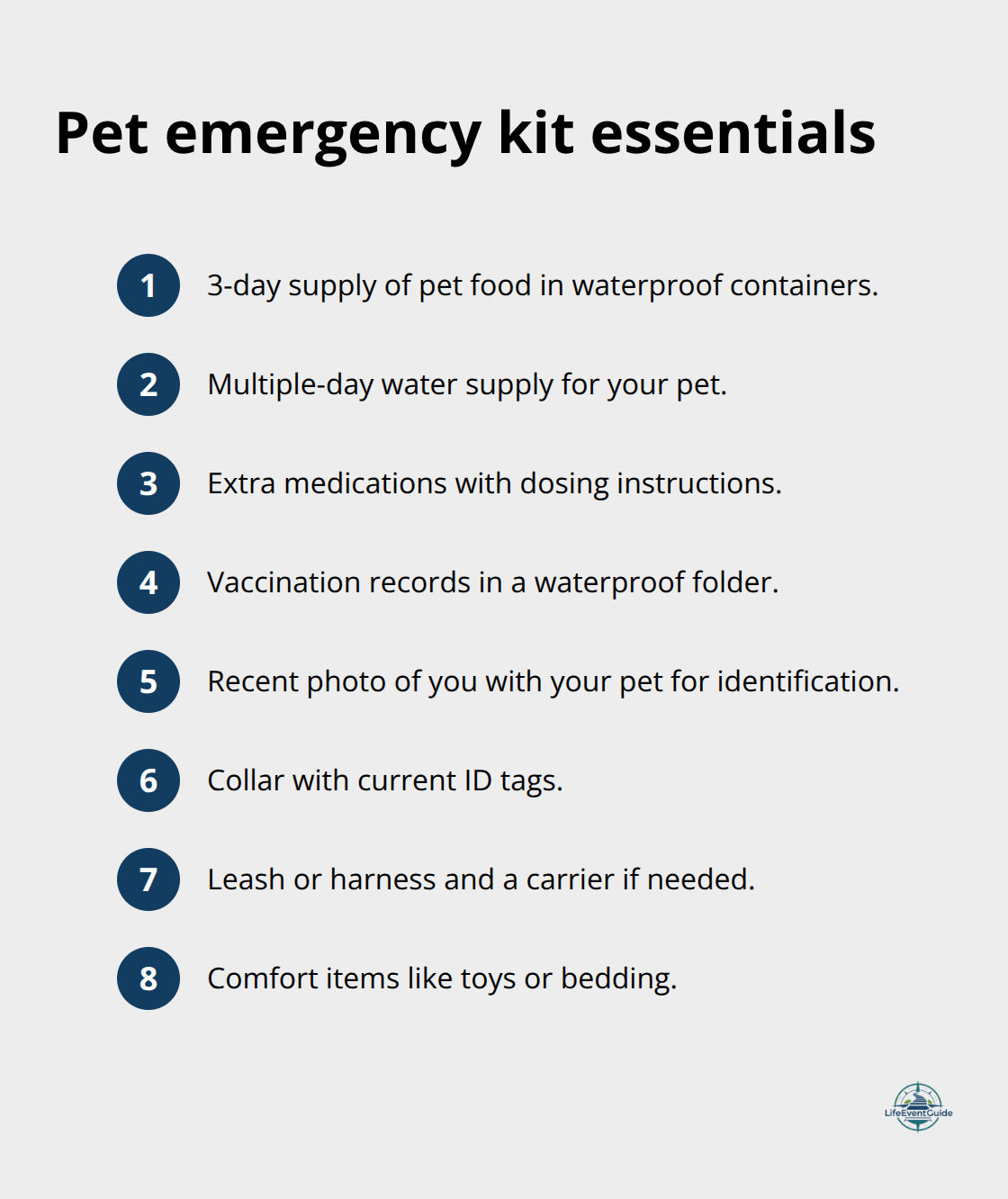
Pet microchipping with updated contact information is essential, as collars and tags can be lost during disasters. Keep copies of vaccination records and microchip registration information both physically and digitally in cloud storage. Store your emergency kit in an accessible location and review contents every six months, rotating food and medications to keep them fresh.
Build Your Pet Support Network
Establish a buddy system with neighbors or trusted friends who can help evacuate or care for your pet if you cannot. Verify in advance which local shelters, hotels, or evacuation centers accept animals during disasters. This network provides peace of mind and ensures your pet has protection even when you cannot provide it directly.
Final Thoughts
You’ve now covered the essential steps for home readiness for a pet: assessing whether your lifestyle and space match pet ownership, removing hazards and creating designated zones, purchasing supplies, establishing routines, and building a support system with a veterinarian and backup caregivers. This preparation work matters because it directly determines whether your pet thrives or struggles during those critical first weeks. The adjustment period typically lasts weeks to months, and expecting perfection from day one sets you up for frustration.
Your new pet will have accidents, may hide or act withdrawn, and might test boundaries as they learn your home’s rules-this is normal. Patience during this transition prevents the common mistake of surrendering pets after a few months because reality didn’t match expectations. Your prepared space, established routines, and trusted support network give your pet the stability they need to settle in confidently.
At LifeEventGuide, we understand that major life transitions require more than enthusiasm-they require planning. Getting a pet ranks among significant life changes, and approaching it with the same thoughtfulness you’d apply to moving or buying a home increases your chances of success. We offer a framework and checklists designed specifically to help you navigate major life events by defining goals, timelines, and key decisions while avoiding common mistakes.
Publisher’s Note: LifeEventGuide is an independent educational publisher. Some articles reference tools or services we recommend to help readers explore options related to major life transitions. Learn more about how we make recommendations here.