

Moving doesn’t have to harm the environment. We at LifeEventGuide believe that planning a sustainable move is practical, cost-effective, and straightforward.
This eco-friendly moving checklist walks you through every step, from deciding what to pack to coordinating your logistics responsibly. You’ll reduce waste, save money, and arrive at your new home with a clear conscience.
Plan Your Move with Sustainability in Mind
Sustainability starts with intention, not impulse. The moment you decide to move, you face a critical choice: declutter first or pack everything. Decluttering before packing is non-negotiable if you care about reducing waste. The average household moves 11.2 times in a lifetime according to U.S. Census data, and each move creates an opportunity to shed items you no longer use. Walk through your home and sort ruthlessly. Items in good condition go to Goodwill or Habitat for Humanity ReStore, which diverts hundreds of thousands of pounds from landfills annually. Sell what has resale value on Facebook Marketplace or eBay-this keeps items in circulation rather than in a truck headed to a landfill. Recycle or discard the rest. This step alone reduces moving volume by 20–40 percent, which directly lowers transportation emissions and packing material waste. A smaller move costs less money and requires fewer resources.
Select a Moving Company That Prioritizes the Environment
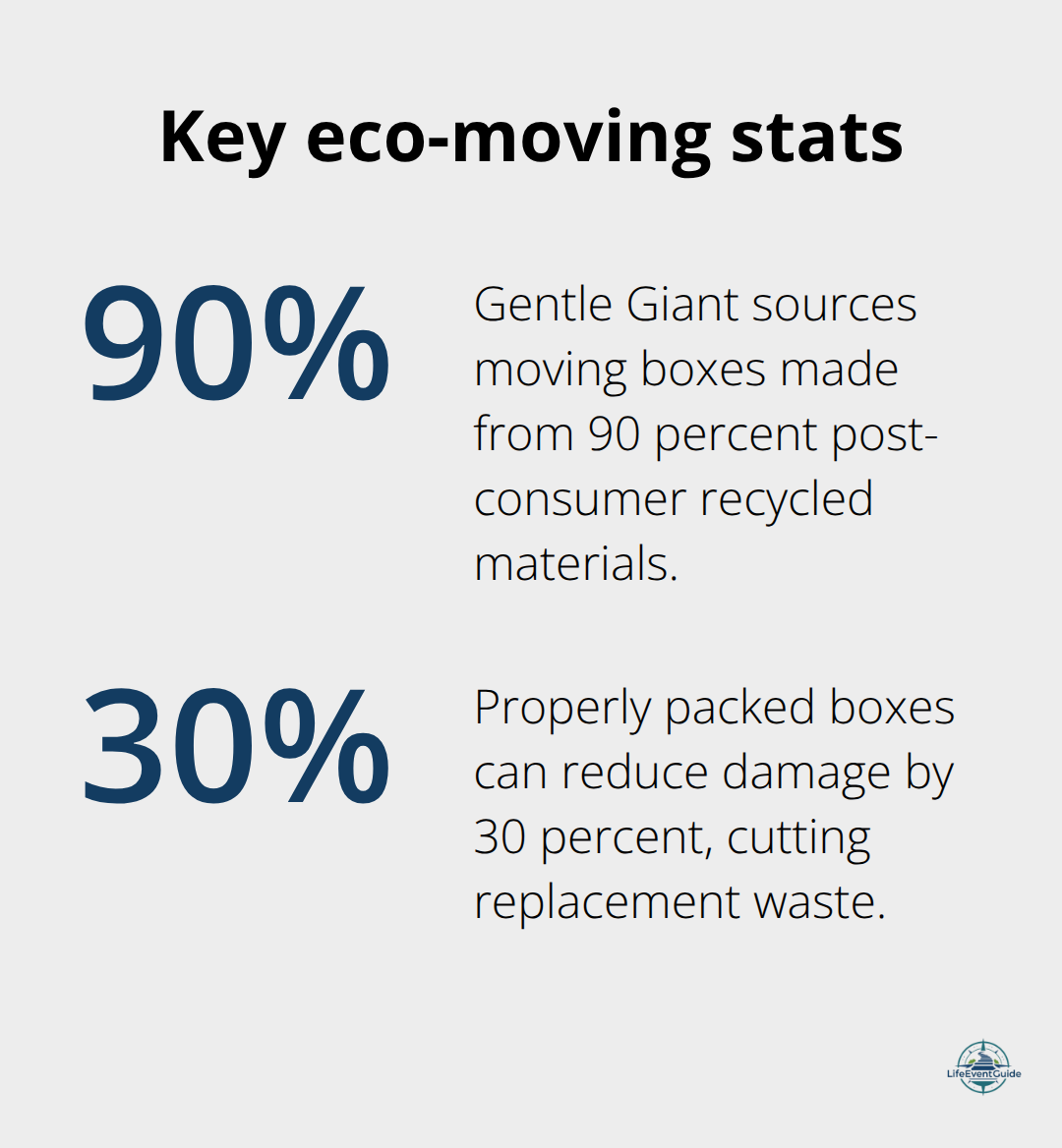
Not all moving companies prioritize the environment, and you should hold them accountable. Gentle Giant recycles materials annually and sources moving boxes made from 90 percent post-consumer recycled materials. They also use biodegradable foam peanuts and oxo-biodegradable bubble wrap that degrade into water and carbon dioxide. When you contact moving companies for estimates, ask three specific questions:
What percentage of your boxes contain recycled content? Do you have a carbon offset program? What happens to materials after a move? If a company can’t answer these questions clearly, move on.
Explore Reusable Box Options
You can rent reusable plastic moving boxes from U-Haul’s Ready-To-Go Box program, which uses high-density polyethylene boxes designed for repeated use across hundreds of locations in the U.S. and Canada. These boxes nest when empty and require no tape or assembly, making packing faster and cleaner than cardboard. Another option is Earth-Friendly Moving Kits, which deliver sustainably sourced boxes and packing supplies to your door within 2–3 business days, with free shipping across the USA.
Set a Realistic Timeline
A realistic timeline prevents panic purchasing of single-use plastics and excessive packing materials. Try to start planning at least four to six weeks before moving day. This buffer gives you time to source reusable boxes from local grocery stores, bookstores, or Facebook Marketplace rather than purchasing new cardboard. A rushed move creates waste; a planned move creates options. With these foundational decisions in place, you’re ready to tackle the next phase: identifying what materials you actually need and where to find them without generating unnecessary waste.
How to Source and Reuse Materials Without Overspending
Find Free or Low-Cost Boxes in Your Community
Reusing boxes and packing materials cuts waste and costs simultaneously. Contact local grocery stores, bookstores, and liquor shops-they discard dozens of sturdy boxes weekly and will often set them aside if you ask. UsedCardboardBoxes, North America’s largest processor of used shipping boxes, reports that purchasing once-used boxes achieves up to double recycling rates compared to new cardboard. If you prefer convenience, Earth-Friendly Moving Kits deliver sustainably sourced boxes plus complete packing supplies within 2–3 business days with free USA shipping. This approach eliminates the need to purchase new cardboard while supporting a circular economy.
Cushion Fragile Items with What You Already Own
Skip bubble wrap entirely and use towels, blankets, old clothes, and linens from your closet instead-items you’re moving anyway. If you need additional filler, biodegradable packing peanuts reduce long-term contamination of soil and waterways, unlike Styrofoam which persists in landfills for centuries. Paper-based packing tape replaces plastic tape and serves the same function without environmental compromise.
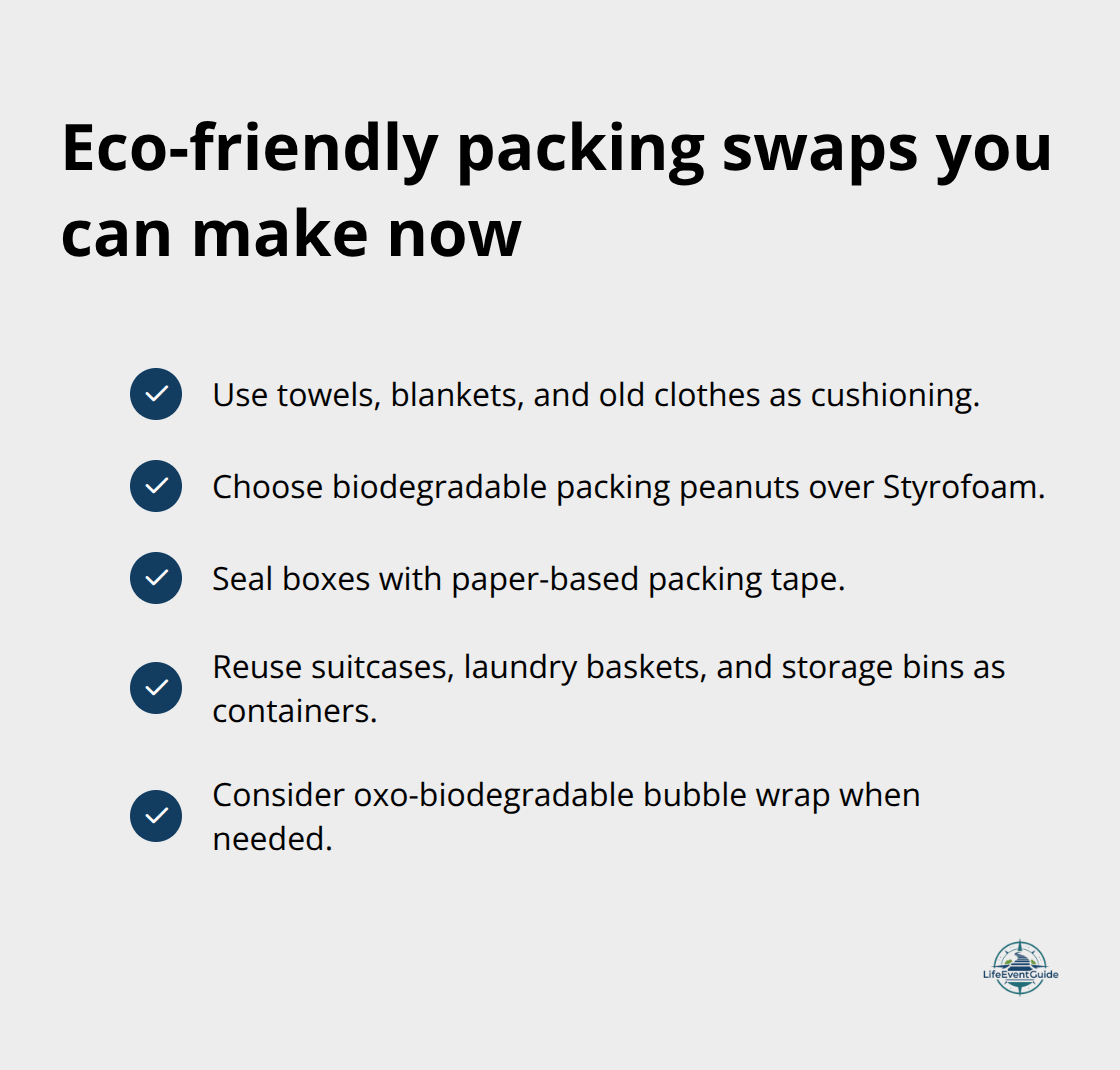
Gentle Giant uses oxo-biodegradable bubble wrap that degrades and fragments, proving that effective materials don’t require environmental sacrifice. Suitcases, laundry baskets, and plastic storage bins you already own function as moving containers-maximize their use before purchasing anything new.
Turn Unwanted Items Into Revenue or Community Support
Decluttering before packing creates a secondary benefit: items in good condition become revenue or community support. Facebook Marketplace and eBay move thousands of used household goods daily, keeping them circulating instead of heading to disposal. Goodwill and Habitat for Humanity ReStore accept furniture, appliances, and tools in working condition and have diverted millions of pounds from landfills. List items for sale or donation at least three weeks before moving day to avoid last-minute scrambling.
Establish a Recycling Plan for Moving Day
After you’ve sorted what stays and what goes, establish a clear recycling plan for moving day itself. Break down cardboard boxes immediately and place them in curbside recycling or contact local waste facilities about bulk cardboard drop-off. Many communities offer free recycling events specifically for moving materials. Gentle Giant recycles 80,000–100,000 pounds of materials annually by collecting mattress bags, box springs, and packing supplies separately rather than mixing them with general trash. This structured approach transforms a chaotic final day into an organized handoff where every material has a designated destination. With your materials sourced responsibly and your recycling plan in place, you’re ready to pack strategically and coordinate the logistics that will complete your green move.
Execute Your Green Move Efficiently
Packing efficiency determines how many boxes you need, which directly impacts transportation emissions and material waste. Start by categorizing items by room and frequency of use rather than randomly filling boxes. Heavy items like books belong in small boxes that one person can safely lift; lighter items like bedding and clothing go in larger boxes to maximize space without creating unsafe weight. Properly packed boxes reduce damage by 30 percent, which means fewer replacement purchases and less waste after arrival. Maximize every container you already own before opening a single new box. Suitcases, storage bins, laundry baskets, and even drawers from dressers serve as moving containers when wrapped securely. Fill gaps in boxes with soft items you’re moving anyway-towels, clothes, linens-rather than purchasing filler material. This approach simultaneously reduces the number of boxes needed and eliminates the temptation to buy packing supplies you don’t need.
Label Everything Clearly to Prevent Damage and Chaos
Clear labeling prevents unpacking chaos and protects items from damage during transit. Label each box on at least two sides with the room destination and primary contents using a permanent marker or labels you’ve created digitally and printed at home. Include fragile warnings on boxes containing breakables so movers handle them carefully. This system takes 30 seconds per box but prevents the scramble of opening multiple containers searching for specific items, which wastes time and creates unnecessary handling that damages contents.
Coordinate Logistics to Reduce Fuel Consumption
Coordinate your logistics strategically to minimize driving distance and fuel consumption. If hiring a moving company, request a fuel-efficient route that consolidates stops rather than backtracking through neighborhoods. Contact your utility providers, postal service, and service subscriptions at least two weeks before moving day so you avoid making return trips to your old address. If you’re renting a truck for a DIY move, choose the smallest vehicle that fits your belongings rather than oversizing, which wastes fuel and increases your carbon footprint unnecessarily.
Final Thoughts
An eco-friendly moving checklist transforms your move into an organized, intentional process that protects the environment without requiring sacrifice. Decluttering cuts moving volume by 20–40 percent, which directly reduces transportation emissions, while reusing boxes and packing materials from sources like Earth-Friendly Moving Kits eliminates single-use plastics. Clear labeling prevents damage and unpacking chaos, and these steps compound into meaningful environmental impact.
A sustainable move creates habits that extend far beyond moving day itself. You establish recycling systems, donation networks, and mindful consumption patterns that reduce waste in your new home, and your choices as a customer signal market demand for sustainable options that influence how the moving industry operates. Gentle Giant’s annual recycling of 80,000–100,000 pounds of materials demonstrates what becomes possible when moving companies prioritize environmental responsibility.
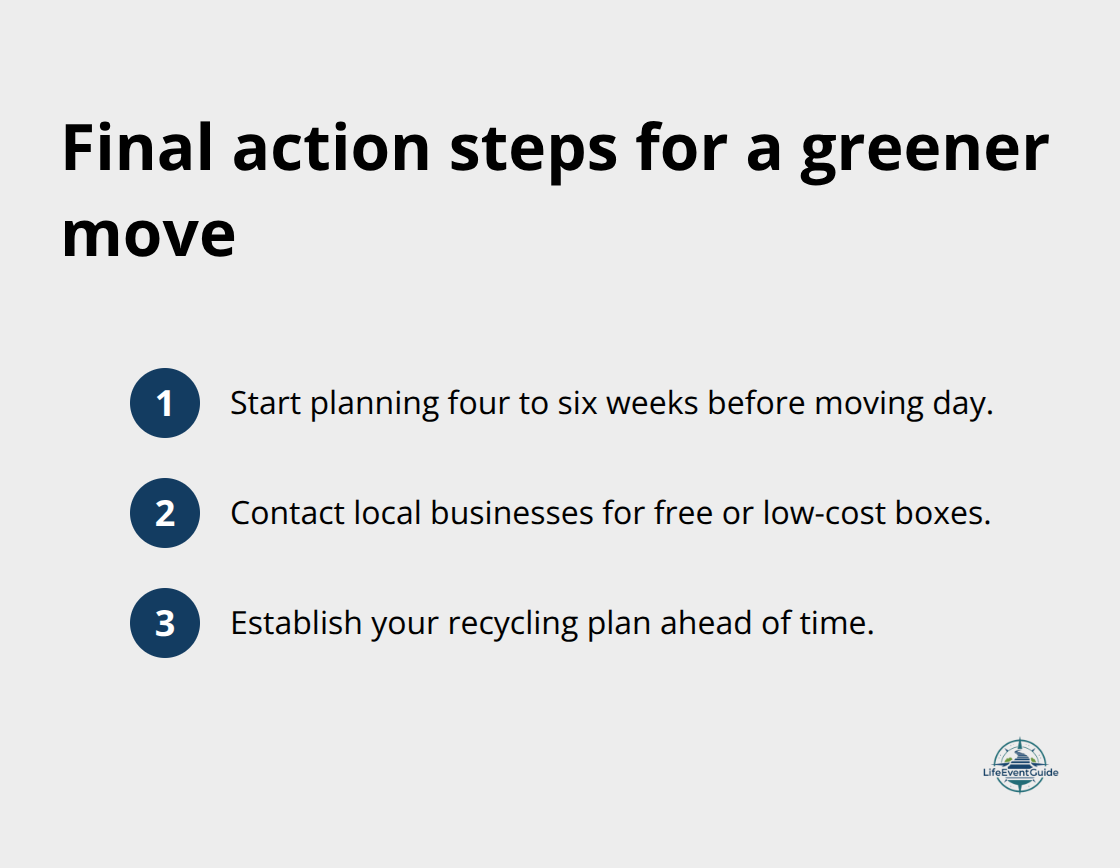
Start four to six weeks before moving day, contact local businesses for free boxes, and establish your recycling plan early. We at LifeEventGuide recommend exploring our publisher recommendations for additional frameworks and checklists that help you define goals, timelines, and budgets with confidence as you navigate this transition.
Publisher’s Note: LifeEventGuide is an independent educational publisher. Some articles reference tools or services we recommend to help readers explore options related to major life transitions. Learn more about how we make recommendations here.