

Adopting a dog is one of life’s most rewarding decisions, but it comes with real responsibilities and specific dog adoption requirements you need to understand first. Shelters and rescue organizations have standards in place to protect both dogs and their new families.
At LifeEventGuide, we’ve put together this guide to walk you through exactly what to expect. Whether you’re meeting age requirements, preparing your home, or understanding the costs involved, we’ll help you get ready for this major life change.
Who Can Adopt a Dog
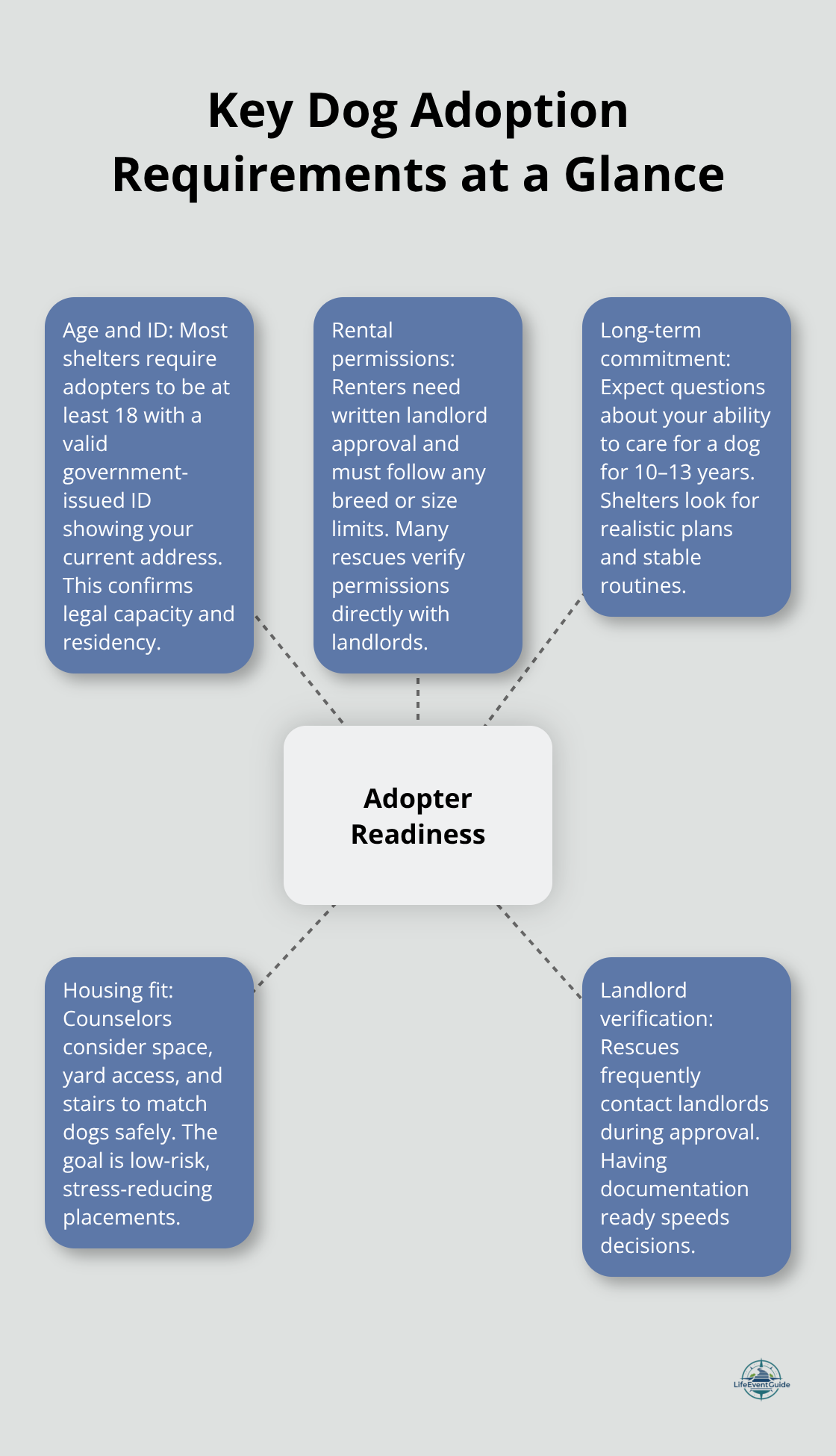
Most shelters require adopters to be at least 18 years old and present valid identification with your current address. This legal requirement applies across nearly all of the 5,000 animal shelters and 9,500 rescues operating in the U.S., making it a universal starting point. Beyond age, shelters assess whether you have the capacity to make a long-term commitment. If you rent, you must verify that your landlord permits pets and confirm any breed or size restrictions in your lease. This matters significantly-rescues frequently contact landlords as part of their approval process, so written permission from your landlord strengthens your application considerably.
Housing and Space Considerations
For housing, shelters consider practical factors like available space and yard access. Larger dogs benefit from fenced yards, while senior dogs may struggle with homes that have multiple stairs. The shelter counselor will ask where your dog will spend the day and night, so prepare a concrete answer rather than vague intentions. Your living situation directly affects which dogs match your home, and shelters use this information to place animals into safe, loving homes that suit their specific needs.
Your Financial Readiness Matters
Adoption fees themselves are manageable, ranging from $50 to $200 depending on the dog’s age and your location. At The Animal Foundation in Las Vegas, for example, adult small dogs cost $100, adult large dogs are $50, and puppies are $200. However, adoption fees represent only the beginning. The annual cost of dog ownership averages between $1,500 and $3,000 when you factor in food, routine veterinary care, licensing, and preventive treatments like parasite control. Emergency veterinary care can spike costs dramatically-a single emergency visit costs $1,000 or more.
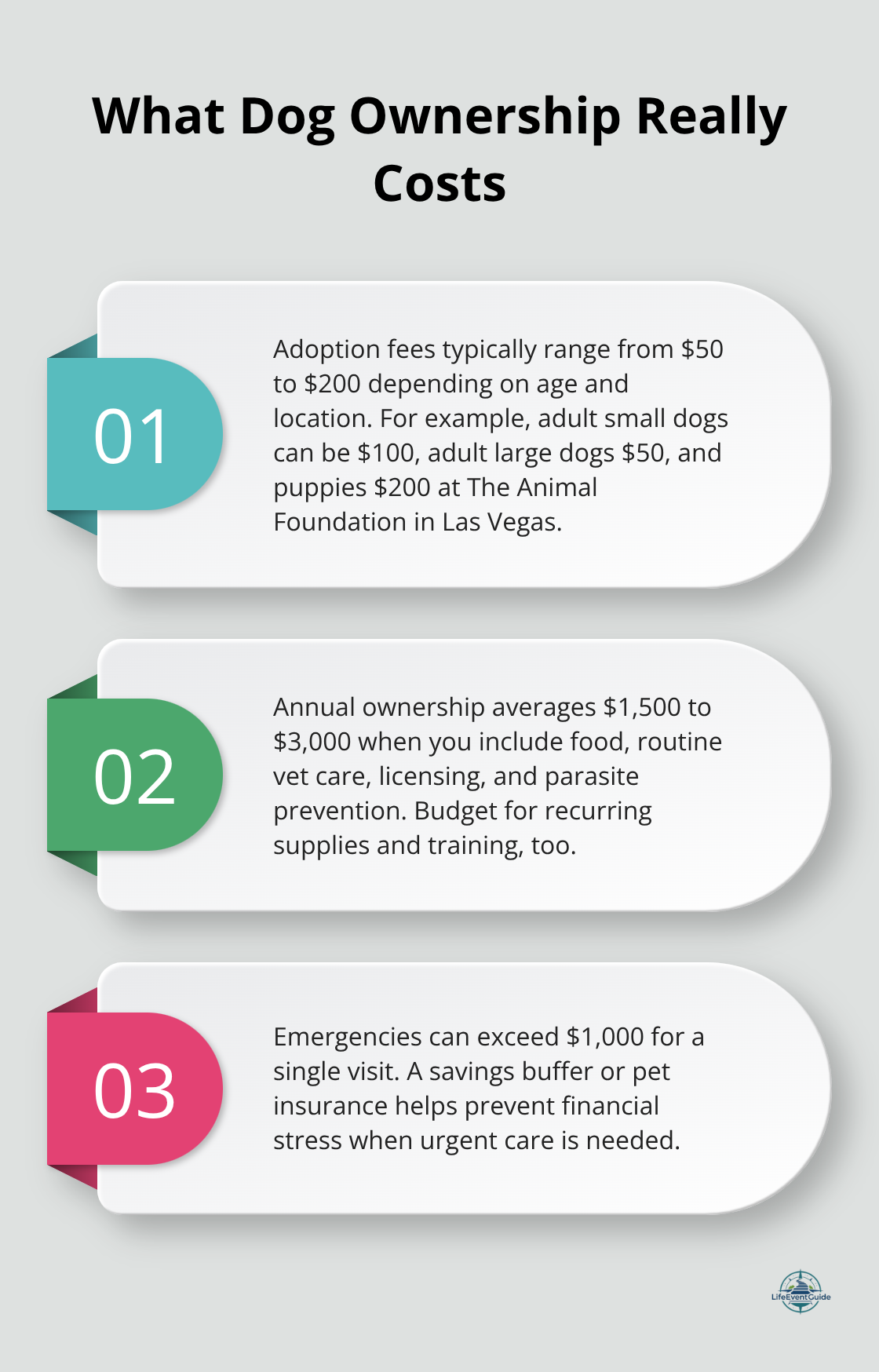
Shelters want to know you can handle these ongoing expenses, so discuss your budget honestly.
Planning for Long-Term Financial Commitment
Some rescues request income verification to confirm you have the financial capacity to support a dog through its entire life (typically 10 to 13 years). Consider pet insurance as a safeguard for unexpected veterinary costs. Understanding these financial realities upfront prepares you for the true cost of dog ownership and helps shelters identify adopters who can commit to their dogs’ wellbeing for years to come.
What Happens During the Adoption Process
The adoption process typically starts with an application form that shelters and rescues use to assess whether your home and lifestyle match a dog’s needs. Applications range from simple questionnaires to detailed surveys asking about your housing, daily schedule, existing pets, and experience with dogs. Shelters process applications on a first-come basis, so accuracy and completeness matter. Provide thorough, honest details about where the dog will stay during the day, your exercise plan, and whether all household members approve of adopting.
Strengthening Your Application
If you don’t have a fenced yard, outline concrete plans like daily walks or regular dog park visits to show you can meet the dog’s needs. For renters, include written permission from your landlord confirming pets are allowed and noting any size or breed limits. Strong references from people who’ve known you for years significantly strengthen your application, while weak or unresponsive references can jeopardize approval. Rescues typically call your veterinarian to verify that current and past pets received regular care, so demonstrating a history of wellness visits, vaccinations, and preventive treatments improves your prospects considerably.
Home Visits and Family Introductions
Home visits and interviews come next for many rescues, though some shelters often skip this step to enable faster adoption processing. During a home visit, a staff member assesses whether your living environment suits the dog, checking for hazards, space for the dog to sleep and play, and compatibility with existing pets. Prepare your home by securing cords, removing toxic plants, and showing where the dog will spend time. Some rescues require a family meet-and-greet so everyone in your household meets the prospective dog before paperwork is finalized. This interaction reveals whether the dog’s temperament fits your family’s energy level and lifestyle.
Adoption Fees and Timeline
Adoption fees typically range from $50 to $200 and cover spaying or neutering, initial vaccinations, microchipping, and the shelter’s costs for housing and food while the dog was in care. A pet license fee of around $10 may apply depending on your city. Same-day adoption is possible if the dog is already spayed or neutered; otherwise, expect an overnight stay for surgery. If you’re approved, most rescues expect you to bring the dog home within a few days, so be ready to move quickly once matched with your dog.
Once you’ve navigated the application, home visit, and fee payment, your focus shifts to preparing your actual living space and daily routine for your new companion.
Getting Your Home Ready for a Dog
The weeks between approval and bringing your dog home offer your window to prepare properly. Most dogs need 0 to 3 days just to settle in, then 3 weeks to decompress before they’re ready for training, so rushing your setup creates unnecessary stress for both of you. Start by identifying where your dog will sleep, eat, and spend unsupervised time. This location matters more than you’d think-a crate in your bedroom for the first few nights helps a new dog feel secure, while a designated area with a bed and toys gives them a safe retreat during the day.
Setting Up Spaces for Your New Dog
If you already have pets, plan separate spaces initially so introductions happen gradually rather than all at once in a chaotic environment. Purchase essentials before arrival: food and water bowls, a collar and leash, an ID tag, a comfortable bed, durable toys appropriate for your dog’s size, grooming supplies, and a first-aid kit. Wait until you meet your dog to understand their size and energy level, then select toys and supplies that match their needs.
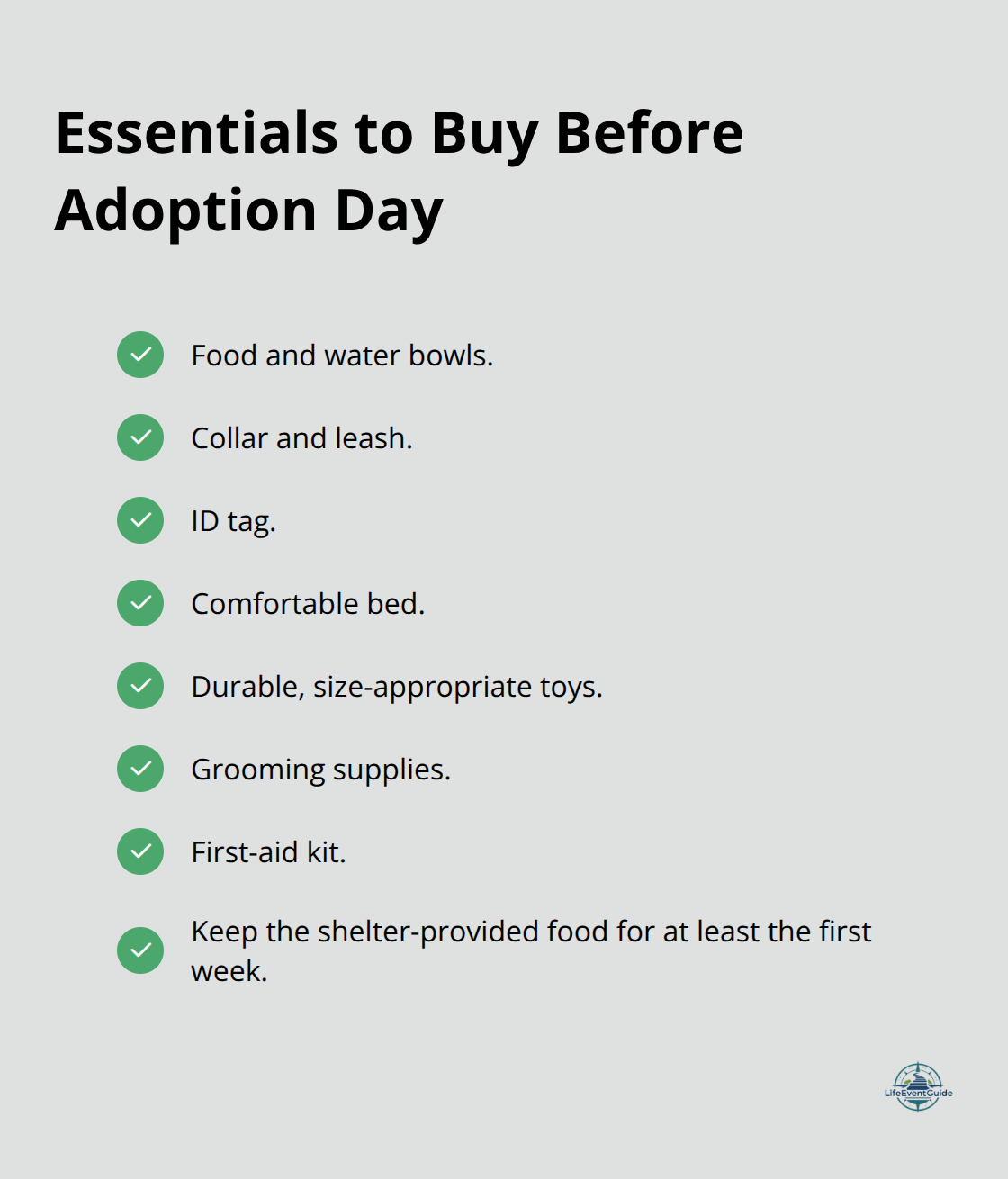
Keep the food the shelter provided for at least the first week-sudden diet changes cause digestive upset, and your veterinarian can advise on transitioning to new food gradually over at least a week.
Securing Your Home’s Physical Safety
Your home’s physical safety requires deliberate attention before day one. Secure electrical cords, remove toxic plants like lilies and sago palms, store cleaning supplies and medications behind closed doors, and use baby gates to restrict access to stairs or rooms where accidents matter less. Trash cans need secure lids or cabinet storage. Chewable items like shoes, books, and remote controls should stay out of reach for at least the first month while your dog learns what’s appropriate.
Arranging Reliable Care and Veterinary Support
If you work full-time, arrange reliable dog care before adoption-this might mean hiring a dog walker for midday potty breaks, enrolling in doggy daycare two or three days weekly, or asking a trusted neighbor to help. Dogs left alone for 8+ hours daily develop anxiety and behavioral problems, so this isn’t optional if you work long shifts. Schedule a veterinary appointment within the first week for a wellness exam, and discuss vaccination schedules, parasite prevention, and any breed-specific health concerns. Having a veterinarian lined up before your dog arrives means you’re not scrambling during a crisis.
Planning Safe Introductions with Family and Pets
If your household includes children or other animals, walk through introductions step-by-step with your adoption counselor-they provide guidance on safe, gradual meetings that reduce stress for everyone involved.
Final Thoughts
Dog adoption requirements exist to protect both you and your new companion, but they’re not obstacles-they’re guardrails that help match the right dog with the right home. You now understand what shelters expect: proof of age and identity, housing verification, financial readiness, honest application details, and willingness to prepare your home thoughtfully. These requirements reflect a simple truth: shelters want dogs to succeed in their forever homes, and that success depends on honest preparation from adopters.
Start your dog adoption journey by moving through each step deliberately and completing your application with thorough, honest answers about your living situation, daily schedule, and financial capacity. Gather strong references and veterinary records that demonstrate your commitment to animal care, prepare your home with the essentials before your dog arrives, and arrange reliable care if you work full-time. Schedule a veterinary appointment within the first week, and use the 0-3-3 guideline to manage your dog’s transition: three days to settle, three weeks to decompress, three months to bond.
If you’re feeling overwhelmed by the planning involved, that’s normal-dog adoption is a major life transition with real financial, time, and emotional commitments. We at LifeEventGuide help people navigate major life changes like pet adoption by defining goals, timelines, budgets, and key decisions through structured frameworks and checklists that prevent common mistakes. Contact your nearest shelter or rescue to ask specific questions about their dog adoption requirements and process, and explore how LifeEventGuide supports adopters through major transitions.
Publisher’s Note: LifeEventGuide is an independent educational publisher. Some articles reference tools or services we recommend to help readers explore options related to major life transitions. Learn more about how we make recommendations here.