
Introduction: Preparing for Your New Arrival
Bringing home a newborn is one of life’s most profound moments—equal parts joy, wonder, and if we’re honest, a little overwhelm. The nursery needs setting up, the hospital bag needs packing, and there’s a seemingly endless list of tiny essentials you never knew existed.
This guide breaks down everything you truly need before, during, and after baby arrives. We’ve organized items by category, flagged the absolute must-haves, and noted what can wait. Whether you’re nesting at 30 weeks or scrambling in the final days, this checklist will help you feel prepared, confident, and ready to welcome your little one home.
What This Guide Covers:
- Essential gear by category (feeding, sleeping, diapering, clothing, bathing, safety)
- Hospital bag checklist for labor and delivery
- Important documents and administrative tasks
- Week-by-week preparation timeline
- Budget-friendly alternatives and what not to buy
- Evidence-based safety recommendations
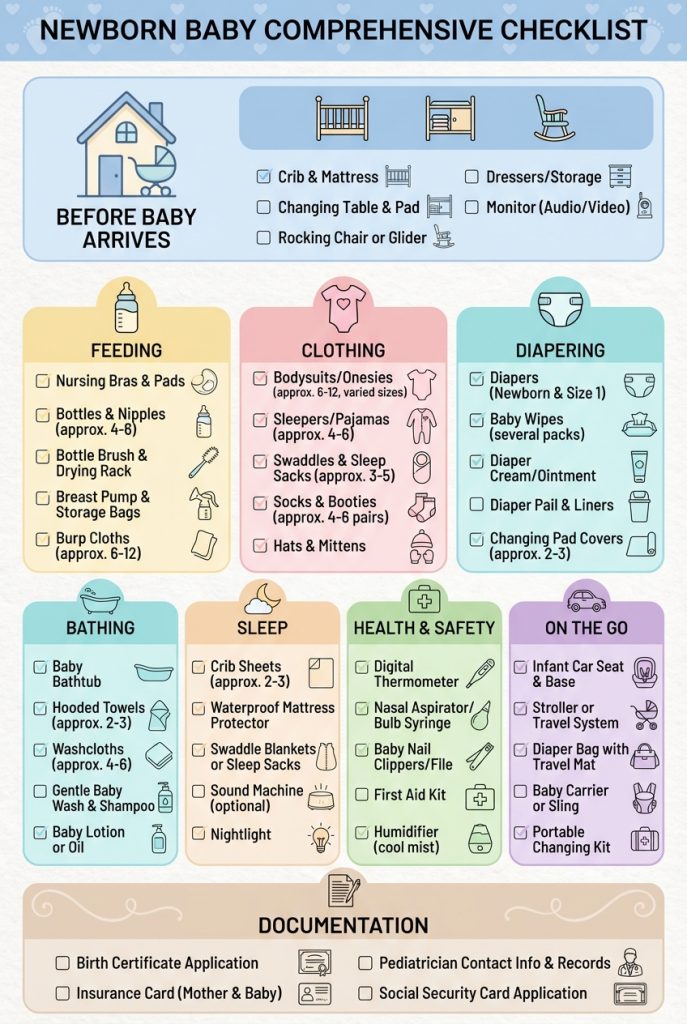
Before Baby Arrives: The Essentials Checklist
Nursery and Sleep (Safe Sleep Foundation)
Must-Haves:
- Crib or bassinet that meets current CPSC safety standards (slats no more than 2⅜ inches apart)
- Firm, flat mattress with fitted sheets (3-4 sheets for frequent changes)
- Waterproof mattress protector (2-3 for rotation during washing)
- Sleep sacks or wearable blankets (avoid loose blankets per AAP safe sleep guidelines)
- White noise machine (optional but helps many newborns settle)
- Blackout curtains or shades for daytime naps
- Baby monitor (audio minimum; video optional for peace of mind)
Safety Note: The American Academy of Pediatrics recommends room-sharing (but not bed-sharing) for at least the first 6 months, ideally the first year, to reduce SIDS risk by up to 50%.
Can Wait:
- Decorative bedding sets (bumpers, pillows, blankets are unsafe for infants)
- Changing table (you can use a changing pad on a dresser)
- Glider or rocking chair (comfortable but not essential)
Reference: American Academy of Pediatrics Safe Sleep Guidelines
Feeding Essentials
For Breastfeeding Families:
Must-Haves:
- Nursing bras (2-3 comfortable, well-fitting bras; size may change in first weeks)
- Nursing pads (disposable or washable, to prevent leaks)
- Nipple cream (lanolin-based like Lansinoh, or coconut oil)
- Breast pump (if planning to pump; often covered by insurance under ACA)
- Milk storage bags or containers (BPA-free, freezer-safe)
- Nursing pillow (supports baby at breast height, reduces back strain)
- Burp cloths (6-8 cloth diapers work perfectly)
Helpful:
- Lactation consultant contact (many hospitals offer free consults; also covered by insurance)
- Breastfeeding app (track feeds, diaper changes, sleep)
- Water bottle (nursing makes you incredibly thirsty)
For Formula Feeding Families:
Must-Haves:
- Baby bottles (4-6 bottles; 4-5 oz for newborns)
- Bottle nipples (slow-flow for newborns; have backups)
- Bottle brush and drying rack
- Formula (start with small containers until you know what baby tolerates)
- Bottle warmer (optional; warm water bath works too)
- Insulated bottle carrier for outings
Note: If using powdered formula, CDC recommends preparing bottles fresh for each feeding for babies under 3 months, immunocompromised, or premature, to reduce infection risk.
Reference: CDC Infant Formula Preparation Guidelines
For All Feeding Methods:
- Bibs (6-8 for spit-up and drool)
- High-sided bowls (for when you’re eating one-handed)
- Snacks and easy meals stocked for postpartum recovery
Diapering Station
Must-Haves:
- Diapers (newborn and size 1; babies go through 8-12 per day initially)
- Baby wipes (unscented, sensitive skin formulas; or use warm water and soft cloths)
- Diaper cream (zinc oxide-based for prevention and treatment of rash)
- Changing pad (portable pads are great for multiple rooms)
- Diaper pail or odor-sealing bags
- Changing pad covers (2-3 washable covers)
Cloth Diapering Option:
- 24-36 cloth diapers (newborn or one-size adjustable)
- 4-6 diaper covers
- Wet bag for storage
- Cloth-safe detergent
Budget Tip: Store brands and generic diapers often perform just as well as name brands at 30-40% less cost. Buy small packs initially to test fit and absorption.
Reference: Consumer Reports Diaper Buying Guide
Clothing and Laundry
Newborn Wardrobe Must-Haves:
- Onesies or bodysuits (6-8 in newborn and 0-3 month sizes; side-snap or kimono style easiest for newborns)
- Sleepers with feet (4-6; zippers are faster than snaps at 3 AM)
- Sleep gowns (2-3; great for nighttime diaper changes)
- Hats (2-3 soft cotton hats; newborns lose heat through their heads)
- Socks or booties (4-6 pairs; they fall off constantly)
- Swaddle blankets (3-4 muslin or cotton swaddles, or 2-3 Velcro swaddles)
- Going-home outfit (one special outfit plus a backup)
- Seasonal outerwear (bunting or snowsuit for winter babies; sun hat for summer)
Sizing Reality Check: Many babies outgrow newborn size within 2-3 weeks. Stock more 0-3 month clothes than newborn.
Laundry Essentials:
- Gentle, fragrance-free detergent (regular detergent is fine; “baby” formulas are optional)
- Stain remover (enzyme-based for breast milk and formula stains)
- Mesh laundry bags for small items like socks
Bathing and Grooming
Must-Haves:
- Baby bathtub or sink insert (until baby can sit unassisted)
- Soft washcloths (4-6 dedicated for baby)
- Hooded baby towels (2-3; keep baby warm after bath)
- Gentle baby wash and shampoo (tear-free, fragrance-free; can also use plain water for first month)
- Baby lotion (fragrance-free; only if skin is dry—most newborns don’t need it)
- Soft-bristle baby brush (for cradle cap)
- Infant nail clippers or file (tiny nails grow fast and are sharp)
- Digital thermometer (rectal is most accurate for newborns; have petroleum jelly on hand)
Bathing Frequency: Newborns only need 2-3 baths per week. Daily baths can dry delicate skin. Focus on keeping diaper area and skin folds clean between baths.
Reference: Mayo Clinic Newborn Bathing Guide
Health, Safety, and Medical Supplies
First Aid and Medicine Cabinet
Must-Haves:
- Digital thermometer (rectal for most accurate reading under 3 months)
- Infant acetaminophen (Tylenol; ask pediatrician about dosing by weight)
- Saline drops and nasal aspirator (for stuffy noses)
- Infant gas drops (simethicone; check with pediatrician)
- Petroleum jelly (for thermometer, diaper rash)
- Infant nail care kit (clippers, file, safety scissors)
- Baby-safe sunscreen (if baby will be outdoors; 6+ months for most sunscreens; use shade and protective clothing for younger babies)
- Basic first aid kit (bandages, gauze, medical tape, antiseptic)
Emergency Preparedness:
- Pediatrician’s after-hours contact info saved in phone
- Nearest emergency room location and route
- Infant CPR certification (many hospitals offer free classes)
- Poison control number: 1-800-222-1222
What NOT to Give: Never give honey to babies under 12 months (botulism risk), aspirin (Reye’s syndrome risk), or cough/cold medicines (not safe or effective for infants).
Reference: HealthyChildren.org Medication Safety
Baby Safety Gear
Must-Haves Before Baby Arrives:
- Rear-facing infant car seat (must be properly installed; many fire stations and hospitals offer free installation checks)
- Carbon monoxide and smoke detectors (test batteries; install per manufacturer guidelines)
- Outlet covers or safety plugs
- Cabinet locks and baby gates (can install in phases as baby becomes mobile)
Helpful Within First 3 Months:
- Baby carrier or wrap (keeps baby close while freeing your hands; proper positioning supports hip development)
- Stroller (travel system with car seat adapter, or standalone)
- Diaper bag or backpack (well-organized with insulated pockets)
Safety Standards to Check:
- Car seat must meet Federal Motor Vehicle Safety Standard 213
- Cribs manufactured after June 28, 2011 (older cribs may have unsafe drop-sides)
- All products registered for recall notifications
Reference: CPSC Juvenile Product Safety
Hospital Bag Checklist
For Labor and Delivery
For the Birthing Parent:
- ID, insurance card, hospital pre-registration paperwork
- Birth plan (if you have one; discuss with provider in advance)
- Comfortable labor outfit (hospital gown provided, but some prefer own clothes)
- Warm socks and slippers (labor rooms can be cold)
- Hair ties (if you have long hair)
- Lip balm and face mist (breathing techniques can dry out lips)
- Phone charger (long cord helpful)
- Entertainment (music playlist, audiobooks, tablet)
- Snacks for after delivery (you’ll be hungry!)
For Postpartum Recovery:
- Going-home outfit (think comfortable, maternity-size clothes)
- Nursing bras and pads (if breastfeeding)
- Extra underwear (hospital usually provides disposables, but bring backups)
- Personal toiletries (toothbrush, shampoo, face wash, etc.)
- Glasses or contacts (if you wear them)
- Maternity pads (hospital provides some, but bring your preferred brand)
For Partner/Support Person:
- Snacks and drinks (hospital cafeteria hours vary)
- Change of clothes
- Phone charger
- Camera (if not using phone)
- List of people to notify
For Baby:
- Going-home outfit (in two sizes: newborn and 0-3 months)
- Blanket for car ride
- Properly installed car seat (hospital will check before discharge)
- Hat and socks
What the Hospital Provides: Most hospitals supply diapers, wipes, basic toiletries, receiving blankets, hats, and initial formula if needed. Ask your provider what’s included.
Important Documents and Administrative Tasks
Before Baby Arrives
Insurance and Financial:
- ☐ Add baby to health insurance (usually must be done within 30 days of birth)
- ☐ Review maternity/paternity leave policies and complete paperwork
- ☐ Understand your insurance’s coverage for pediatric care and where to go for baby’s first appointments
- ☐ Review life insurance policies
- ☐ Update or create a will and designate guardianship
Healthcare Setup:
- ☐ Choose a pediatrician and schedule newborn appointment (usually within first week)
- ☐ Tour hospital or birth center
- ☐ Take childbirth class and infant care class
- ☐ Pre-register at hospital (usually done around 36 weeks)
Reference: HealthCare.gov Special Enrollment for Newborns
After Baby Arrives (First Month)
Legal Documents:
- ☐ Birth certificate application (hospital usually initiates; verify it was filed)
- ☐ Social Security number application (also typically initiated at hospital)
- ☐ Complete paperwork for paid family leave if applicable
- ☐ Update emergency contacts with pediatrician, work, and family
Medical Follow-Up:
- ☐ Attend all scheduled newborn checkups (typically at 3-5 days, 2 weeks, 1 month)
- ☐ Schedule postpartum checkup for birthing parent (usually 6 weeks postpartum)
- ☐ Review and understand newborn screening results
- ☐ Confirm baby’s vaccination schedule with pediatrician
Reference: CDC Newborn Screening
Week-by-Week Preparation Timeline
20-28 Weeks: Research and Plan
- Research and choose pediatrician
- Take hospital tour
- Begin nursery setup
- Register for baby shower or create registry
- Start childbirth and infant care classes
28-32 Weeks: Major Purchases
- Order crib, car seat, stroller
- Purchase feeding supplies based on your plan
- Stock up on diapers (variety of sizes)
- Wash and organize baby clothes
- Set up changing station
32-36 Weeks: Final Preparations
- Install car seat and get it inspected
- Pack hospital bag
- Prep and freeze meals
- Complete nursery setup
- Pre-register at hospital
- Confirm pediatrician appointment for first week
36+ Weeks: Ready to Go
- Keep hospital bag in car or by door
- Ensure car has gas
- Phone fully charged at night
- Final grocery run and household prep
- Arrange pet or sibling care during labor
- Review birth plan with partner
What You DON’T Need (Save Your Money)
Skip These Common Registry Items:
- ❌ Wipe warmer – Room-temperature wipes are fine; baby will adjust
- ❌ Diaper Genie – Regular trash with sealed bags works just as well
- ❌ Bottle sterilizer – Dishwasher or boiling water suffices
- ❌ Expensive baby bathtub – Sink or $15 basic tub works for first months
- ❌ Baby shoes – Babies don’t walk; socks are more practical and cheaper
- ❌ Bumper pads – Unsafe per AAP; unnecessary
- ❌ Dozens of newborn outfits – Babies outgrow them in weeks
- ❌ Baby towel set – Regular soft towels work; hooded ones are nice but not essential
- ❌ Special baby laundry detergent – Regular gentle detergent is fine for most babies
Buy After Baby if Needed:
- High chair (not needed until 4-6 months)
- Exersaucer or jumper (4+ months)
- Baby food maker (can use regular blender)
- Large toy collection (young babies need very little)
Budget-Friendly Tips
Where to Save:
- Buy secondhand for big-ticket items like cribs, strollers, high chairs (verify recalls and safety standards)
- Accept hand-me-downs for clothes (babies outgrow them before wearing out)
- Generic brands for diapers, wipes, and formula often equal name-brand quality
- Minimalist approach – buy basics first, add items as needs become clear
- Baby shower or blessing way – let loved ones contribute to your essentials
- Library programs – many libraries offer free board books, music classes, and parenting resources
Where NOT to Compromise:
- Car seat (buy new to ensure no hidden damage; verify it meets current standards)
- Crib mattress (should be firm and fit snugly)
- Baby monitor (if you’re using one, ensure good quality and range)
Free Resources:
- WIC (Women, Infants, and Children) program for eligible families
- Hospital lactation support and classes
- Local parenting groups and mom groups (advice, swaps, support)
- Public health nurse home visits in some areas
Reference: USDA WIC Program
Frequently Asked Questions
How many diapers will my newborn use? Newborns typically use 8-12 diapers per day for the first few weeks, then 6-8 per day as they get older. Stock up on size 1 and 2; babies often skip newborn size entirely or outgrow it within two weeks.
What temperature should I keep the nursery? The AAP recommends 68-72°F (20-22°C) to reduce SIDS risk. Dress baby in layers you’d be comfortable in, plus one extra layer, and use a sleep sack instead of blankets.
How often should I bathe my newborn? 2-3 times per week is sufficient. Daily baths can dry out delicate newborn skin. Focus on keeping the diaper area, face, and neck folds clean with a warm washcloth between baths.
When should I start tummy time? Begin tummy time from day one for brief periods (2-3 minutes, 2-3 times daily) while baby is awake and supervised. This builds neck and shoulder strength and prevents flat spots on the head.
Can I use a baby wrap or carrier right away? Yes, as long as baby’s airway is clear and their face is visible. Ensure baby is in an ergonomic position with knees higher than bottom (M-position) and chin off chest.
What if my baby won’t sleep in the bassinet? This is common. Try swaddling, white noise, ensuring the room is dark and cool, and placing a worn shirt near baby (not over face) so they smell you. Always place baby on their back to sleep.
Do I really need to wake a sleeping baby to feed? In the first 2-3 weeks, yes, if baby hasn’t eaten in 3-4 hours during the day (2-3 hours at night for breastfed babies). After baby regains birth weight and pediatrician gives the okay, you can let baby sleep longer stretches.
What’s the best way to soothe a crying baby? Try the “5 S’s”: Swaddle, Side/stomach position (only while awake and supervised), Shush (white noise), Swing (gentle motion), and Suck (pacifier or nursing). Always check for basic needs first: hunger, diaper, temperature.
When can my baby meet visitors? This is a personal choice. Many families wait until after baby’s first vaccines (at 2 months) or limit visitors who aren’t up-to-date on Tdap and flu vaccines. Trust your instincts and don’t hesitate to set boundaries.
Reference: KidsHealth Newborn Care Basics
Final Thoughts: Trust Yourself
Preparing for a newborn is less about perfection and more about creating a safe, loving environment where your baby can thrive—and where you can rest and recover. You don’t need every gadget or the trendiest nursery theme. You need the basics, a support system, and permission to ask for help.
Remember:
- Babies need surprisingly little—safe sleep space, food, clean diapers, and your love
- Your instincts are powerful; trust yourself
- Accept help when offered (meals, errands, holding baby while you shower)
- Be kind to yourself in the postpartum period; recovery takes time
- Every baby is different; what works for one may not work for yours
You’re already doing the most important work by preparing thoughtfully. Take a deep breath. You’ve got this.
Additional Resources and References
Safe Sleep:
Feeding:
Health and Development:
- HealthyChildren.org (AAP Patient Education)
- CDC Developmental Milestones
- Zero to Three (Early Development)
Safety:
- Consumer Product Safety Commission (CPSC)
- National Highway Traffic Safety Administration Car Seat Guidelines
Postpartum Support:
Financial Assistance:
Word Count: 3,200+ words
Last Updated: January 2026
This guide is for informational purposes only and does not substitute for medical advice from your pediatrician or healthcare provider. Always consult with qualified professionals for personalized guidance.
Publisher’s Note: LifeEventGuide is an independent educational publisher. Some articles reference tools or services we recommend to help readers explore options related to major life transitions. Learn more about how we make recommendations here.