

Bringing a cat into your home is a significant decision that affects both you and the animal for years to come. At LifeEventGuide, we know that cat adoption considerations go far beyond simply falling in love with a cute face at the shelter.
This guide walks you through the practical steps needed to find the right match between your lifestyle and a cat’s needs. We’ll help you assess your home, understand different cat personalities, and prepare for the financial and emotional responsibilities ahead.
Assessing Your Lifestyle and Home Environment
Your daily routine is the first reality check in cat adoption. Cats require consistent care, but the intensity depends entirely on which cat you choose. If you work nine to five with a predictable schedule, you can support an adult cat comfortably. Adult cats aged one to ten years typically have established personalities and often handle alone time well, especially if they’re independent types. However, if your schedule is erratic or you travel frequently, a high-energy kitten will struggle. Kittens up to one year old demand supervision, interactive play, and attention multiple times daily. They cannot remain alone for extended periods without developing behavioral problems or getting into dangerous situations.
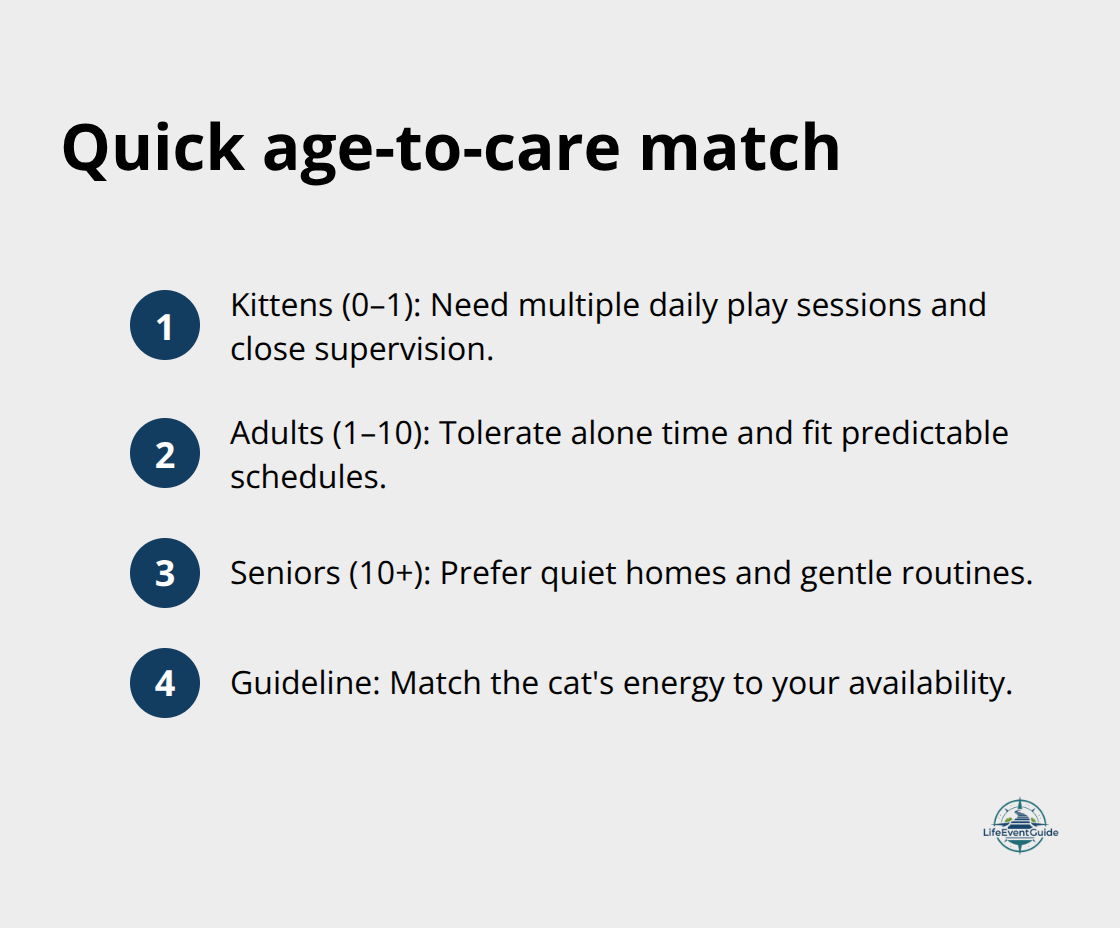
A kitten in a home where everyone works full-time often becomes destructive or anxious. Senior cats aged ten years and older actually thrive in stable, quieter homes where someone is around regularly. They need consistent routines and gentle handling, but they don’t demand the active engagement that younger cats do. The rule is straightforward: match the cat’s energy to your availability, not the other way around.
Space Requirements Vary Less Than You Think
Apartment living works perfectly fine for cats. You don’t need a sprawling house. What matters far more is vertical space and mental stimulation. Cats feel secure when they can climb and observe from high vantage points, so cat trees and wall-mounted shelves are more valuable than square footage. A small apartment with enrichment beats a large house with nothing to do. Provide one litter box per cat plus one additional box, and keep them separated from food and water bowls. In smaller homes, this spacing becomes more challenging but still manageable with thoughtful placement. Loud environments stress some cats, so if your home is consistently noisy with young children or frequent guests, seek a calm, tolerant cat specifically. Conversely, if you have a quiet household, a nervous or shy cat may flourish. The physical environment matters less than the atmosphere you create.
Your Energy Aligns with Cat Selection
High-energy people often assume they want high-energy cats, but this creates friction. Active, playful cats demand constant interactive engagement with toys and games. If you’re genuinely willing to dedicate thirty to forty-five minutes daily to structured play, this works. Most people aren’t. Moderate-energy cats balance play with independence, making them suitable for busy families who want engagement without constant demands. Low-energy cats are content with quiet homes, long naps, and gentle interactions. They’re ideal for people with lower activity levels or health limitations. Shelter staff can describe cat temperament if you ask specific questions about how each cat behaves around people, how much they sleep, and what triggers their play response. Spend actual time with potential cats at the shelter before adopting. Observe whether a cat approaches you, hides, or ignores you. This behavior reveals compatibility far better than any description. Once you understand your schedule, space, and energy level, you’re ready to explore which cat personalities and breeds align with your household dynamics.
Understanding Cat Personality Types and Health Needs
Active Cats Demand Real Commitment
Cat personality falls into three distinct categories, and understanding where a cat lands determines whether adoption succeeds or fails. Active and playful cats are genuinely demanding. These cats zoom around, pounce on toys, and seek constant interaction. They won’t nap all day contentedly. They need two or three 10- to 15-minute play sessions a day, depending on their age and energy level. If you cannot commit this time consistently, an active cat will become destructive, scratch furniture aggressively, and develop behavioral problems. Shelter staff can tell you exactly which category a specific cat fits into if you ask how much the cat sleeps, whether it approaches visitors, and what triggers its play response.
Calm and Independent Cats Thrive Alone
Calm and independent cats occupy the opposite end of the spectrum. They’re content with quiet environments, minimal handling, and long stretches alone. These cats do well in homes where people work full-time. They don’t require constant engagement. Moderate-energy cats fall between these extremes. They enjoy play but also respect alone time. They’re genuinely the easiest match for most households because they adapt to busy schedules without becoming anxious or destructive.
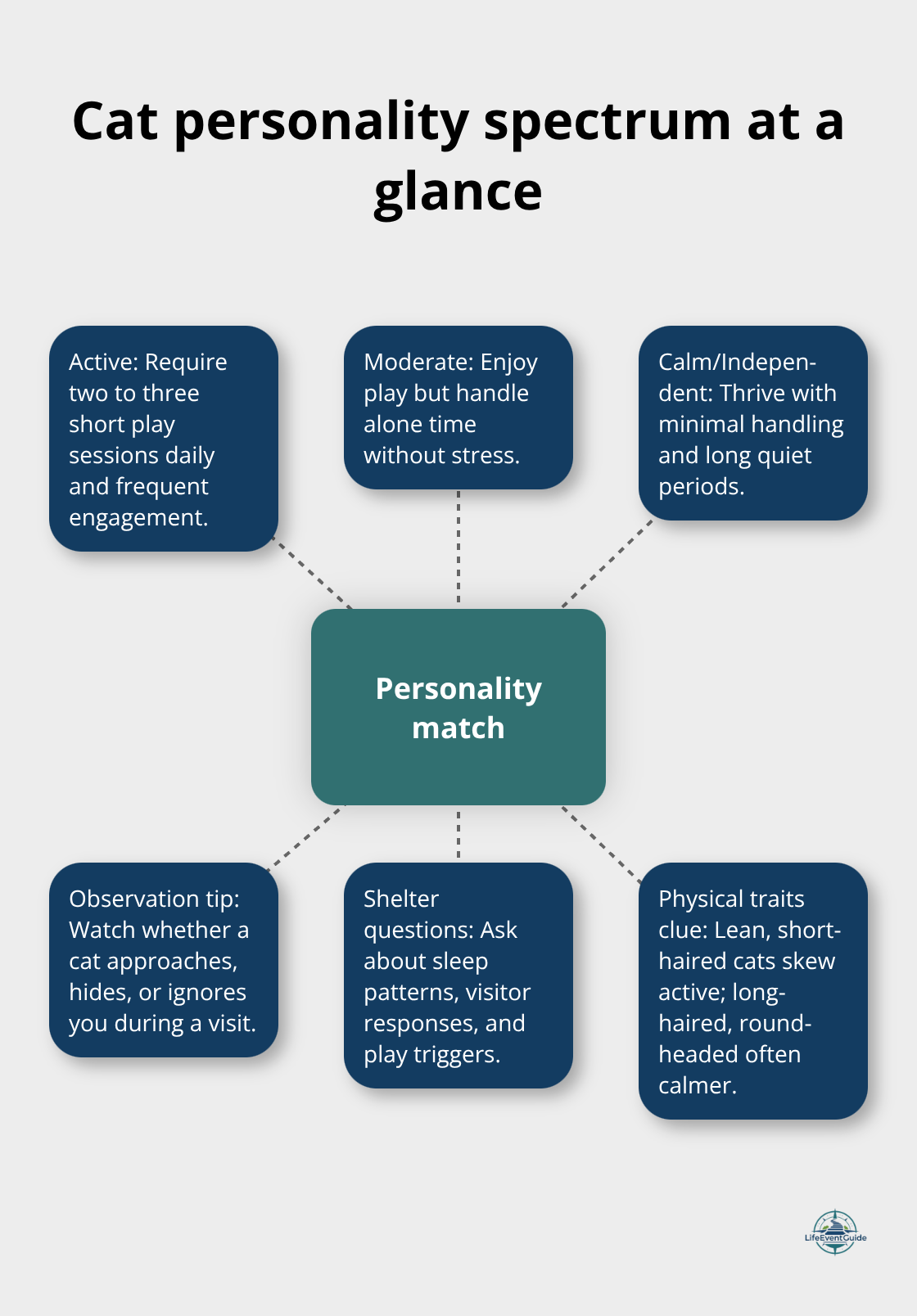
Spend fifteen to twenty minutes observing a potential cat at the shelter. Does it approach you or hide? Does it engage with toys staff offer? This real-world observation beats any personality description. Physical traits offer hints too. Long-haired, round-headed cats tend toward calm temperaments, while lean, short-haired cats often display higher activity levels and more demanding behaviors.
Age Shapes Health Risks and Care Needs
Health considerations shift dramatically based on age and breed background. Senior cats over ten years old may experience arthritis, dental disease, hearing and vision loss, and other age-related conditions. They need softer food, easier litter box access with lower sides, and regular veterinary check-ups at least twice yearly. Kittens require vaccinations, deworming, and spaying or neutering before adoption, which shelters typically handle. However, newly adopted cats from shelters face higher health risks even when they appear healthy initially.
Common Health Issues in Newly Adopted Cats
Diarrhea strikes many newly adopted cats and stems from stress, food changes, or parasitic infections. A veterinary visit within the first few days, bringing a stool sample, identifies the cause. Respiratory infections and eye discharge appear frequently in shelter cats. Ringworm, a contagious skin disease, can be hard to spot in long-coated cats but shows up as scabs, bald patches, or scaling. Get veterinary treatment immediately if skin issues appear. Lack of appetite after adoption isn’t unusual but warrants evaluation if it persists beyond three days. Budget for a first vet visit costing one hundred to three hundred dollars depending on your location and what testing is needed. Establish a relationship with a veterinarian before bringing a cat home so you know where to go if problems emerge. Some breeds carry specific health predispositions, so ask shelter staff about the cat’s background and any known health concerns. The commitment to ongoing care, preventive medicine, and prompt attention to health changes separates successful adoptions from situations where people return cats to shelters. With personality and health factors now clear, your next step involves preparing your physical space and finances for the responsibilities ahead.
Preparing Your Home and Financial Planning
Stock Essential Supplies Before Adoption Day
The temptation to buy everything at a pet store is real, but most cat owners waste money on items they never use. Focus on what actually matters: one litter box per cat plus one extra, unscented litter, food and water bowls made from ceramic or stainless steel, quality food, a comfortable bed, a carrier for vet visits, and scratching posts. Cats need vertical space far more than horizontal clutter, so invest in a sturdy cat tree or wall-mounted shelves before you bring the cat home. Your cat will use these daily. Toys rotate weekly-four or five is enough-and you can make enrichment cost-effective with cardboard tubes, paper bags, or crumpled paper. Shelters often include spaying or neutering, initial vaccines, and microchipping in adoption fees, which typically range from fifty to one hundred fifty dollars depending on your location. This upfront cost saves you three hundred to five hundred dollars on these procedures elsewhere.
Cat-Proof Your Space Immediately
Before the cat arrives, cat-proof your space by securing electrical cords, removing small objects that could be swallowed, and eliminating loose items a curious cat might destroy. Open shelving becomes a hazard, so think vertically about what a climbing cat can access. Stock supplies before adoption day-don’t plan to shop after bringing the cat home when you are managing stress and adjustment. This preparation prevents accidents and reduces your stress during the critical first days.
Budget for Realistic Monthly and Annual Costs
Financial planning for cat ownership requires honesty about long-term costs, not just adoption fees. Food costs between twenty and forty dollars monthly depending on quality and whether you feed wet or dry food. Litter runs ten to twenty dollars monthly for unscented varieties. The first veterinary visit costs one hundred to three hundred dollars and should happen within the first few days of adoption.
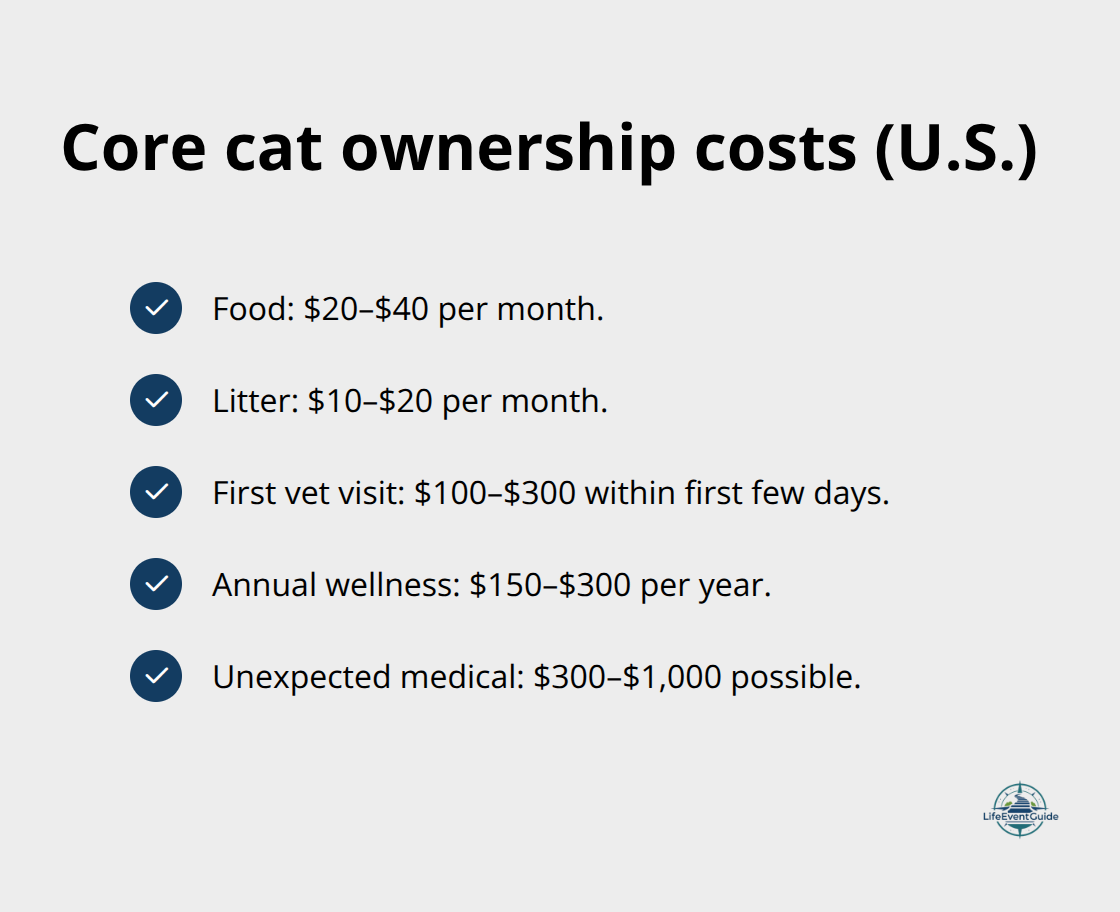
Annual wellness visits run one hundred fifty to three hundred dollars per cat. Unexpected medical issues in newly adopted shelter cats happen frequently-respiratory infections, parasitic treatments, or dental problems can cost three hundred to one thousand dollars without warning.
Plan for Emergency Medical Expenses
Cat insurance exists but varies widely in coverage and cost, starting around ten to twenty dollars monthly. Many people skip insurance and regret it when an adopted cat develops a health issue within the first year. Set aside at least five hundred dollars in emergency funds specifically for cat medical care. Senior cats need veterinary check-ups twice yearly instead of annually, doubling ongoing costs. Budget for enrichment supplies, grooming tools, nail clippers, and occasional replacement items like litter boxes or beds. Over two million cats are adopted annually, yet many adoptions fail because people underestimate the financial commitment. Create a dedicated budget line in your household finances for cat expenses before adoption, not after.
Final Thoughts
Successful cat adoption hinges on matching your lifestyle, home, and finances to a cat’s actual needs rather than an idealized version of pet ownership. The cat adoption considerations we’ve covered-your schedule, living space, energy level, the cat’s personality, health status, and financial capacity-work together to determine whether adoption succeeds or fails. Ignore any single factor and adoption struggles follow, whether that’s a beautiful kitten in a home where no one has time for interactive play or a senior cat adjusting to a chaotic household with young children.
Visit shelters with a clear picture of what you can realistically provide, and spend time with potential cats before making your decision. Ask shelter staff specific questions about behavior, energy level, and health background, then bring a stool sample to your first veterinary appointment and stock your home with essentials before adoption day. Set aside emergency funds (aim for at least five hundred dollars) to handle unexpected medical issues that commonly affect newly adopted shelter cats.
Building a long-term relationship with your new cat requires patience during the adjustment period, as cats from shelters may have unknown histories and feel overwhelmed initially. Create a quiet sanctuary room where your cat can retreat and feel secure, use positive reinforcement when your cat uses the litter box correctly or engages with appropriate toys, and establish consistent routines with regular feeding, play, and quiet time. We at LifeEventGuide understand that major life transitions like pet adoption require planning and clear decision-making, which is why our life event guides provide frameworks and checklists to help you navigate significant changes with confidence.
Publisher’s Note: LifeEventGuide is an independent educational publisher. Some articles reference tools or services we recommend to help readers explore options related to major life transitions. Learn more about how we make recommendations here.