

Car ownership brings unexpected bills. One month your brakes need work, the next your transmission acts up, and suddenly your budget feels out of control.
We at LifeEventGuide know that having a car maintenance budget checklist makes all the difference. When you plan ahead, these costs stop feeling like surprises and start feeling manageable.
Understanding Your Car’s Maintenance Costs
Regular Maintenance: The Predictable Expenses
Your car’s maintenance costs split into three distinct categories, and understanding each one changes how you budget. Regular maintenance represents the predictable stuff: oil changes every 5,000 to 7,500 miles, air filter replacements, tire rotations, and fluid top-ups. According to AAA’s 2025 Your Driving Costs study, maintenance and repairs average 11.04 cents per mile, which translates to about $1,656 annually for someone driving 15,000 miles per year.
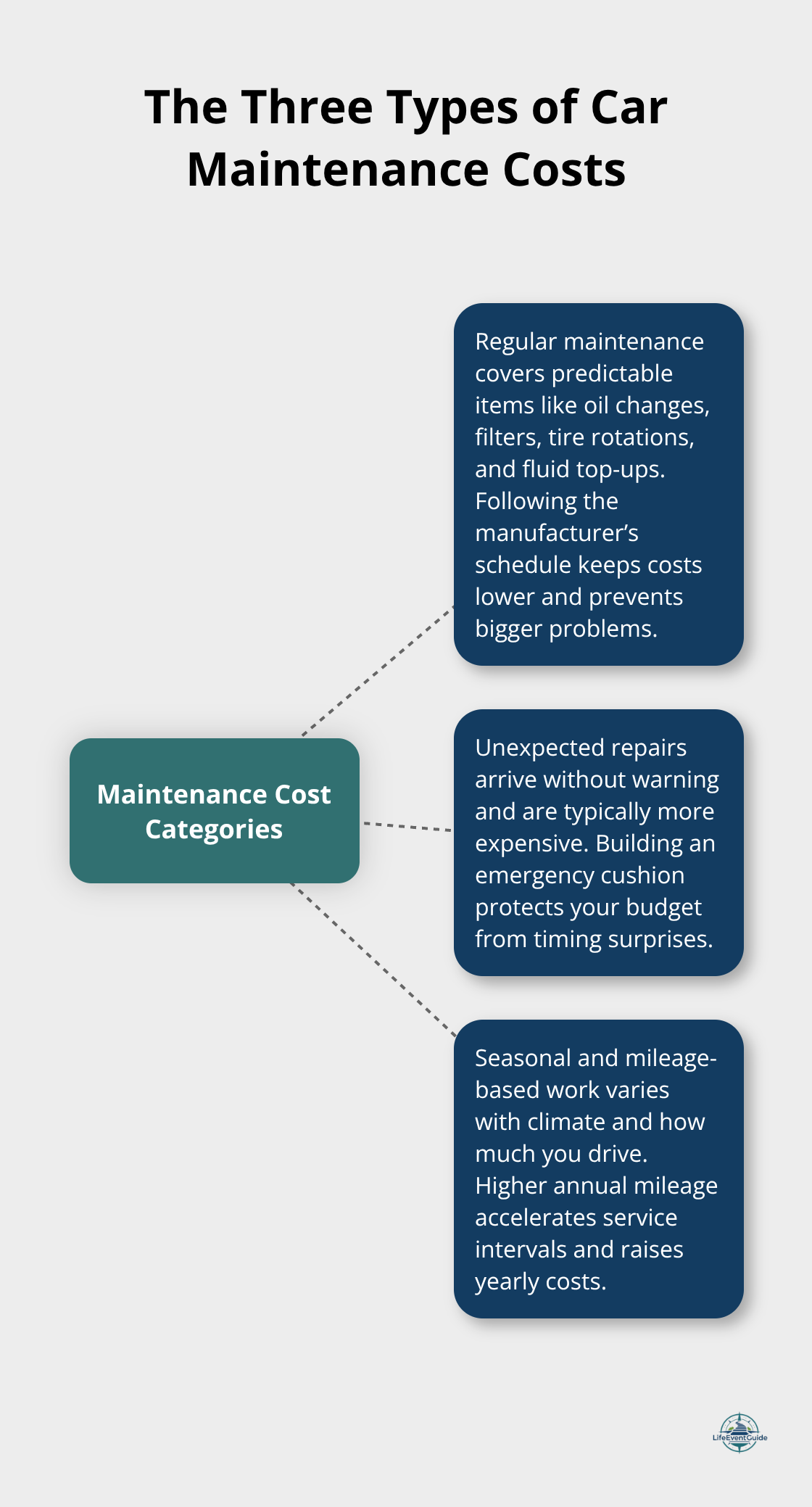
A medium sedan typically costs around $1,786 per year in regular maintenance, while electric vehicles run closer to $1,358 because they skip oil changes and have fewer moving parts. This budget category gives you actual control because it follows your manufacturer’s maintenance schedule. You know these expenses arrive on schedule, and they represent the cheapest way to prevent bigger problems down the road.
Unexpected Repairs: The Budget Killers
Unexpected repairs catch most car owners off guard, and they cost far more than regular maintenance. Catalytic converter replacement averages $1,348, oxygen sensor repairs run about $254, and fuel injector service costs roughly $420 according to RepairPal data. The problem lies in timing: these repairs don’t follow a schedule. A transmission issue might hit at 80,000 miles or 150,000 miles. This unpredictability is why setting aside emergency funds matters more than trying to predict exactly what will break. Rather than guessing which component fails next, you build a financial cushion that absorbs whatever repair comes your way.
Seasonal and Mileage-Based Maintenance: The Variables
Seasonal and mileage-based maintenance falls between these two categories. Winter driving demands more frequent brake inspections and tire checks; summer heat accelerates fluid degradation. High-mileage vehicles approaching 100,000 miles need transmission fluid checks, coolant flushes, and suspension inspections that newer cars don’t require yet. If you drive 20,000 miles annually instead of 15,000, your maintenance costs increase proportionally because you hit service intervals faster. The AAA benchmark of 11.04 cents per mile accounts for this variation, so calculate your actual annual mileage and multiply it by that figure to get a realistic number for your specific driving patterns. This calculation forms the foundation for your annual maintenance budget, which you’ll then break down into monthly amounts. Before finalizing your purchase, document everything to establish a baseline for your vehicle’s condition and maintenance history.
Creating Your Annual Maintenance Budget
Start with Your Vehicle’s Actual Repair History
Pull together receipts and records from the past two years, then calculate what you actually spent on maintenance and repairs. This number becomes your baseline rather than a theoretical average. If you spent $1,200 on repairs last year, that’s your starting point. AAA’s 2025 data shows maintenance and repairs average 11.04 cents per mile, but your specific vehicle might run cheaper or more expensive depending on its condition, age, and how well previous owners maintained it.
Once you have your historical figure, adjust it upward by 10 to 15 percent to account for inflation and the natural wear that comes with another year of driving. This adjusted number is what you should budget annually.
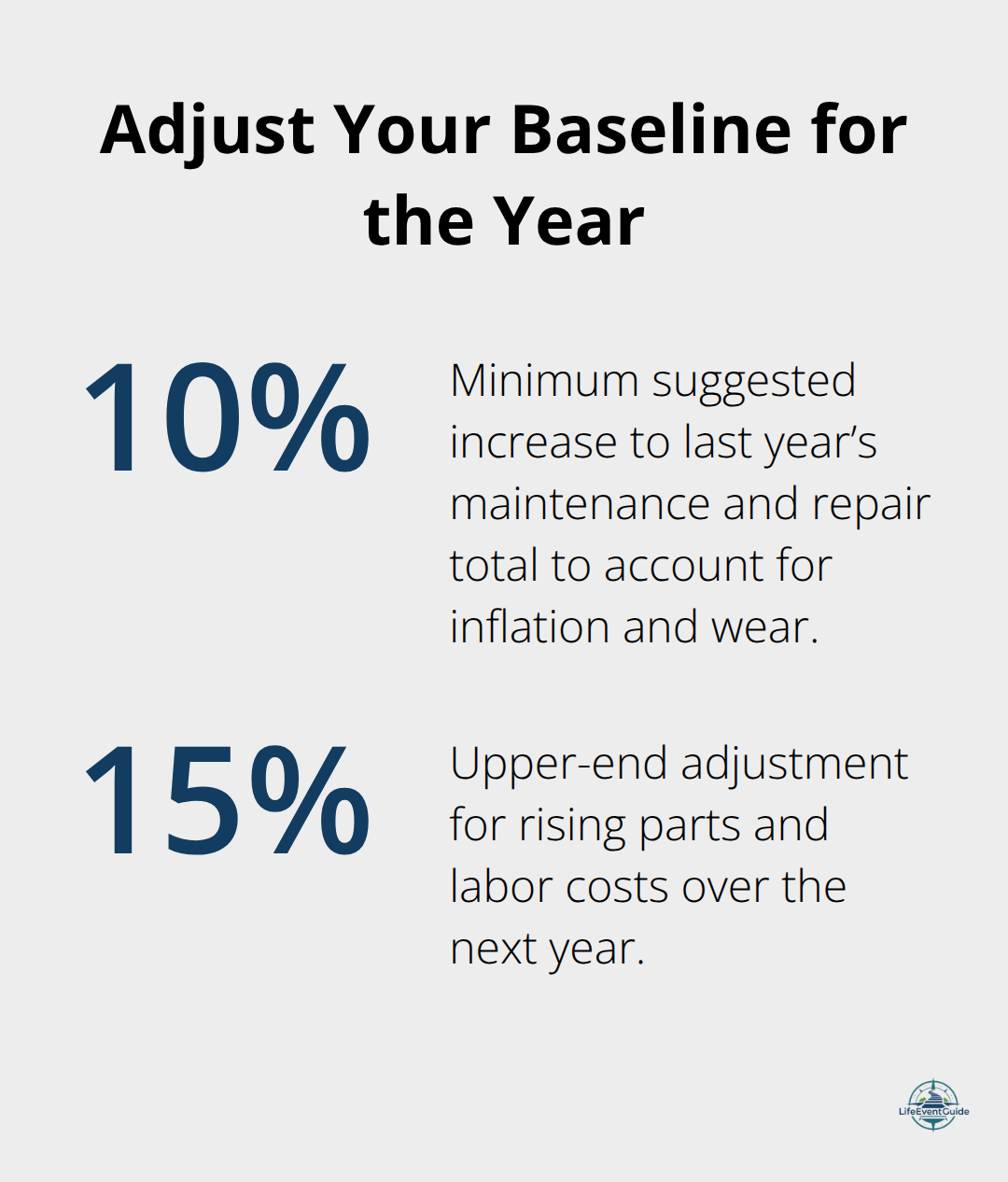
If your records show $1,200 last year, plan for roughly $1,320 to $1,380 this year. The adjustment matters because parts and labor costs rise annually, and waiting until a repair bill arrives to acknowledge this reality puts you in a reactive position instead of a prepared one.
Factor in Your Vehicle’s Age and Mileage
Your vehicle’s age and current mileage heavily influence what maintenance costs actually look like going forward. A car at 50,000 miles needs different work than one at 120,000 miles. Check your owner’s manual for the maintenance schedule specific to your vehicle, then cross-reference it against your current mileage to identify what’s coming due in the next 12 months.
Major services cluster around certain mileage intervals: transmission fluid changes often occur around 60,000 to 100,000 miles, coolant flushes around 100,000 miles, and suspension work becomes more frequent after 80,000 miles. If you’re approaching one of these intervals, add that cost to your annual budget now rather than hoping it delays another year. This forward-looking approach prevents surprises and keeps your finances stable.
Set Aside Emergency Funds for Unexpected Repairs
Most financial advisors recommend setting aside one to two months of your regular maintenance budget in a dedicated savings account for emergency repairs. If your annual maintenance budget is $1,500, that means keeping $125 to $250 available for unexpected costs. This emergency fund isn’t borrowed money or credit card space-it’s actual cash sitting separately so that when a catalytic converter fails or a transmission issue surfaces, you pay for it immediately without disrupting your regular budget or going into debt.
This emergency cushion protects you from the unpredictable nature of car ownership. When major repairs hit (and they will), you respond with cash rather than panic. With your annual budget established and your emergency fund in place, the next step involves breaking these yearly figures into monthly amounts that fit comfortably into your regular spending plan.
Monthly Budget Planning and Management
Converting your annual maintenance budget into monthly amounts removes the shock of large repair bills and lets you build funds gradually throughout the year. Take your annual maintenance budget-whether that’s the $1,786 average for a medium sedan or your actual historical spending-and divide it by 12. If you budgeted $1,800 annually, that’s $150 monthly set aside specifically for maintenance and repairs. This monthly figure goes into a dedicated savings account separate from your emergency fund, not into your general checking account where it gets spent on groceries or gas. The separation matters because maintenance money has one purpose only: paying for scheduled service and unexpected repairs.
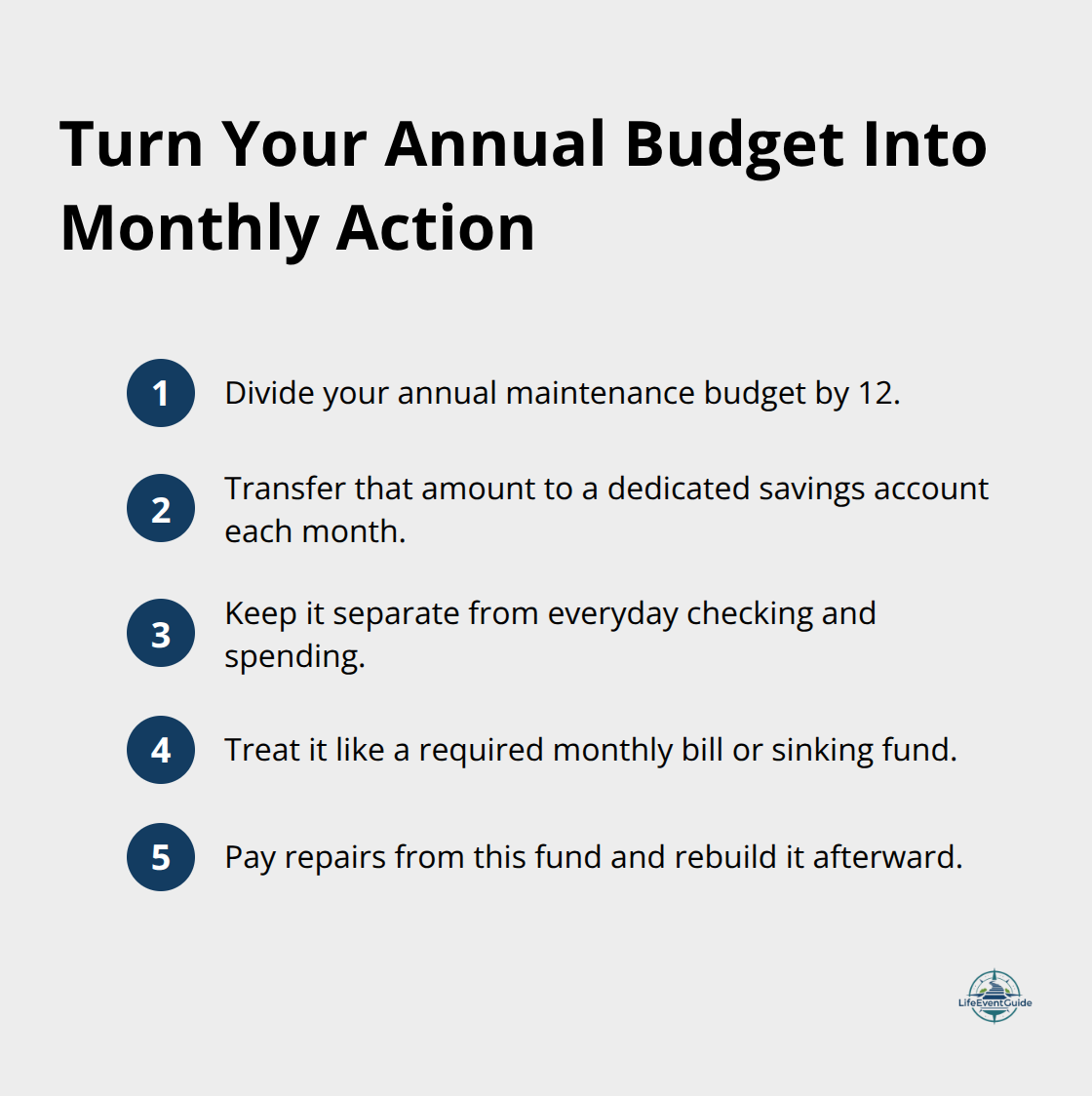
Many car owners use sinking funds for this exact reason, treating maintenance savings the same way they’d treat a utility bill that must be paid each month. When a $400 brake job arrives, you’re not scrambling to find money-you’ve already accumulated $600 in your maintenance account over four months, so you pay from that fund and continue building it back up.
Schedule Major Services Around Your Annual Mileage
Your vehicle’s maintenance calendar doesn’t align with the calendar year, so map out when major services actually arrive based on your current mileage and driving patterns. If you drive 15,000 miles annually and you’re currently at 45,000 miles, a 60,000-mile transmission fluid service hits in one year. If a 100,000-mile coolant flush looms in 18 months, you know that large expense is coming and can adjust your monthly savings now to accommodate it. Some owners front-load their monthly savings in months when they know major work is coming due, then reduce their monthly allocation in lighter months. Others maintain the same monthly amount year-round and let the account build higher in preparation for known expensive intervals. The second approach works better because it creates a larger cushion for unexpected repairs while still funding scheduled maintenance on time. Use your owner’s manual to identify the next three major services, note approximately when each arrives, and adjust your financial planning accordingly. This forward visibility prevents the common mistake of underfunding maintenance because you forgot about the 120,000-mile spark plug replacement or transmission service your specific vehicle requires.
Predict Future Costs from Your Repair History
Your repair receipts tell a story about what your specific vehicle costs to maintain, and that story improves your forecasting accuracy far more than industry averages do. If your records show you spent $400 on brakes two years ago and your current mileage suggests brakes need attention again soon, you can anticipate another $400 expense and adjust your budget accordingly. Some repairs recur at predictable intervals: if your vehicle needed new brake pads every 40,000 miles historically, and you’re approaching that mileage again, add brake service to your upcoming maintenance plan rather than hoping it delays another year. Conversely, if you’ve never had transmission problems in 80,000 miles, you might maintain a smaller contingency for transmission work than the industry average suggests. This doesn’t mean ignoring maintenance schedules-you still follow your manufacturer’s recommendations-but it means personalizing your budget based on your vehicle’s actual performance history. Track which repairs appear repeatedly in your records, as these represent your vehicle’s weak points and deserve priority attention in your monthly budget. A vehicle prone to sensor issues might need a slightly higher monthly allocation than one with a clean sensor history (for example, if your records show repeated oxygen sensor replacements, budget accordingly for the next one).
Final Thoughts
A car maintenance budget checklist transforms ownership from a source of financial stress into a manageable part of your monthly expenses. Your actual repair history matters more than industry averages, so pull those receipts, calculate what you spent, and adjust for inflation to establish your starting point. Add your upcoming major services based on your vehicle’s mileage schedule, then divide everything by twelve to find your monthly contribution amount.
The real power comes from consistency-when you set aside $150 monthly instead of facing a $1,800 surprise repair bill, you protect your ability to get to work, pick up your kids, and handle life without depending on credit cards or loans. That monthly amount sits in a dedicated account separate from your emergency fund, building the cushion that absorbs the catalytic converter failure or transmission service that will eventually arrive. You also extend your vehicle’s lifespan because you fund preventive maintenance that stops small problems from becoming expensive ones.
Review your repair history quarterly and adjust your budget if patterns emerge, increasing your monthly allocation if you consistently spend more than expected. When you’re ready to think through your entire car-buying and ownership strategy, our publisher recommendations provide guidance for major life transitions like vehicle purchases. Your maintenance budget checklist forms one piece of the larger picture of responsible car ownership.
Publisher’s Note: LifeEventGuide is an independent educational publisher. Some articles reference tools or services we recommend to help readers explore options related to major life transitions. Learn more about how we make recommendations here.